
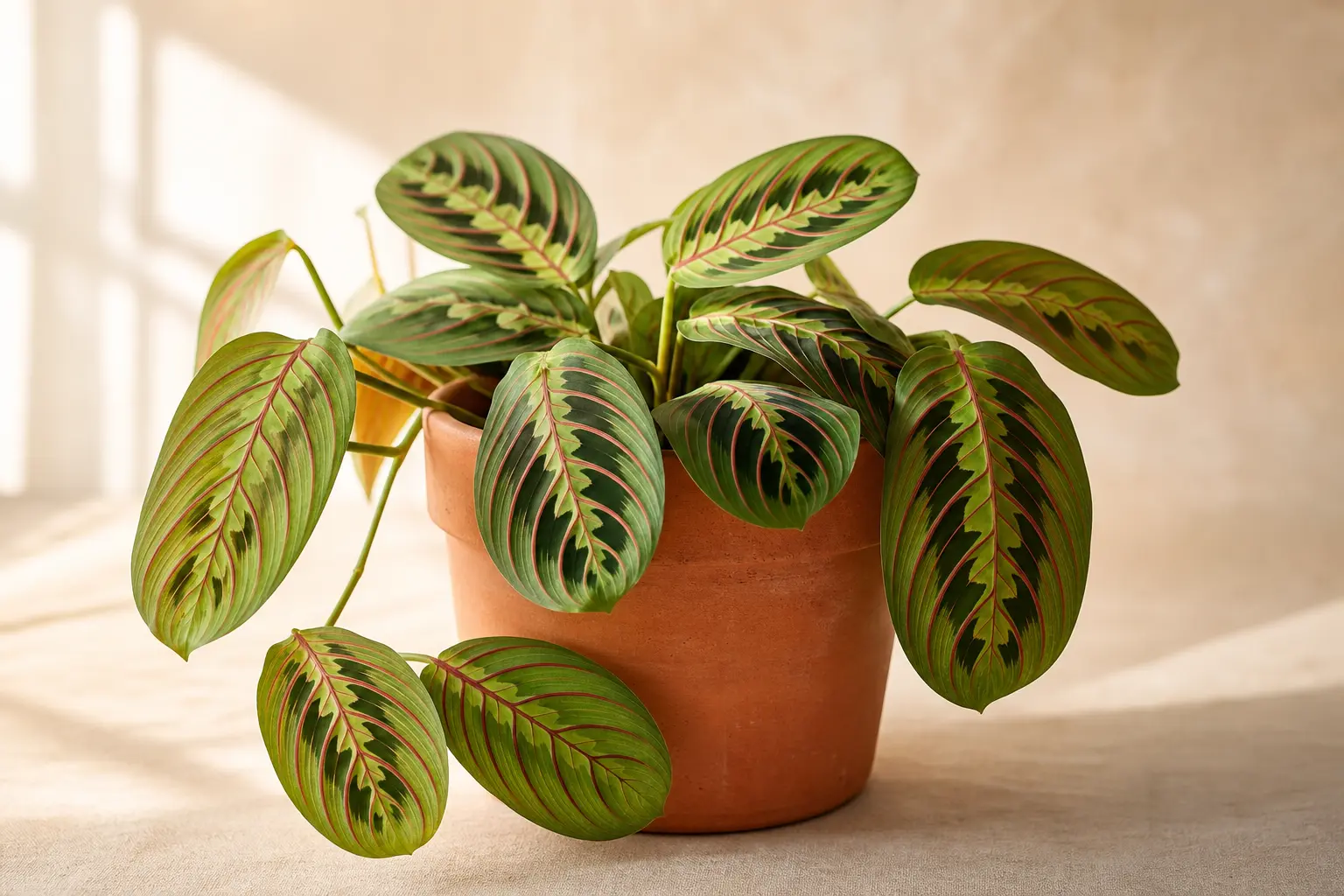
Prayer Plant
Maranta leuconeura
Also known as: Prayer Plant, Rabbit Tracks, Maranta, Maranta leuconeura
Last updated: Sep 10, 2026
Medium to low indirect light
When top inch of soil is dry — keep consistently moist
60–80%
65–80°F (18–27°C)
Peat-based mix with perlite — well-draining
Diluted balanced fertilizer every 2 weeks in growing season
Intermediate
Pet safe
Seasonal Care Calendar
| Season | Watering | Fertilizer | Notes |
|---|---|---|---|
| Spring | Every 5–7 days | Bi-weekly half-strength | Active growth resumes. Best time to repot, divide, or take cuttings. |
| Summer | Every 5–7 days | Bi-weekly half-strength | Peak growing season. Maintain 60%+ humidity. Watch for spider mites in dry air. |
| Fall | Every 7–10 days | Monthly quarter-strength | Growth slows. Run humidifier as heating starts drying indoor air. |
| Winter | Every 7–10 days | None or monthly quarter-strength | Rest period. Maintain warmth and humidity. Watch for cold drafts near windows. |
Detailed Care Guide
Everything you need to know to keep your Prayer Plant thriving.
Light Requirements
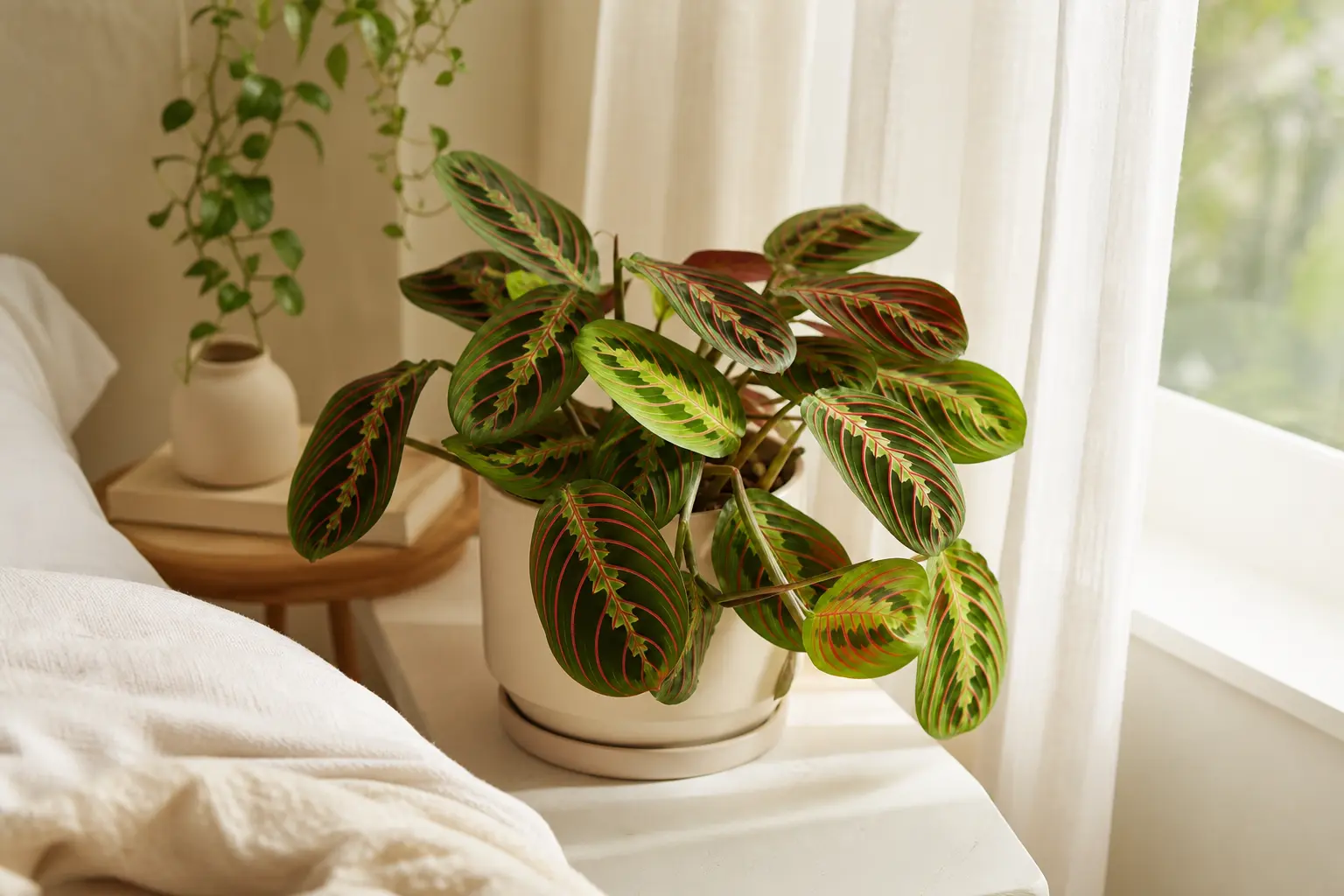
Prayer Plant thrives in medium to low indirect light, mimicking the dappled sunlight that filters through the dense Brazilian rainforest canopy where it grows naturally on the forest floor. An east or north-facing window provides ideal conditions — bright enough to support healthy growth and vibrant leaf coloration without exposing the delicate foliage to harsh direct sun. South or west-facing windows can work if the plant is placed several feet back or filtered by sheer curtains.
Direct sunlight is the most common cause of leaf damage in Prayer Plants. Even an hour of harsh midday sun can fade the rich color patterns, bleach the leaves, and cause crispy brown patches that do not recover. The intricate variegation that makes Prayer Plant so beautiful — the dark green blotches, pink veins, and red undersides — actually develops better in lower light than in bright sun. If your plant is losing its vibrant patterns and becoming uniformly green, it likely needs less light, not more.
The nightly leaf-folding behavior — the plant's namesake "prayer" movement — is triggered by changes in light levels. As evening approaches, the leaves fold upward; at dawn, they unfold flat. This circadian rhythm is most pronounced when the plant receives consistent light cycles, so avoid placing Prayer Plant where artificial lights stay on at night. If the leaves stop folding at night, check whether artificial lighting is disrupting the natural rhythm. The plant tolerates low light better than most tropicals and is an excellent choice for north-facing rooms where colorful houseplants typically struggle.
Watering
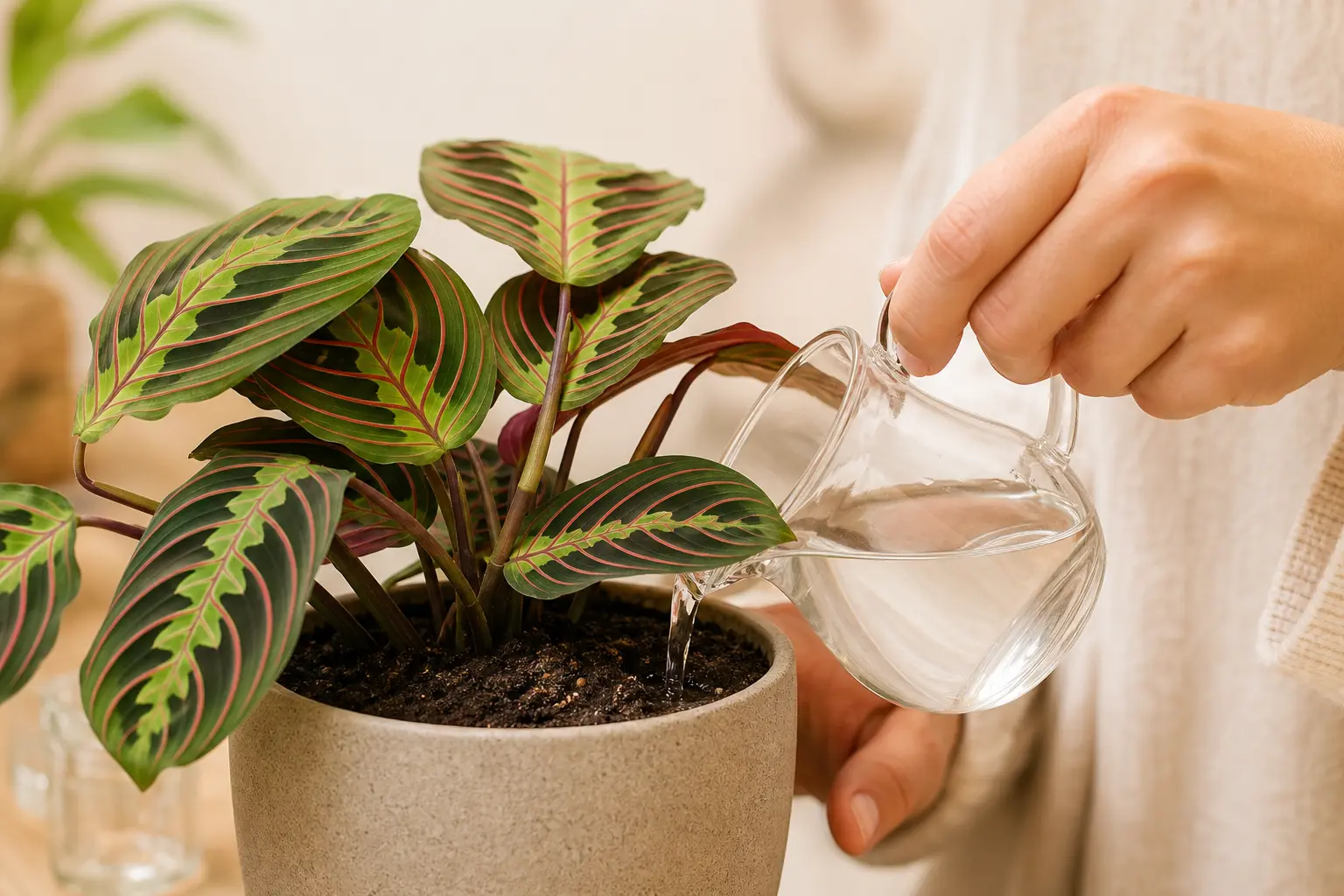
Prayer Plant needs consistently moist soil — not wet, not dry — and is one of the more demanding houseplants when it comes to watering rhythm. Water when the top inch of soil feels dry to the touch, typically every 5–7 days during spring and summer and every 7–10 days in fall and winter. The goal is to keep the soil evenly moist throughout the pot, never letting it dry out completely but also never sitting in water. This balance is the single biggest challenge for new Prayer Plant owners.
Water quality matters more for Prayer Plant than for most houseplants. The leaves are highly sensitive to chlorine, fluoride, and dissolved minerals in tap water, which cause crispy brown leaf edges and tip burn within weeks. Use filtered water, distilled water, or rainwater whenever possible. If you must use tap water, let it sit out uncovered for 24 hours before watering — this allows chlorine (but not fluoride) to dissipate. Always use room-temperature water, as cold water can shock the roots and cause leaf damage.
Underwatering shows as curled, crispy leaves that do not unfurl properly at dawn — the leaves remain partially folded throughout the day. Overwatering shows as yellowing leaves that begin at the base and spread upward, often accompanied by stem rot or fungal spots on the foliage. If you suspect overwatering, let the soil dry out somewhat (but not completely) and ensure the pot has proper drainage. Water around the soil rather than from above onto the leaves — water sitting on the leaves overnight can encourage fungal spotting on the delicate variegated foliage.
Humidity
High humidity is essential for Prayer Plant — this is non-negotiable for healthy growth. The plant thrives at 60–80% humidity, conditions found naturally in the rainforest understory but rare in modern homes. Average household humidity (30–40%, or even lower in winter with central heating) is barely enough for survival and produces persistent crispy leaf edges, slow growth, and fading patterns. Humidity is more important to Prayer Plant than nearly any other care factor.
The most reliable method is a small humidifier running near the plant for at least several hours per day. A pebble tray (a shallow dish with pebbles and water, with the pot resting on the pebbles — never in the water) provides modest local humidity for smaller specimens. Grouping Prayer Plant with other tropical plants creates a beneficial microclimate where each plant's transpiration helps the others. Bathrooms with frequent shower steam are excellent natural locations, as are kitchens with regular cooking moisture.
Misting can help temporarily but is not a substitute for ambient humidity — and importantly, mist the air around the plant rather than the leaves directly. Water sitting on the variegated foliage overnight encourages fungal spotting, which appears as small brown or black dots on the leaves. Avoid placing Prayer Plant near heating vents, fireplaces, air conditioners, or drafty windows, all of which create extremely dry air that damages the foliage rapidly. If you notice persistent brown leaf edges despite proper watering, low humidity is almost always the cause, and consistent humidifier use will solve the problem within 1–2 weeks.
Temperature
Prayer Plant prefers warm, stable temperatures between 65–80°F (18–27°C), reflecting its tropical rainforest origins where temperatures remain consistent year-round. It tolerates household temperatures comfortably but suffers significantly when exposed to anything below 55°F (13°C) for more than a few hours. Cold drafts from open winter doors, drafty windows, or air-conditioning vents can cause sudden leaf curling, browning, and stem rot. Likewise, hot dry air from heating registers will scorch the delicate variegated leaves.
Keep Prayer Plant away from temperature extremes and rapid fluctuations. A consistent location with stable temperatures yields far better growth than a spot with brighter light but variable conditions. If you keep your home cool in winter, provide extra warmth by avoiding cold windowsills and moving the plant slightly farther into the room. In summer, ensure adequate humidity to offset the drying effect of air conditioning, and never place the plant in direct airflow from any vent.
Prayer Plant can spend warm summer months outdoors in a sheltered, fully shaded location with high humidity — a covered porch facing east works well, as does a spot under dense tree cover. Acclimate gradually over 7–10 days when moving outdoors, and watch for any cold snap forecasts. Bring the plant back indoors before nighttime temperatures fall below 60°F (15°C). The combination of fresh air, natural humidity, and gentle warmth often produces a noticeable growth spurt with new leaves emerging from the center of the plant.
Soil
Prayer Plant needs a peat-based potting mix that retains moisture without becoming waterlogged. The ideal blend combines roughly 50% peat moss or coco coir for moisture retention, 30% standard potting soil for nutrients and structure, and 20% perlite or pumice for drainage and aeration. A small amount of horticultural charcoal helps prevent the mix from souring over time. The final blend should feel light and fluffy, similar to forest litter rather than dense garden dirt.
If you prefer a pre-made option, an African violet mix or high-quality houseplant mix amended with extra perlite works well. Avoid heavy garden soil, dense potting mixes, or anything containing moisture-retaining crystals — these all hold water against the roots and create the soggy conditions that lead to root rot. Standard potting soil alone is also too dense; always amend with perlite for adequate drainage.
Use a pot with multiple drainage holes — Prayer Plant has a shallow, spreading root system, so a wide shallow pot suits it better than a deep narrow one. Plastic and glazed ceramic pots retain moisture longer than terracotta, which can be beneficial since Prayer Plant likes consistently moist conditions. However, ensure the pot is only 1–2 inches wider than the root ball; oversized pots hold excess wet soil that the small root system cannot use, dramatically increasing rot risk. Hanging baskets are popular choices, allowing the trailing stems to cascade naturally as the plant matures.
Fertilizer
Prayer Plant is a moderate feeder that benefits from regular but gentle fertilization during the growing season. Apply a balanced liquid fertilizer (such as 10-10-10 or 20-20-20) diluted to half strength every 2 weeks from spring through early fall. Consistent feeding supports the production of new vibrantly patterned leaves and helps the plant fill out into a lush, full specimen. Without enough nutrients, growth slows and existing leaves may fade in color.
Never apply fertilizer to dry soil — always water thoroughly first, then follow with the diluted fertilizer solution. Applying nutrients to dry roots causes chemical burn that shows up as brown leaf edges within days. Prayer Plant is sensitive to fertilizer salt buildup, which appears as white crust on the soil surface or pot rim. Flush the pot thoroughly with plain water (run water through the soil for 60–90 seconds) every 2–3 months to leach out accumulated salts, especially if you fertilize regularly.
In fall and winter, when growth naturally slows, reduce fertilizing to once a month at quarter strength or stop entirely. Excess fertilizer during the dormant period can disrupt the plant's natural rest cycle and cause weak, leggy growth. If your plant has been recently repotted into fresh soil, hold off on fertilizing for 4–6 weeks to allow the roots to settle. A high-quality slow-release granular fertilizer applied in spring is an alternative for those who prefer a hands-off approach.
Repotting
Prayer Plant grows moderately and typically needs repotting every 2 years, or when you see roots emerging from drainage holes and growth has slowed despite proper care. Spring is the best time, when the plant is entering active growth and can recover quickly from root disturbance. Choose a pot only 1–2 inches wider than the current one — going up too aggressively in pot size leaves a large volume of wet soil that the roots cannot use, leading to rot.
Gently remove the plant by tipping the pot on its side and easing the root ball out, supporting the foliage gently to prevent stem breakage. Inspect the roots and trim any dark, soft, or smelly sections with clean scissors. Healthy Prayer Plant roots are firm, tan to white, and fibrous. Tease the root ball gently to loosen any compacted soil around the perimeter, but do not aggressively disturb the roots, as Prayer Plant dislikes major root disruption.
Place fresh, well-draining peat-based mix in the new pot, position the plant at the same depth as before, and water thoroughly to settle the soil. Place in a slightly shadier location than usual for 1–2 weeks while the roots settle, and maintain higher than usual humidity to reduce stress. Some leaf yellowing or curling is normal after repotting; affected leaves can be trimmed at the base. New growth should resume within 3–4 weeks, signaling successful establishment. Repotting is also an excellent time to divide an overgrown specimen for propagation.
Our Experience
I keep my Red Prayer Plant on a bathroom shelf where it gets daily steam from the shower and gentle morning light from a frosted window. The crispy edges I struggled with on a kitchen shelf disappeared completely after moving it here.
— Bathroom location, USDA Zone 6b, daily shower humidity
I switched to filtered water exclusively after watching the leaf tips slowly brown over six months on tap water. Within four weeks of using filtered water, new leaves came in with perfectly clean tips. Water quality genuinely matters for this plant.
— Tap water damage recovery, switched to Brita filter
I love watching the leaves fold up at sunset every evening — it is mesmerizing and a clear sign the plant is healthy. When my Marisela stopped folding for a few days, I checked and discovered I had left a closet light on overnight that was disrupting its rhythm. Turning it off restored the prayer behavior immediately.
— Circadian rhythm observation, light pollution disruption
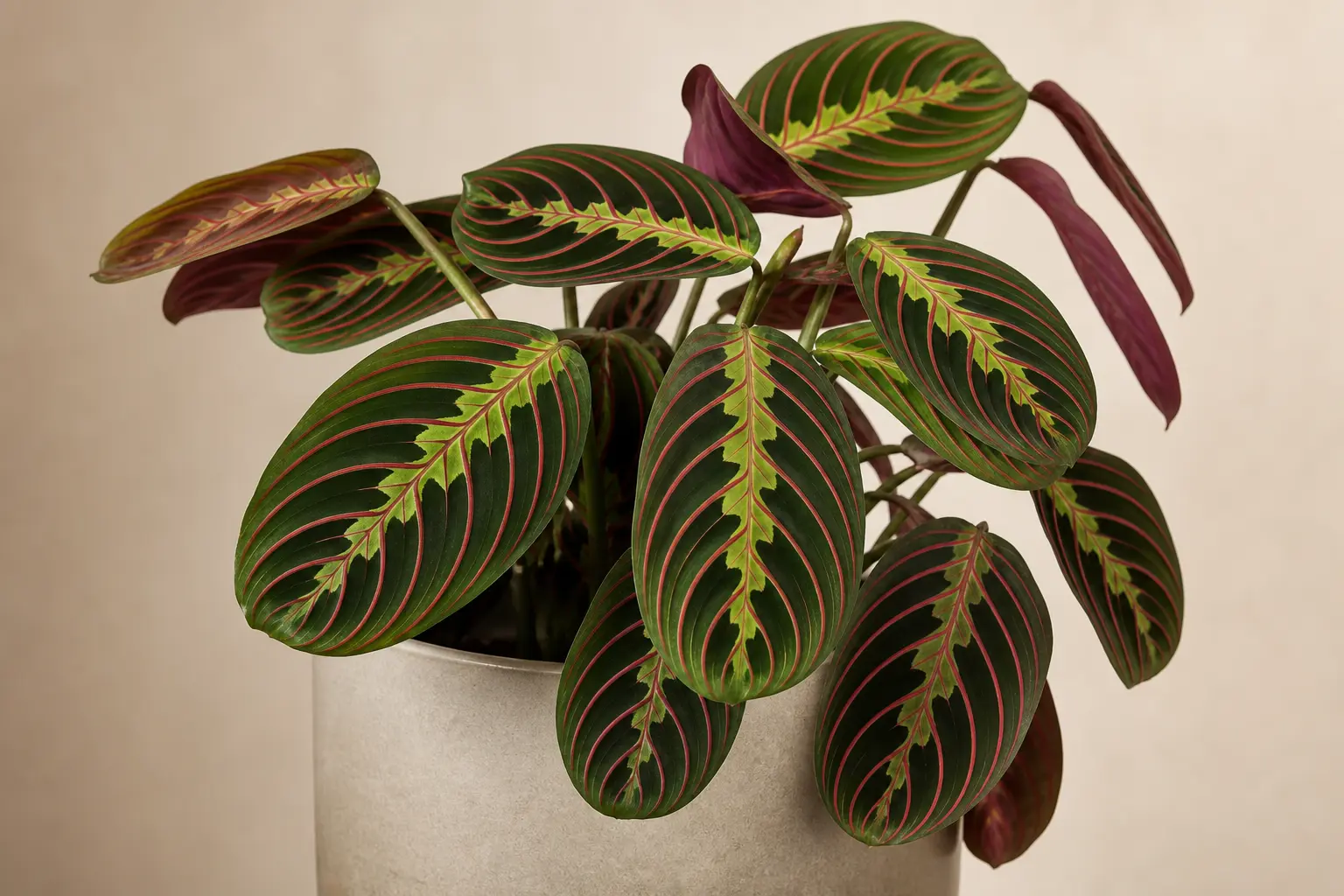 Erythroneura
 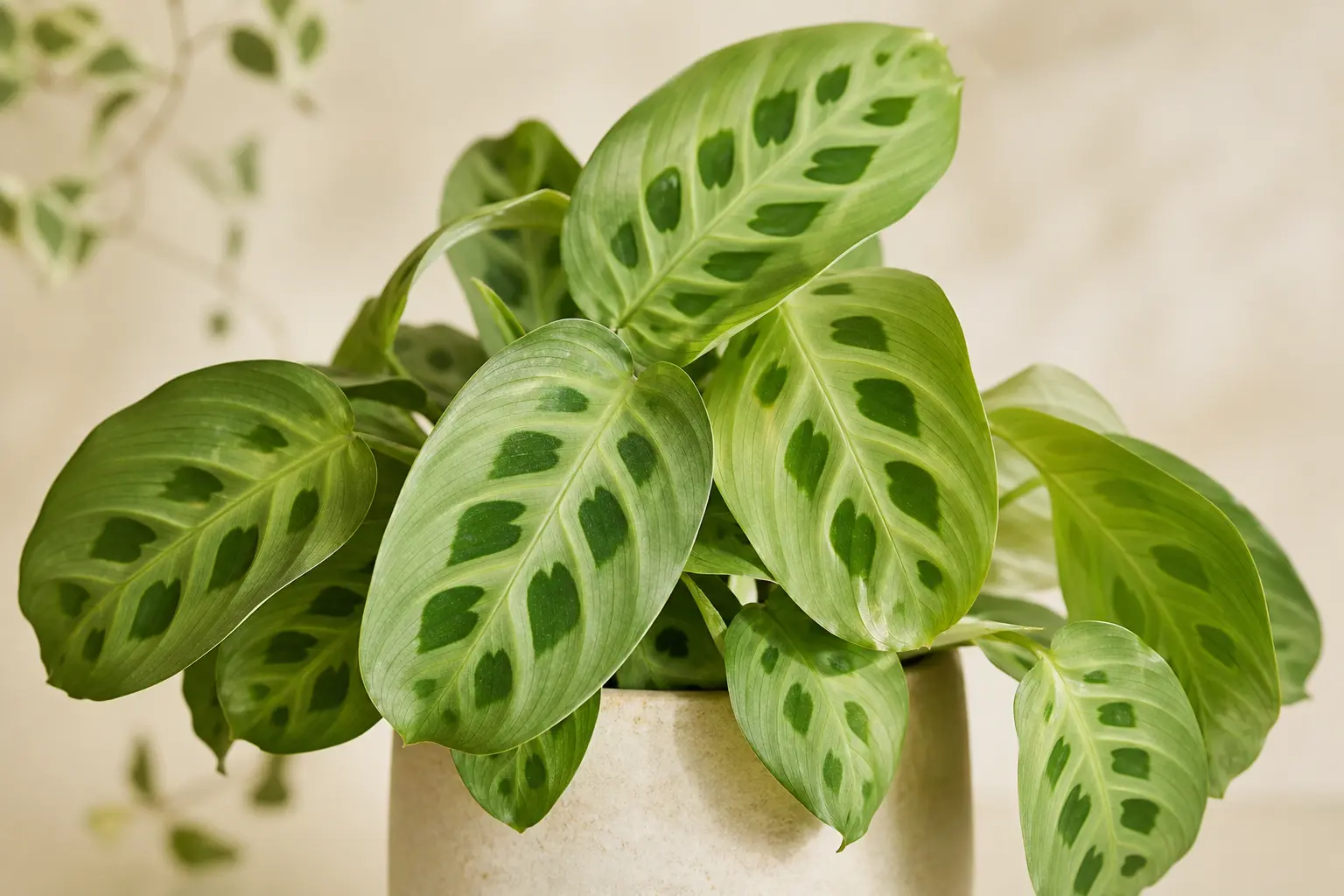 Kerchoveana
 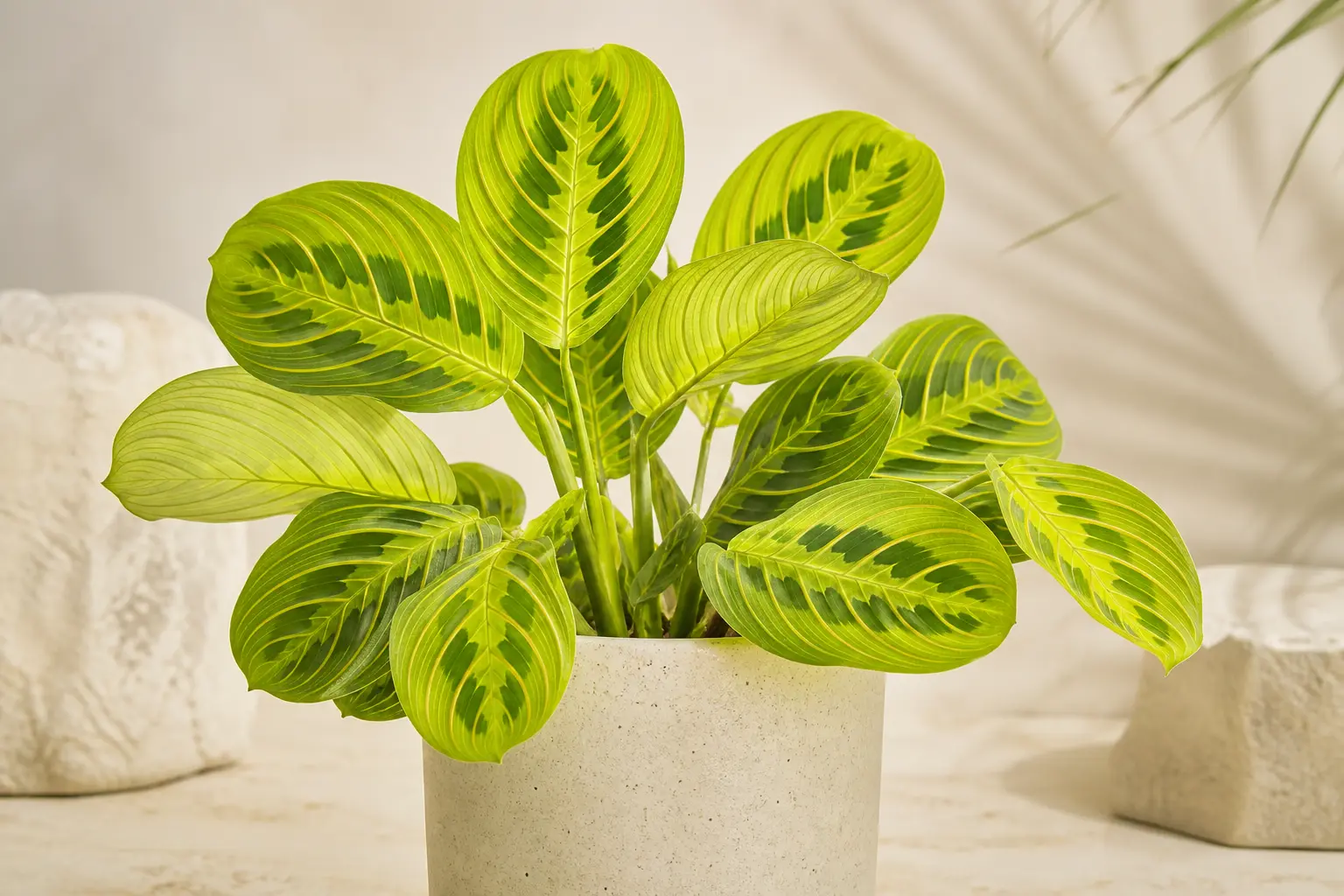 Lemon Lime
 Compare Varieties
Explore different cultivars side-by-side and find the best match for your space.
Browse all varieties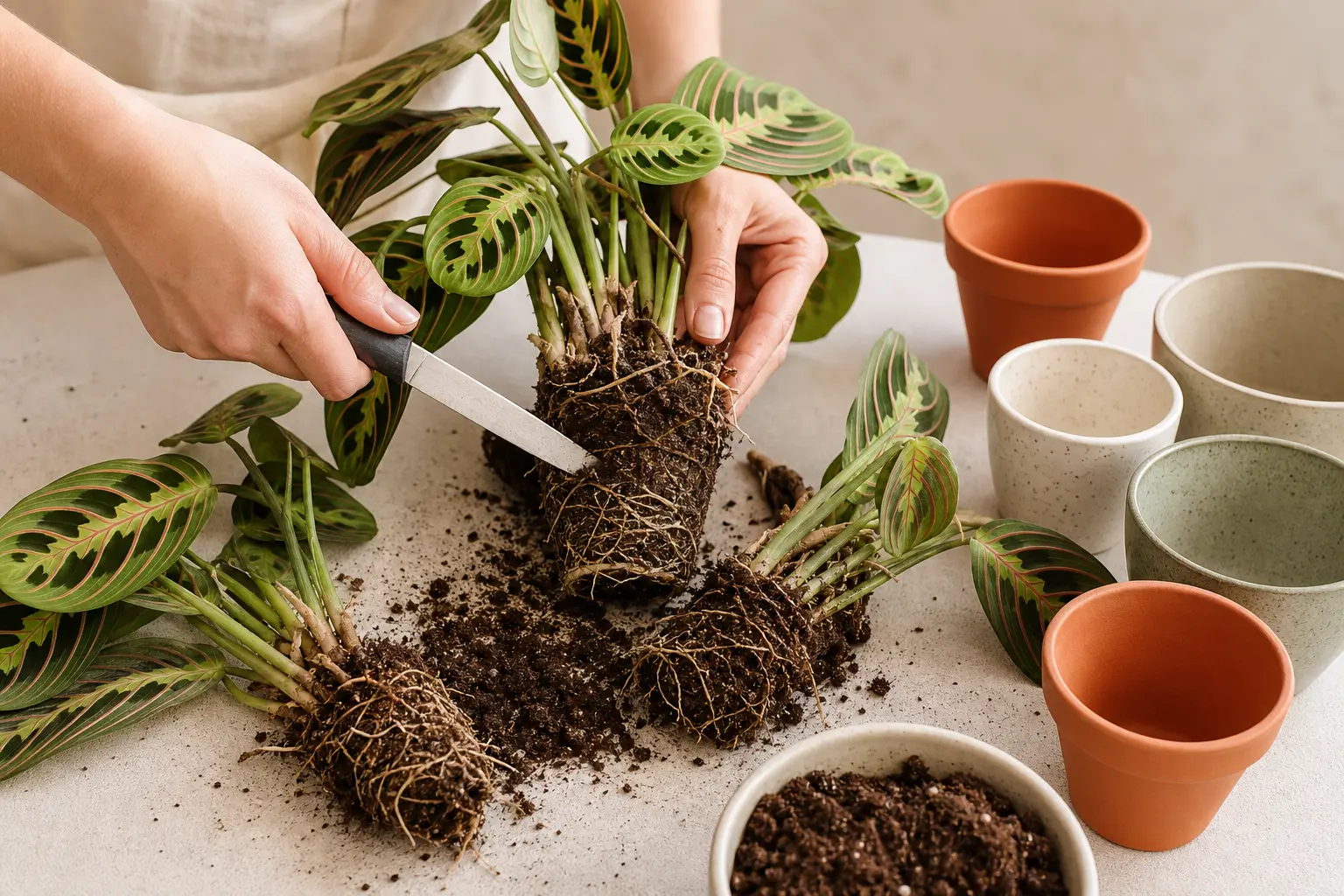
Propagation Guide
Step-by-step instructions for multiplying your plant collection.
Learn how to propagateFrequently Asked Questions
Why are my Prayer Plant leaves curling?
Is Prayer Plant safe for cats and dogs?
Why do my Prayer Plant leaves not fold up at night?
How often should I water my Prayer Plant?
Why are the edges of my Prayer Plant leaves turning brown?
How do I propagate Prayer Plant?
Common Problems
Why Are My Plant Leaves Turning Yellow?
Yellowing leaves are one of the most common houseplant problems. The good news is that most causes are easy to identify and fix once you know what to look for.
Read diagnosis guideHow to Fix an Overwatered Plant
Overwatering kills more houseplants than any other cause. The tricky part? The symptoms — yellowing, wilting, drooping — look just like underwatering. Here's how to tell the difference and fix it.
Read diagnosis guideReferences
- [1] Missouri Botanical Garden. Maranta leuconeura Plant Finder
- [2] ASPCA. Prayer Plant Toxicity (Non-Toxic)
- [3] University of Florida IFAS Extension. Maranta leuconeura Fact Sheet
- [4] Royal Horticultural Society. Maranta leuconeura Care Guide
Similar Plants
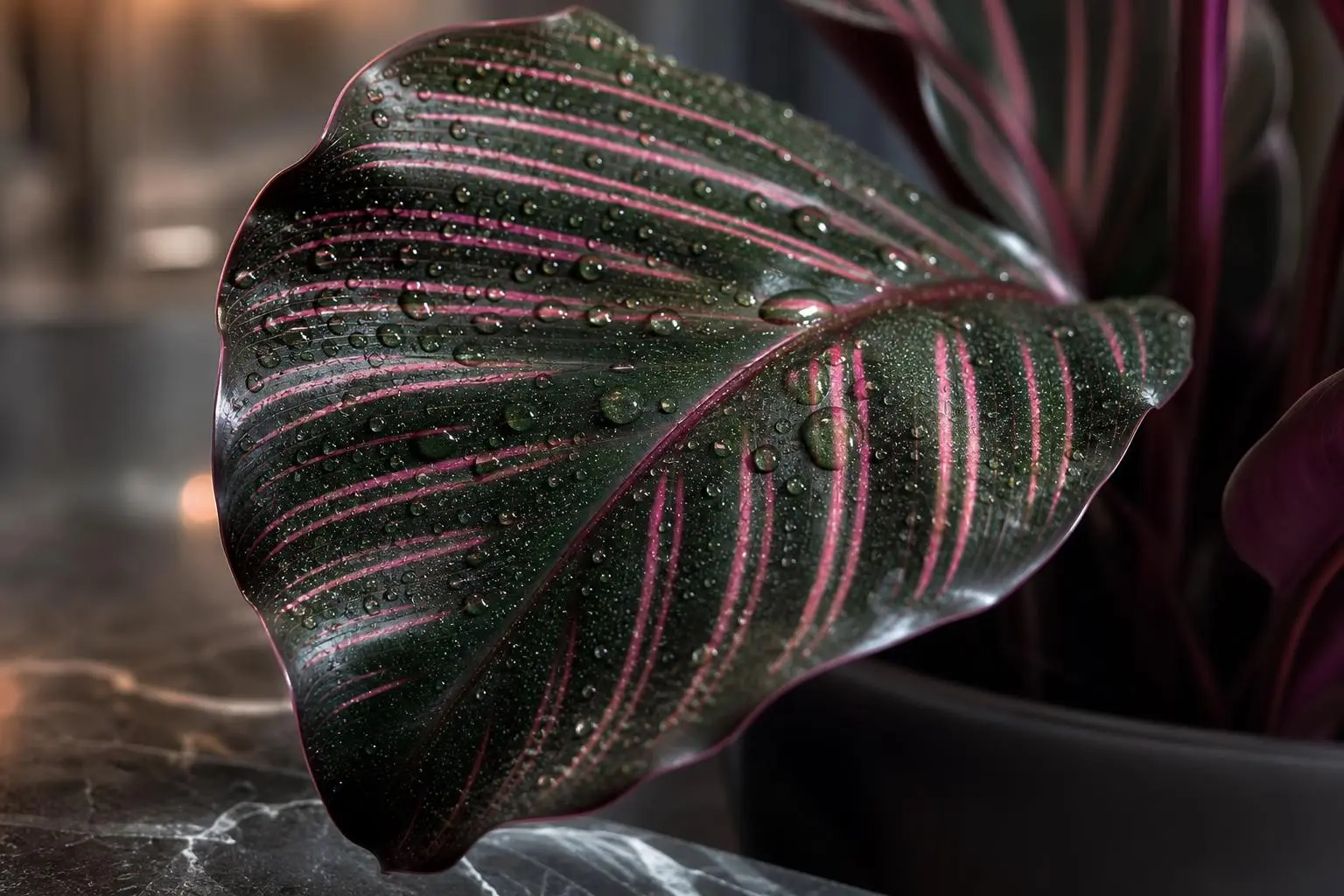
Calathea
Calathea ornata
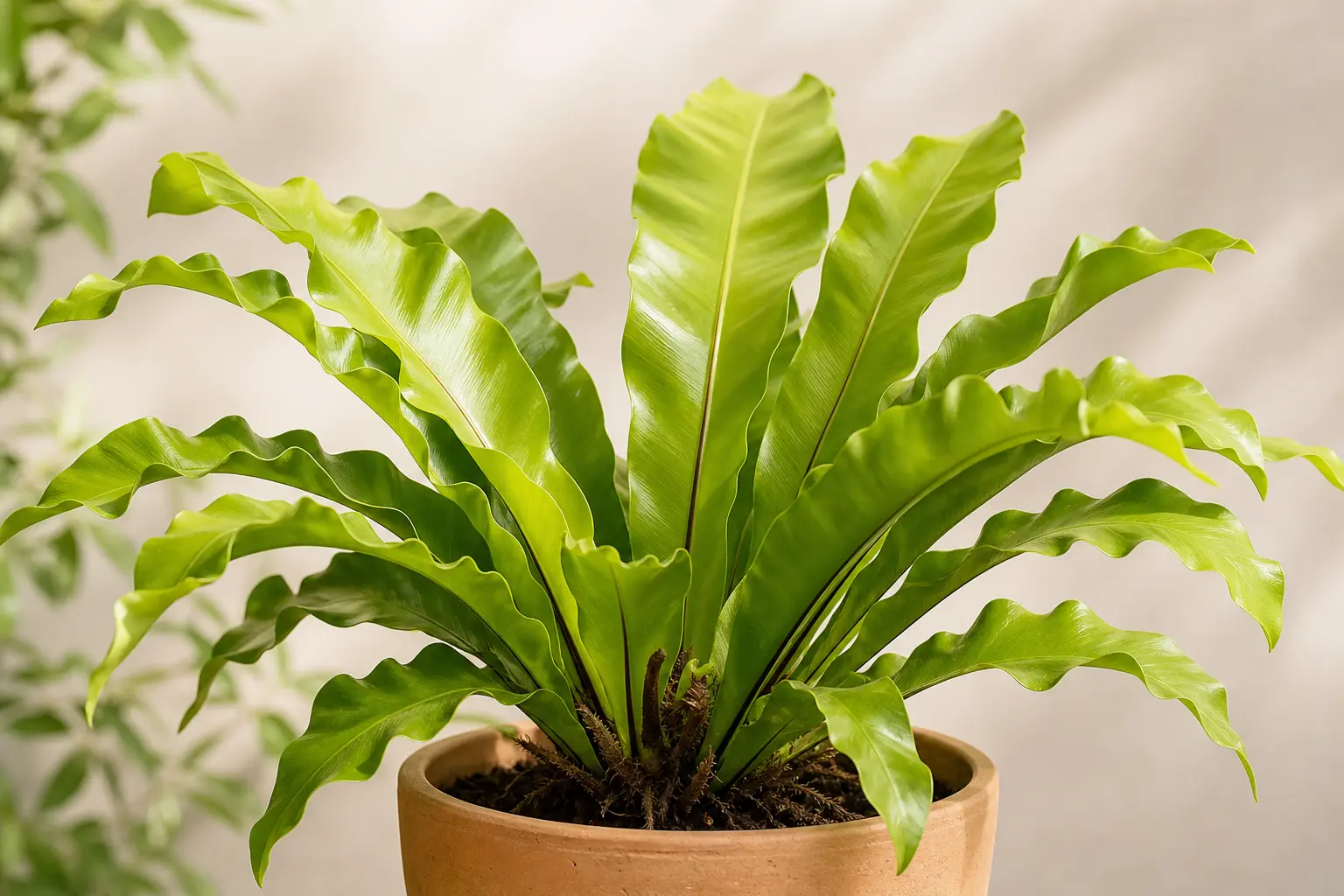
Bird's Nest Fern
Asplenium nidus
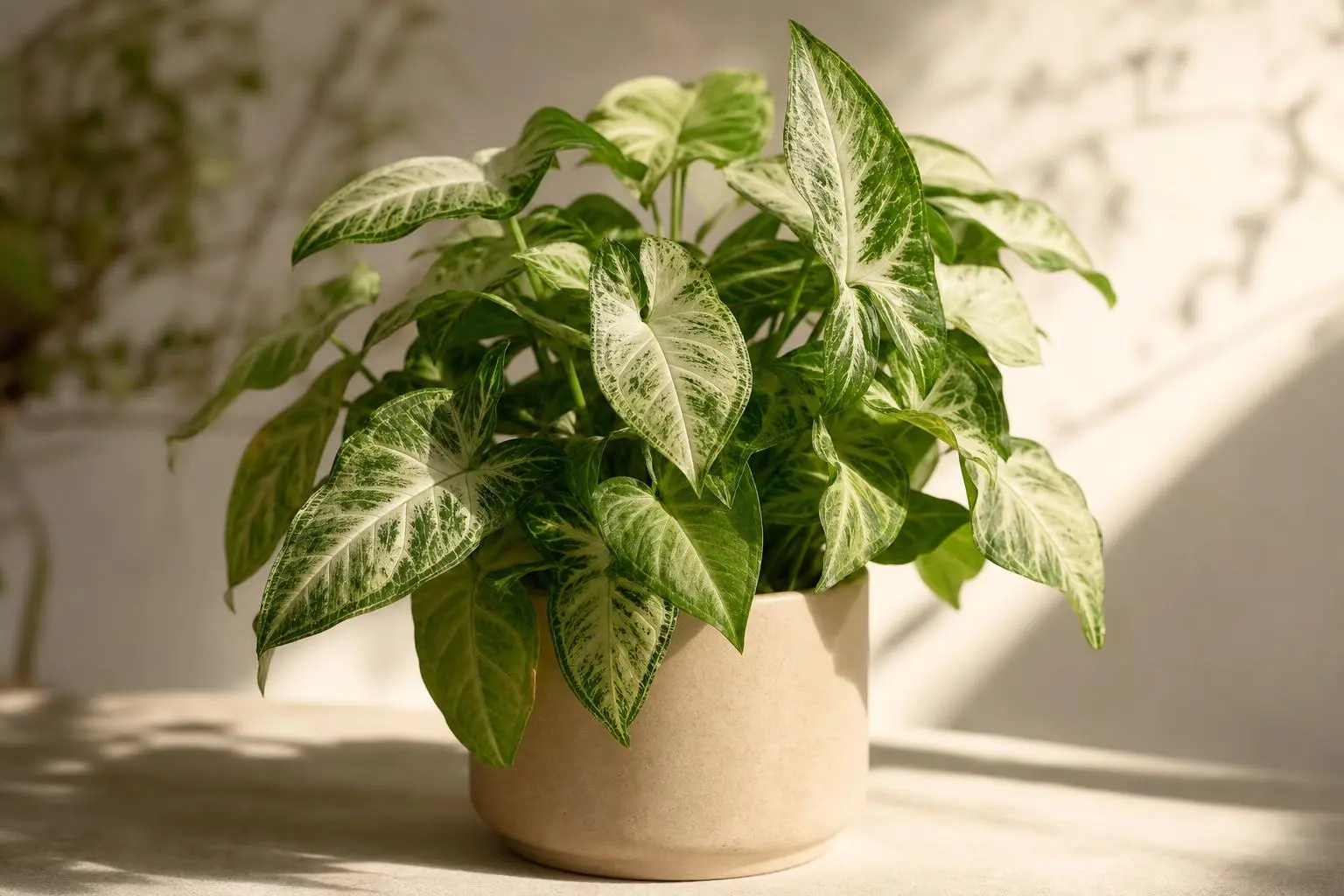
Arrowhead Plant
Syngonium podophyllum
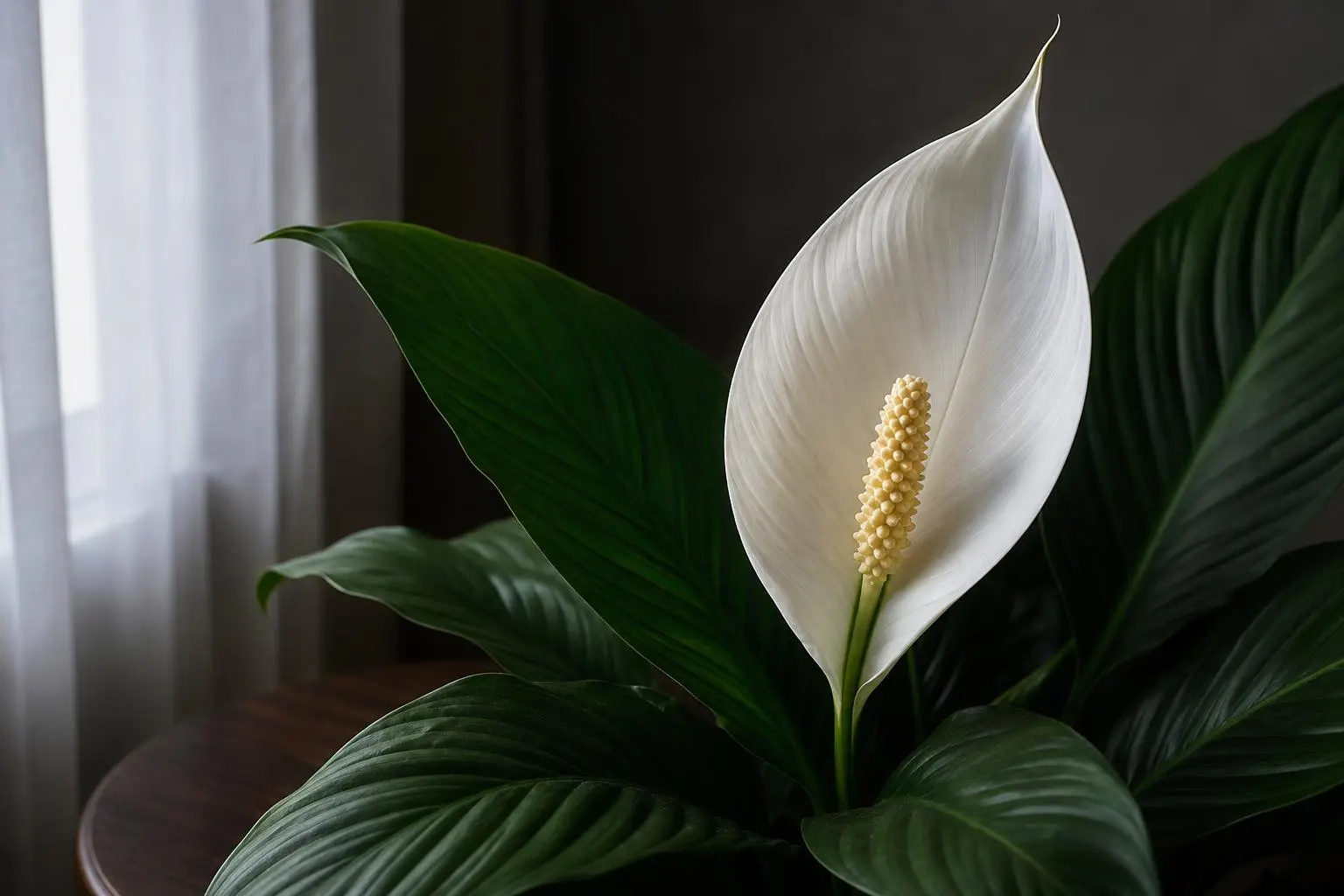
Peace Lily
Spathiphyllum wallisii