
Why Are My Plant Leaves Turning Yellow?
Last updated: Sep 10, 2026
Yellowing leaves are one of the most common houseplant problems. The good news is that most causes are easy to identify and fix once you know what to look for.
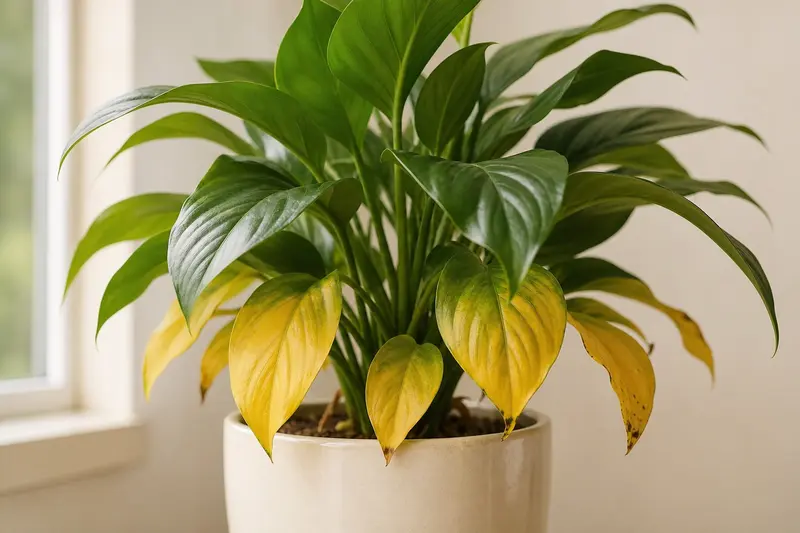
Causes
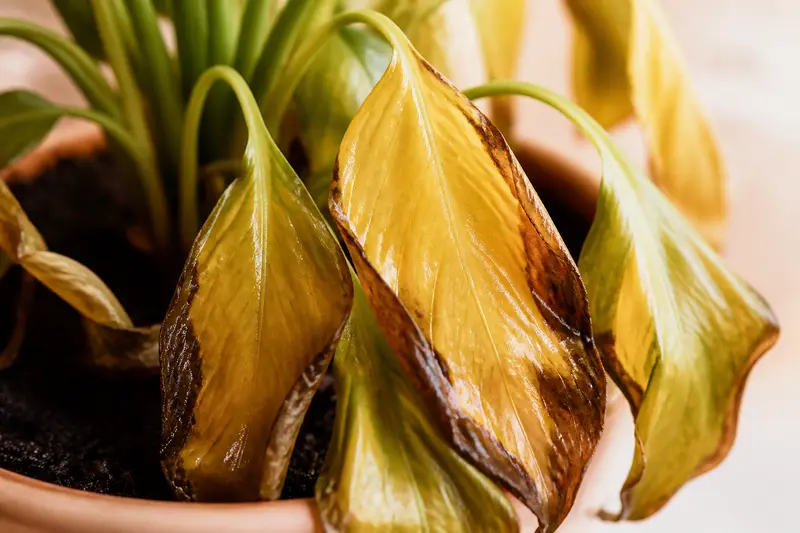
Overwatering
The #1 cause of yellow leaves on houseplants. When soil stays soggy, roots suffocate and begin to rot, losing their ability to absorb water and nutrients. The result: lower leaves turn soft and yellow, eventually becoming mushy. Overwatering mimics underwatering symptoms because rotted roots can't take up water — so the plant is effectively thirsty in wet soil [1].
How to identify: Leaves feel soft and limp, soil is wet, lower leaves affected first
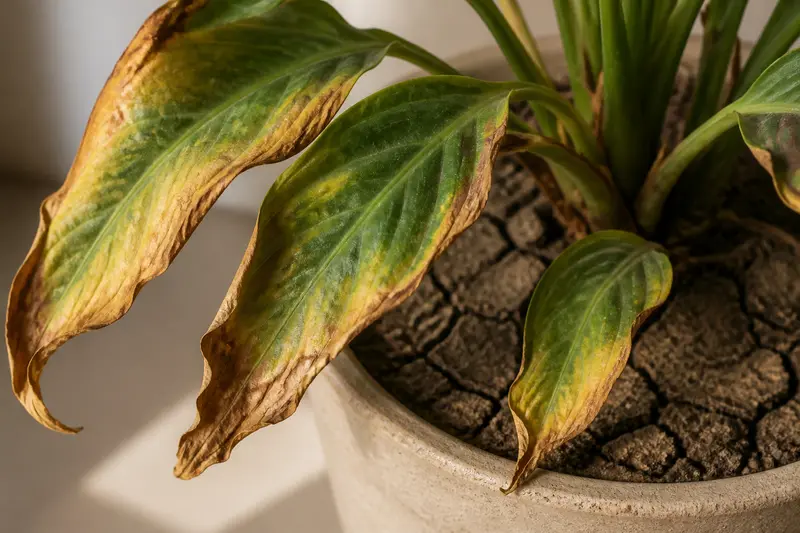
Underwatering
When a plant doesn't receive enough water, it begins sacrificing older leaves to conserve resources. These leaves turn dry, crispy, and yellow — often curling inward before dropping off. Unlike overwatering, the soil will feel bone dry and the pot will feel noticeably lighter. Chronic underwatering stunts growth and makes the plant vulnerable to pests [2].
How to identify: Leaves feel dry and crispy, soil is bone dry, plant may droop
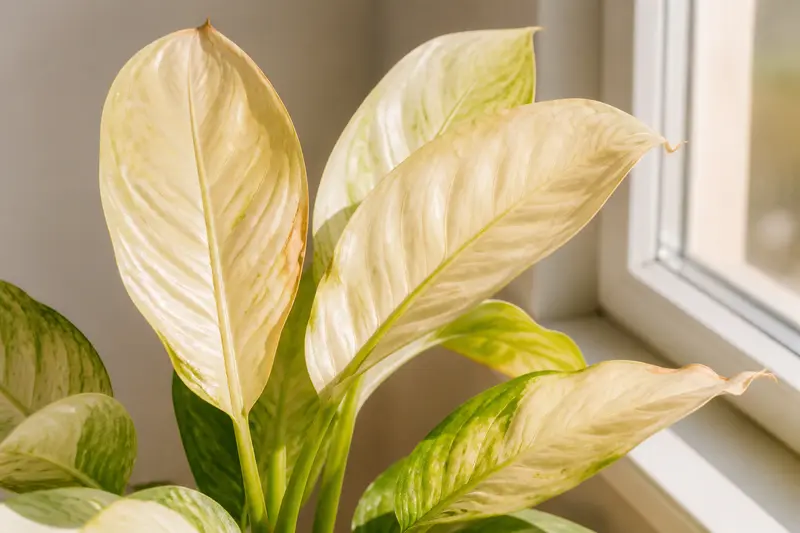
Too Much Direct Sun
Many popular houseplants evolved as understory plants and are adapted to dappled forest light. When placed in direct sun, their leaves can become sunburned — bleaching to a pale yellow or white, often with crispy brown edges. This is especially common when moving a plant from indoors to outdoors without acclimatization, or placing it on a south-facing windowsill [3].
How to identify: Upper leaves affected, plant is in direct sun, bleached appearance
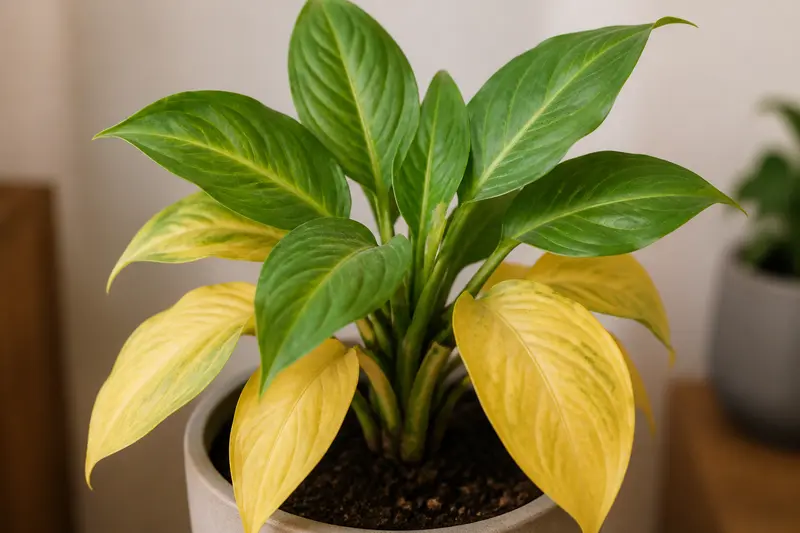
Nutrient Deficiency
When a plant runs low on essential nutrients — particularly nitrogen — it reallocates resources from older leaves to new growth. This causes older (lower) leaves to turn uniformly yellow while new leaves remain green. Other deficiencies produce different patterns: iron deficiency causes yellowing between green veins on new leaves, while magnesium deficiency affects older leaves with interveinal chlorosis [4].
How to identify: Older/lower leaves yellow first, new growth looks normal
Step-by-Step Solutions
- 1
Check the soil moisture
Stick your finger 2 inches into the soil. If it's wet — you're overwatering. If bone dry — you're underwatering. This single test eliminates the most common cause immediately. For more precision, use a moisture meter; readings above 7 in the root zone indicate overwatering, while readings below 3 suggest the plant is too dry [1].
- 2
Adjust watering based on your findings
For overwatering: let soil dry out before watering again, ensure the pot has drainage holes, and consider repotting with fresh well-draining soil if roots are damaged. For underwatering: water thoroughly until water drains from the bottom, then establish a routine of checking soil moisture every few days rather than watering on a rigid schedule.
- 3
Evaluate light conditions
If leaves look bleached or pale yellow, especially on the upper portions facing the window, your plant may be getting too much direct sun. Move it a few feet back from the window or filter the light with a sheer curtain. Most houseplants prefer bright indirect light — a spot where you can read comfortably without turning on a lamp [2].
- 4
Consider fertilizing if deficiency is suspected
If only older leaves are yellow and new growth is green, feed with a balanced houseplant fertilizer (10-10-10 or similar) during the growing season (spring through summer). Dilute to half strength to avoid fertilizer burn. For plants that haven't been repotted in over a year, repotting with fresh soil may be more effective than fertilizing alone [4].
- 5
Remove damaged leaves
Once a leaf has turned completely yellow, it won't recover — the chlorophyll is gone and the plant has already withdrawn usable nutrients. Remove yellow leaves with clean scissors close to the main stem. This redirects the plant's energy to healthy growth and improves air circulation around remaining foliage.
- 6
Monitor for recurring issues
After making adjustments, watch the plant over the next 2–3 weeks. New growth should emerge healthy and green. If yellowing continues, reassess: it could be a combination of factors (e.g., overwatering plus poor drainage), or a less common cause like temperature stress, pest damage, or tap water sensitivity in plants like Calatheas and Spider Plants.
Our Experience with Yellowing Leaves
We've seen yellow leaves on just about every plant in our collection at some point, and the cause is almost always watering-related. Our rule of thumb: when a plant starts yellowing, check the soil first — it solves 80% of cases.
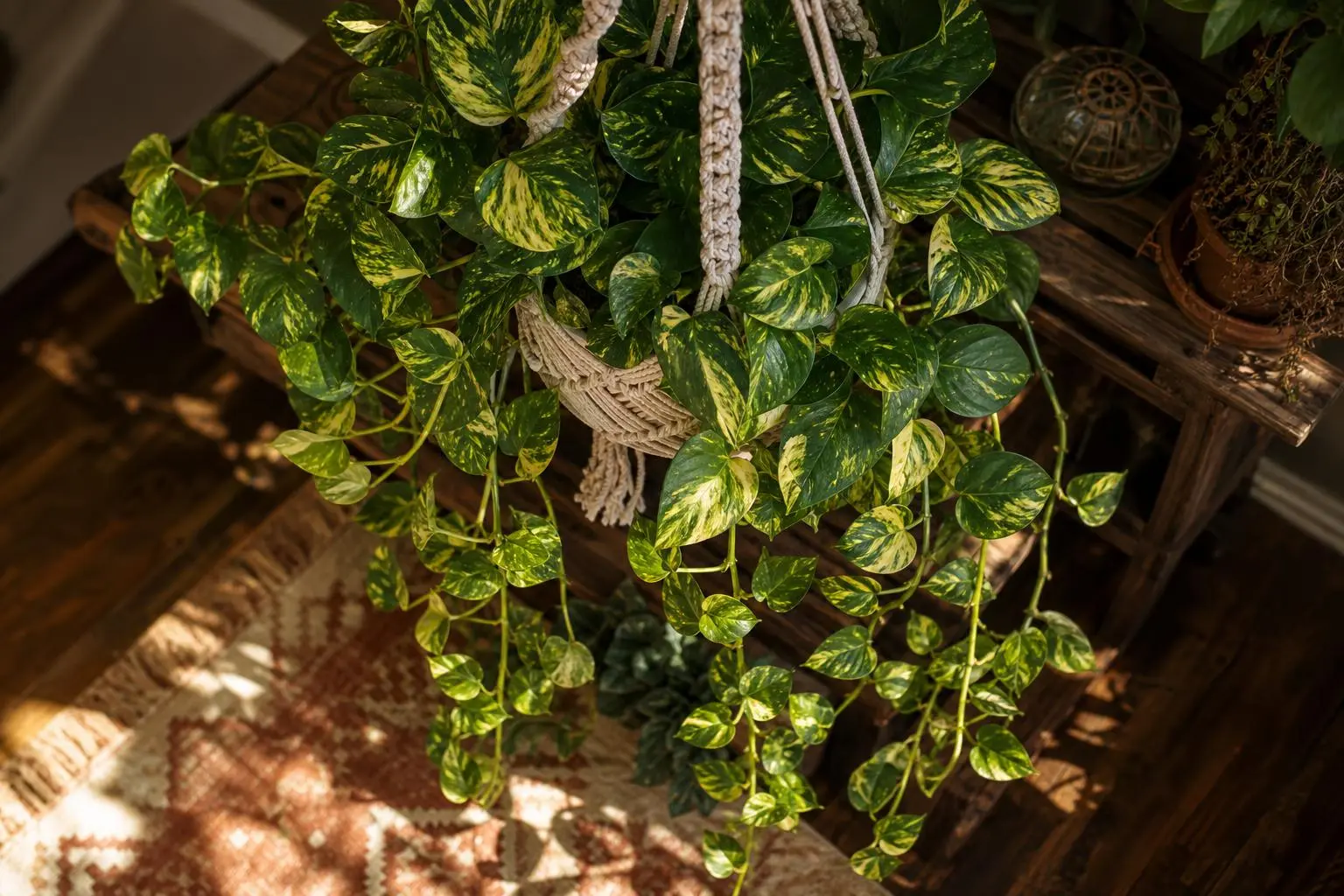
Our Pothos was dropping yellow leaves weekly until we realized the decorative pot had no drainage. Water was pooling at the bottom, invisible to us. Switching to a pot with drainage holes stopped the yellowing within two weeks.
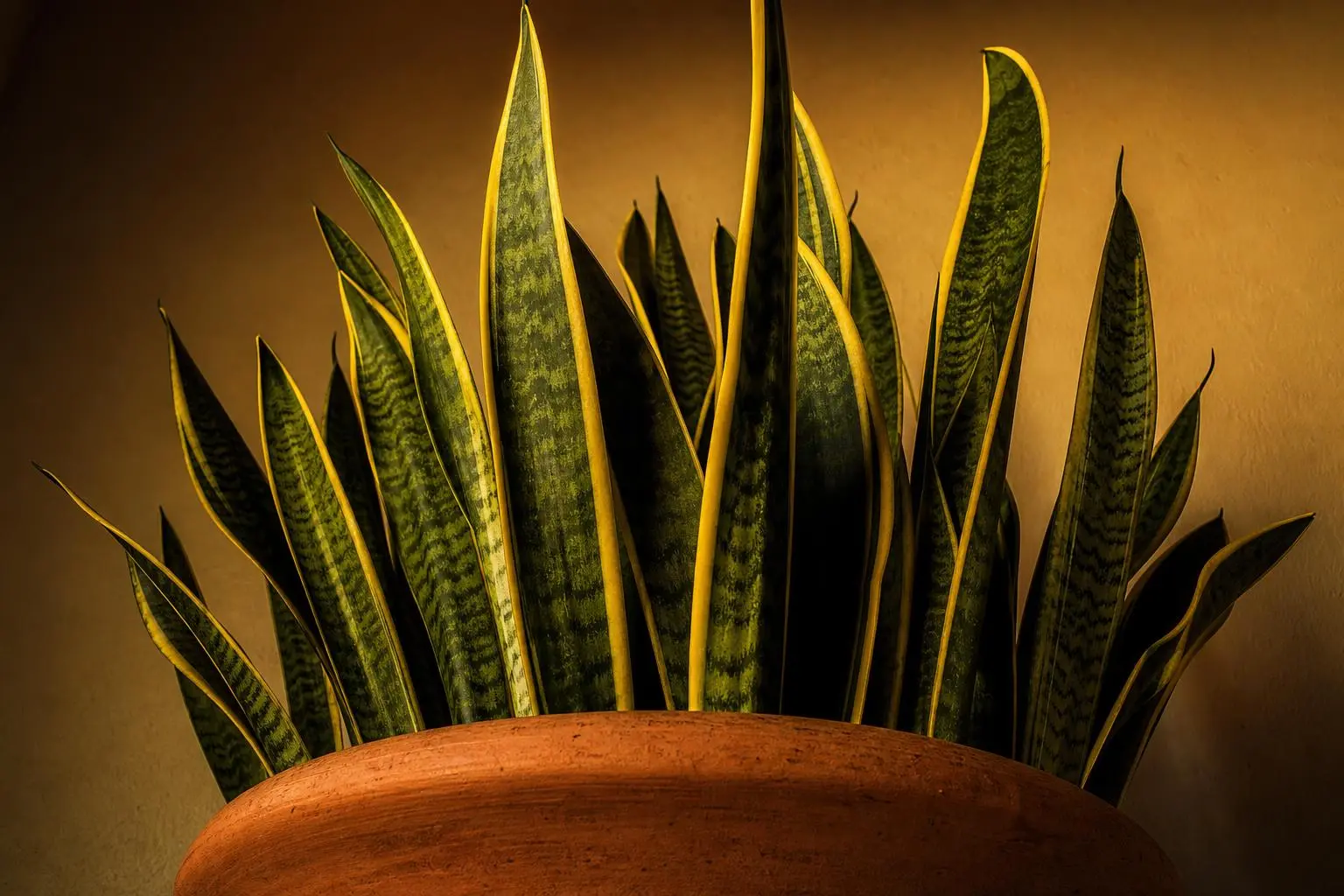
We once moved a Snake Plant to a south-facing window thinking it would love the extra light — instead, its leaves bleached yellow within days. We moved it back to bright indirect light and the new growth came in healthy and green. Lesson learned: always acclimate plants gradually when changing their light exposure.
Prevention
- ✓ Water only when the top 1–2 inches of soil is dry — use the finger test or a moisture meter
- ✓ Ensure every pot has drainage holes and empty saucers after watering
- ✓ Use a well-draining potting mix appropriate for your plant type
- ✓ Fertilize monthly during the growing season with a balanced houseplant fertilizer at half strength
- ✓ Monitor light conditions and adjust plant placement as seasons change
- ✓ Quarantine new plants for 2 weeks to prevent pest-related yellowing from spreading
Frequently Asked Questions
Should I remove yellow leaves from my plant?
Can yellow leaves turn green again?
Why are only the bottom leaves turning yellow?
Can tap water cause yellow leaves?
How quickly should I act when I notice yellow leaves?
References
Related Problems
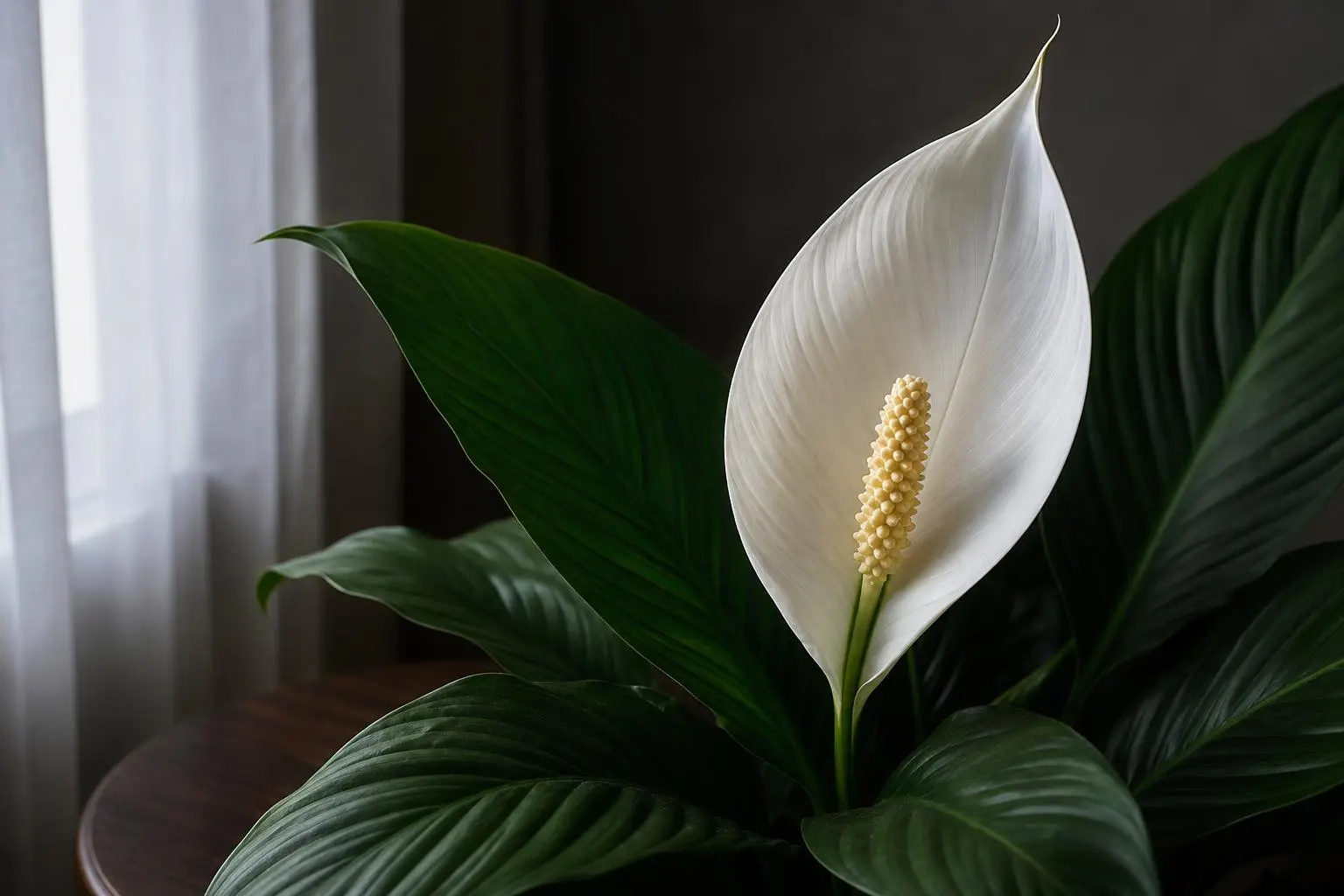
Affected Plants
Related Guides
Symptom Checker
Why Are My Plant Leaves Turning Yellow?
Yellowing leaves are one of the most common houseplant problems. The good news is that most causes are easy to identify and fix once you know what to look for.