
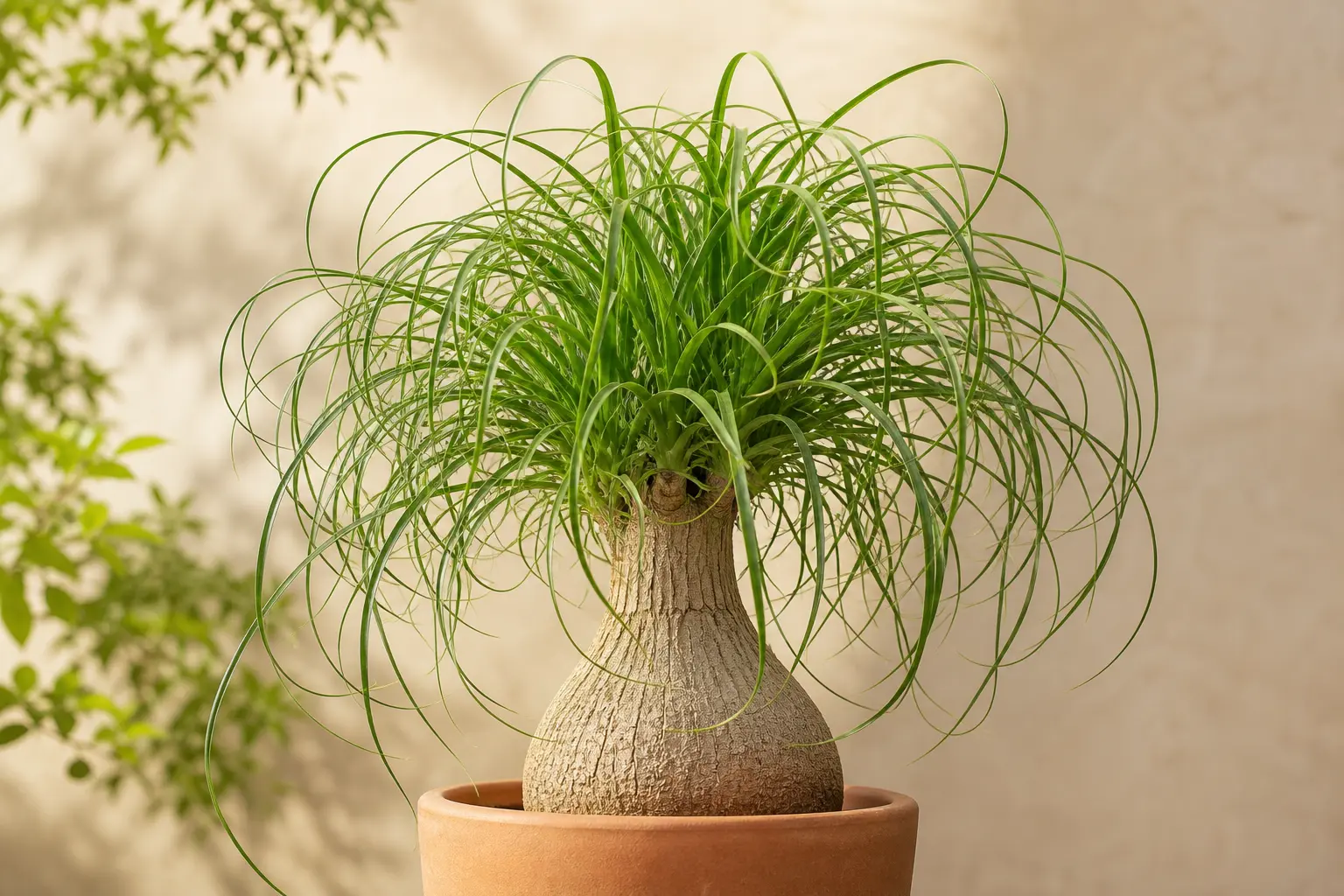
Ponytail Palm
Beaucarnea recurvata
Also known as: Elephant Foot Palm, Bottle Palm, Beaucarnea recurvata
Last updated: Sep 10, 2026
Bright indirect to direct sunlight
Every 2–4 weeks — let soil dry completely
20–50% (tolerates dry air)
60–80°F (15–27°C)
Cactus or succulent mix with extra perlite
Diluted cactus fertilizer 2–3 times per year
Beginner friendly
Pet safe
Seasonal Care Calendar
| Season | Watering | Fertilizer | Notes |
|---|---|---|---|
| Spring | Every 2–3 weeks | Once in early spring at half strength | Active growth resumes. Best time to repot if needed. Inspect for pups. |
| Summer | Every 2–4 weeks | Once mid-summer at half strength | Peak growing season. Can summer outdoors in full sun — acclimate gradually. |
| Fall | Every 4–6 weeks | None | Reduce watering as growth slows. Bring outdoor specimens inside before 50°F nights. |
| Winter | Every 6–8 weeks | None | Dormant period. Water minimally. Cool + wet is dangerous — keep dry. |
Detailed Care Guide
Everything you need to know to keep your Ponytail Palm thriving.
Light Requirements
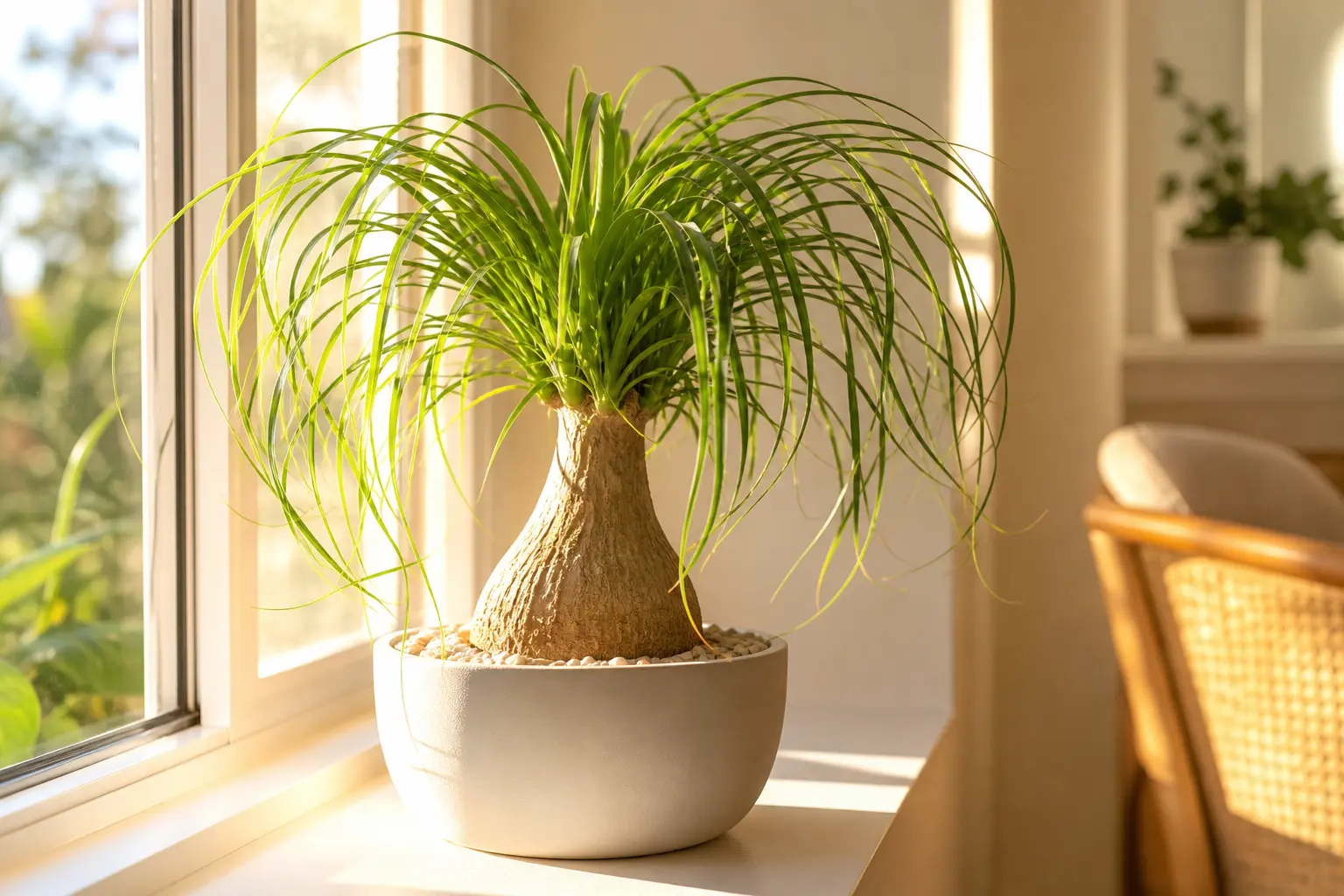
Ponytail Palm is one of the most light-tolerant houseplants you can grow. It thrives in bright indirect light but also handles full direct sunlight with no complaint — a true rarity among indoor plants. South or west-facing windows are ideal, where the plant can soak up 6+ hours of bright light per day. Outdoors, it grows in full Mexican sun, so you cannot easily overdo it indoors.
That said, lower light is also tolerated, though growth slows dramatically and the leaves may become longer, thinner, and droopier as they reach for available light. In very dim conditions, the plant can survive for months but will not produce new growth and may eventually weaken. If you have a Ponytail Palm in low light and want to brighten it up, transition gradually — moving directly from a dark corner to a sunny window can scorch leaves that have adapted to dim conditions. Increase exposure over 1–2 weeks.
The caudex (the swollen base) is what makes this plant special, and bright light encourages it to fatten up over time. Indoors, plants in bright light develop noticeably wider caudexes than those in dim spots. Rotate the pot every few weeks so all sides receive equal light, preventing the leaf crown from leaning toward the window. If you have access to outdoor space in summer, Ponytail Palm responds beautifully to full sun on a patio or deck — just acclimate gradually over 7–10 days to prevent leaf burn.
Watering
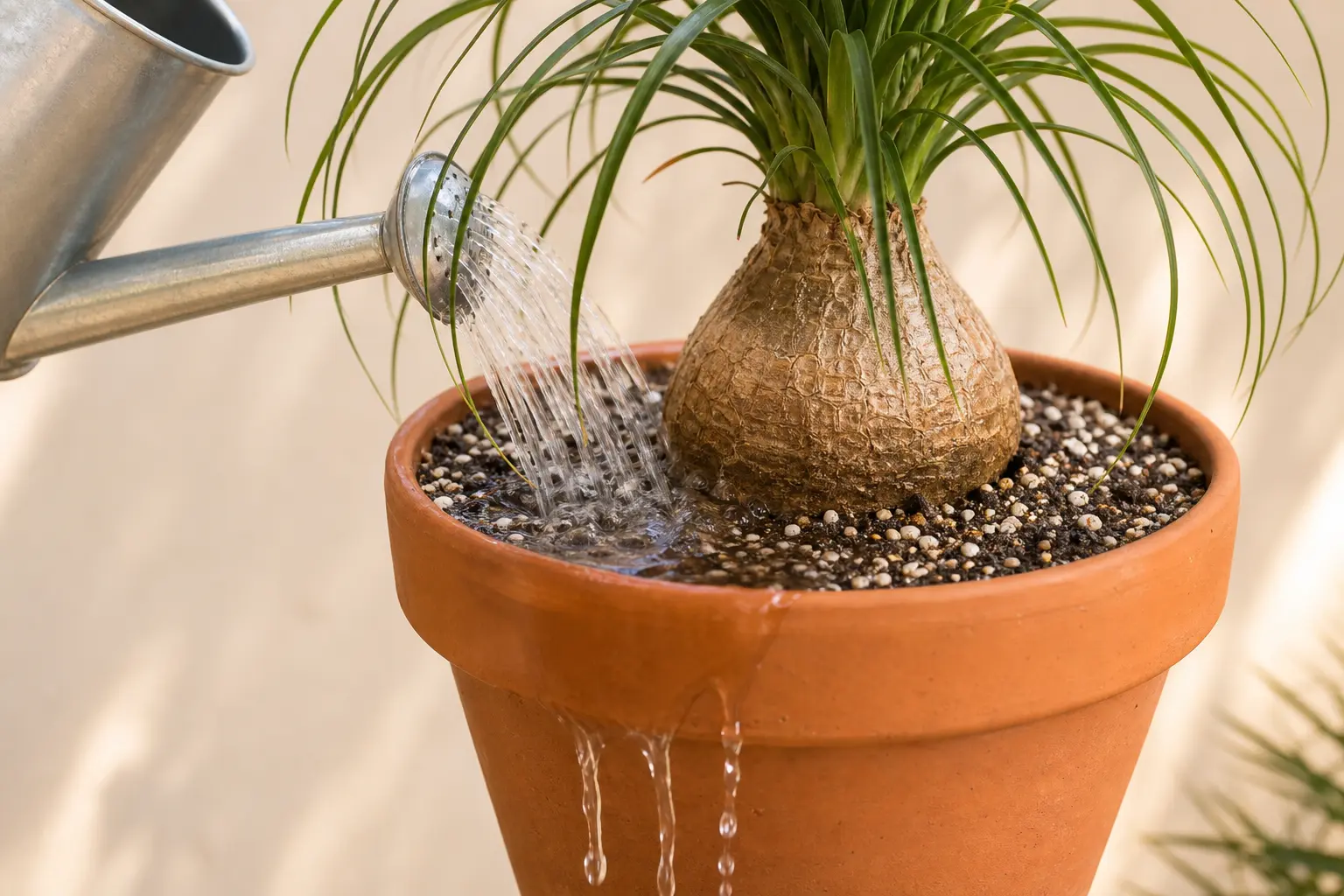
Ponytail Palm is essentially a succulent and stores significant water in its swollen caudex. **Severe overwatering is the only common way to kill this plant.** Water deeply but infrequently — typically every 2–4 weeks during the growing season and every 4–8 weeks in winter. The soil should dry out completely between waterings, including the deeper layers around the roots. When you do water, soak the soil thoroughly until water runs from the drainage holes, then let everything dry out completely before watering again.
The single best test is to insert your finger 2–3 inches into the soil — if you feel any moisture at all, wait. A wooden chopstick or moisture meter inserted to the bottom of the pot can help you check the deeper soil. The caudex itself is your secondary indicator: a firm, plump caudex means the plant is well-hydrated, while a slightly soft, wrinkled caudex means it is time to water. The plant uses caudex water reserves during dry spells, much like a camel uses its hump.
Overwatering symptoms include yellowing leaves starting at the tips, soft wrinkled caudex (paradoxically — soggy roots cannot absorb water properly), and in severe cases, rot at the base where the trunk meets the soil. If you suspect overwatering, stop watering immediately, let the soil dry completely, and consider unpotting to inspect the roots. Brown, mushy, or smelly roots should be trimmed off, and the plant repotted in fresh dry succulent mix. Underwatering is much rarer and shows as crispy brown leaf tips and a deeply wrinkled caudex — but the plant recovers quickly once watered.
Humidity
Ponytail Palm thrives in dry household air and has no humidity requirements beyond what a typical home naturally provides. Humidity levels of 20–50% are perfect, making this plant a great choice for arid climates, dry winter homes with central heating, and rooms with strong air conditioning where most tropical plants suffer. You will never need a humidifier, pebble tray, or any humidity-boosting setup for this species.
In fact, high humidity can cause problems for Ponytail Palm. Combined with overwatering, humid conditions promote fungal issues, leaf spotting, and rot in the caudex. If you live in a very humid climate (60%+), ensure excellent air circulation around the plant and water more sparingly than you would otherwise. Avoid placing Ponytail Palm in steamy bathrooms, near humidifiers, or in densely packed plant collections where air movement is limited.
The long, thin leaves benefit from occasional dusting with a soft cloth or gentle rinse to keep them photosynthesizing efficiently. Misting is unnecessary and not recommended — moisture sitting in the dense leaf crown can encourage fungal issues at the growing point. Simply wipe individual leaves once a month or take the plant to the sink for a gentle rinse, allowing it to drain and dry completely afterward. Good airflow, especially around the caudex, is far more important than humidity for this plant.
Temperature
Ponytail Palm prefers warm temperatures between 60–80°F (15–27°C) — typical of most homes — but it tolerates a wider range than most houseplants. It can handle temperatures as low as 50°F (10°C) without issue and will survive brief dips into the upper 40s. Heat above 80°F is also tolerated well, especially with adequate light, since the plant evolved in the warm semi-arid regions of Mexico.
Despite this hardiness, avoid exposing Ponytail Palm to freezing temperatures or extended cold below 45°F (7°C). Frost will cause significant leaf damage and can rot the caudex if temperatures drop low enough. If you summer the plant outdoors, bring it inside well before nighttime lows reach 50°F (10°C), and acclimate gradually to indoor conditions over 5–7 days. Sudden temperature changes — particularly from warm outdoors to cool air-conditioned indoors — can shock the plant and cause leaf yellowing.
The plant tolerates dry forced-air heating in winter and aggressive air conditioning in summer better than virtually any other houseplant. Drafts are not a major concern. The only environmental factor to watch carefully is the combination of cold + wet, which is the fastest way to kill a Ponytail Palm. In winter, water sparingly (once every 4–8 weeks) and ensure the plant is not sitting in a cold drafty location while the soil is moist. Warm + dry or cool + dry are both safe; cool + wet is dangerous.
Soil
Ponytail Palm requires extremely well-draining soil — this is the most important factor in keeping it healthy. Use a commercial cactus or succulent mix as the base, then amend it with extra perlite, pumice, or coarse sand at a roughly 2:1 ratio (cactus mix to amendments). The final blend should feel gritty and loose, drying within 7–14 days after a thorough watering. Standard potting soil retains too much moisture and is the leading cause of root rot in this species.
A good DIY recipe is 50% commercial cactus mix, 25% perlite or pumice, and 25% coarse sand or fine gravel. This combination drains rapidly while providing the small amount of moisture and nutrients the plant needs. Adding a handful of horticultural charcoal helps prevent the mix from souring over time. Avoid moisture-retaining additives like peat moss or coco coir as the primary base, though small amounts mixed into a gritty blend are acceptable.
Use a terracotta or unglazed ceramic pot whenever possible. The porous walls wick excess moisture away from the soil, providing additional drying capacity that perfectly suits this species. Ensure the pot has at least one large drainage hole — multiple holes are even better. Choose a pot only slightly wider than the caudex and root ball; oversized pots hold excess wet soil that the small root system cannot use, dramatically increasing rot risk. Ponytail Palm grows so slowly that it can stay in the same pot for 4–7 years without issue.
Fertilizer
Ponytail Palm is one of the lightest feeders in the houseplant world. It evolved in nutrient-poor desert soils and grows extremely slowly, so it needs minimal fertilization. A diluted cactus or succulent fertilizer applied 2–3 times per year — once in spring and once or twice in summer — is more than enough. Use the fertilizer at half the recommended strength to avoid burning the roots.
Never apply fertilizer to dry soil — always water thoroughly first, then follow with the diluted fertilizer solution. This prevents fertilizer salts from sitting on dry roots and causing chemical burn that shows up as brown leaf tips. If you notice white crusty deposits on the soil surface or pot rim, this is salt buildup. Flush the pot thoroughly with plain water (run water through the soil for 60 seconds) once a year to leach out accumulated salts.
Do not fertilize in fall or winter when growth slows or stops entirely. Excess nutrients during the dormant period can disrupt the plant's natural rest cycle and cause weak growth. Many growers find that with a well-draining soil mix and yearly flushing, Ponytail Palm thrives with even less fertilization than recommended — once or twice per year is often sufficient. The slow growth rate means rapid feeding is unnecessary and counterproductive.
Repotting
Ponytail Palm rarely needs repotting and actually prefers to be slightly root-bound, which encourages the caudex to swell. Repot only every 4–7 years, or when you see roots emerging from drainage holes and the plant clearly outgrows its container. Spring is the ideal time, when the plant is entering active growth. Choose a new pot only 1–2 inches wider in diameter — going significantly larger holds excess wet soil that the small root system cannot use, leading to rot.
Wear gloves and handle the plant carefully — the leaves have small serrated edges that can give paper cuts. Gently tip the pot on its side and ease the root ball out, supporting the caudex with one hand. Inspect the roots and trim any dark, mushy, or smelly sections with clean scissors. Healthy Ponytail Palm roots are firm, tan to white, and fibrous. Allow the root ball to air-dry for 1–2 days if you trimmed any roots, which lets cuts callus over before contact with damp soil.
Fill the new pot with fresh dry cactus mix and position the plant so the caudex sits at the same depth as before — never bury the swollen base. Burying the caudex causes immediate rot, which often kills the plant. Water lightly to settle the soil, then wait 7–10 days before the first thorough watering to give any disturbed roots time to heal. Place in bright indirect light during the recovery period, gradually returning to its usual sunny spot over 1–2 weeks.
Our Experience
I water my Ponytail Palm exactly once every three weeks year-round in my office — no schedule changes needed because the building maintains stable temperature and humidity. The caudex has visibly fattened up over five years, which tells me the plant is happy.
— Office desk plant, stable HVAC environment, south-facing window
I almost killed my first Ponytail Palm by treating it like a houseplant and watering weekly. The leaves yellowed and the caudex got soft. Now I treat it like a cactus — deep watering only when soil is bone dry — and it has thrived for eight years.
— Overwatering recovery, lesson learned, switched to cactus mix
I move my Ponytail Palm outdoors to a sunny patio every summer (after acclimating it for a week) and bring it back inside in early September. The full sun exposure produces dramatically more leaves and a thicker caudex than purely indoor specimens.
— Summer outdoor schedule, USDA Zone 7a, full sun acclimation
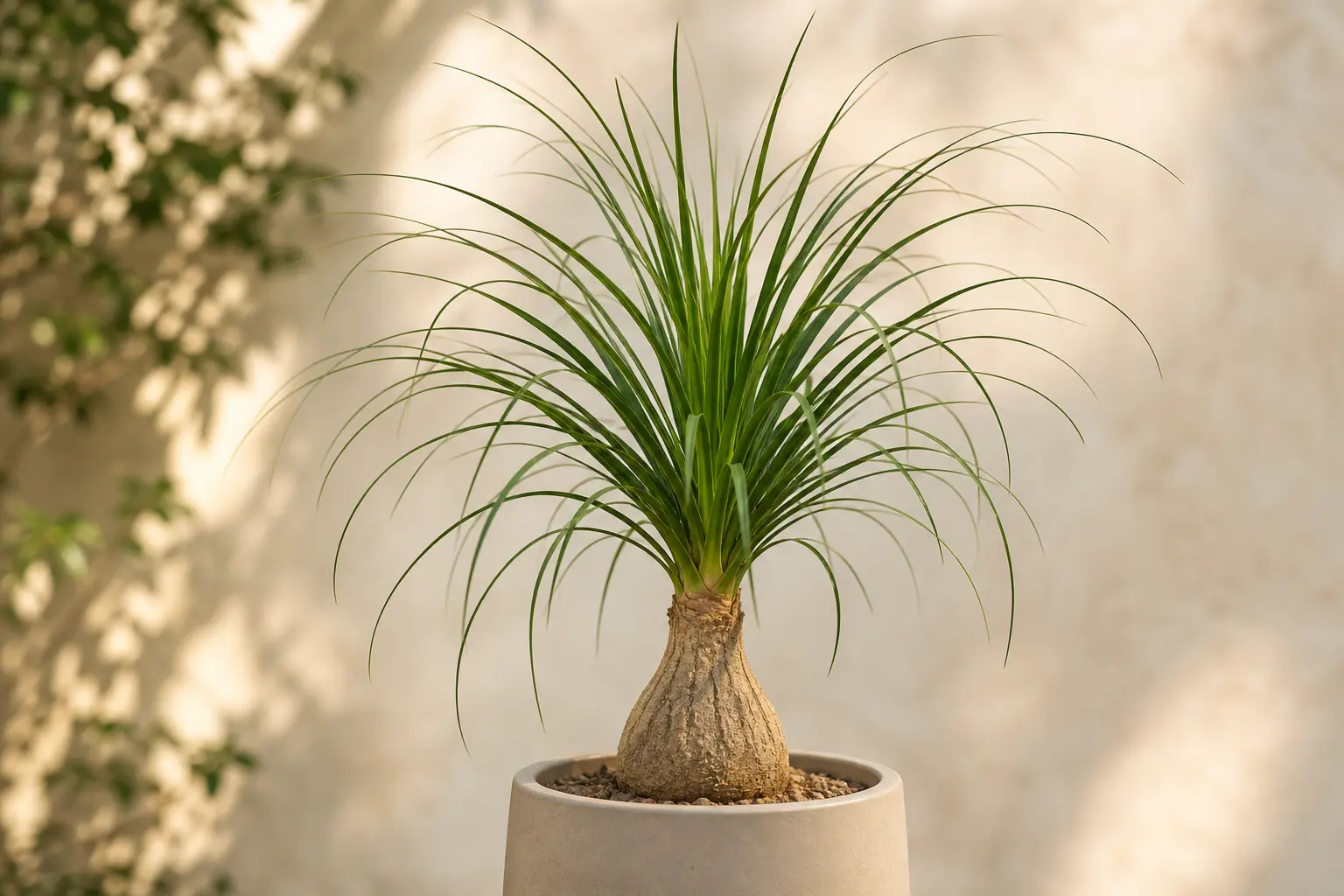 Guatemalensis
 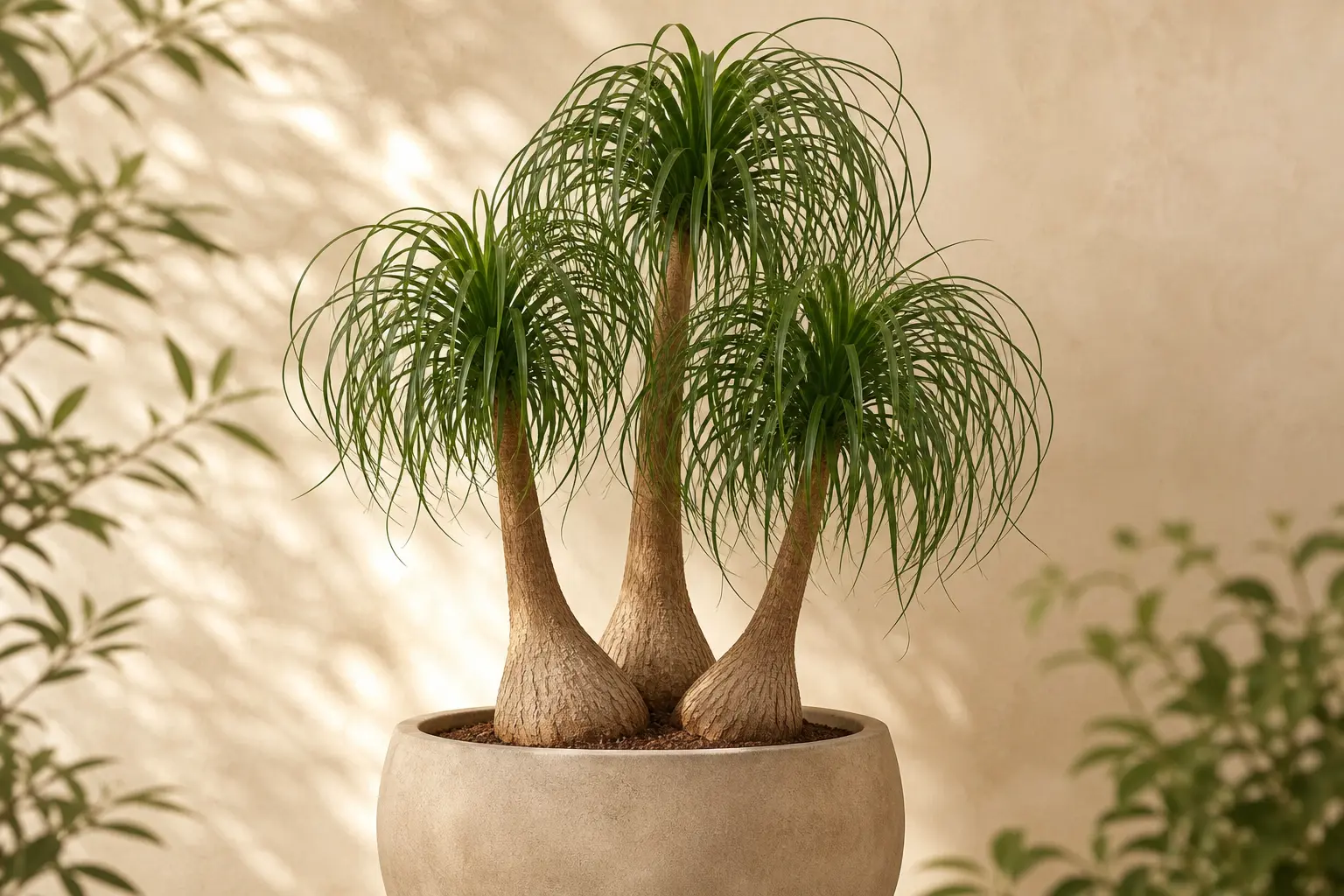 Multi Stem
 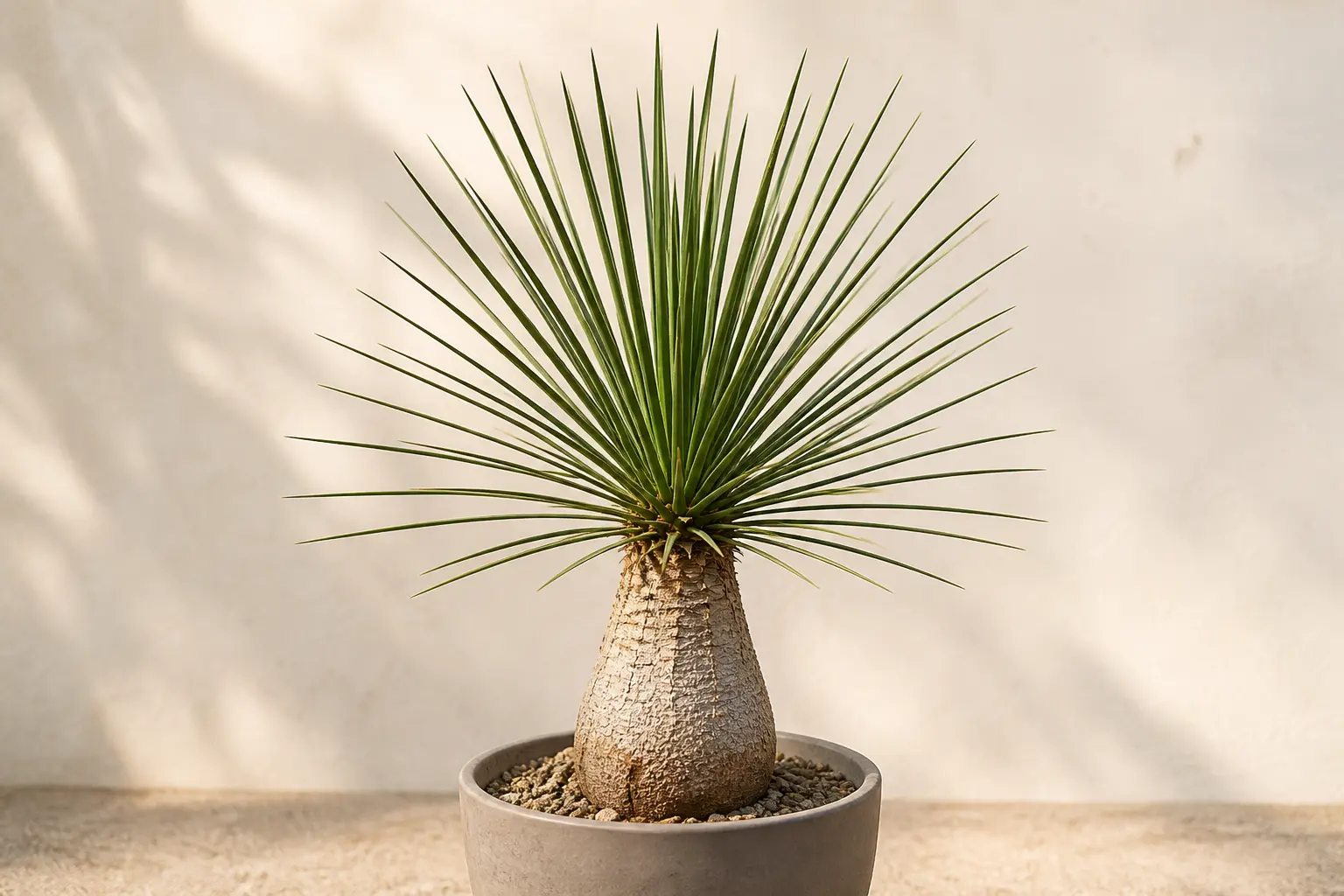 Stricta
 Compare Varieties
Explore different cultivars side-by-side and find the best match for your space.
Browse all varieties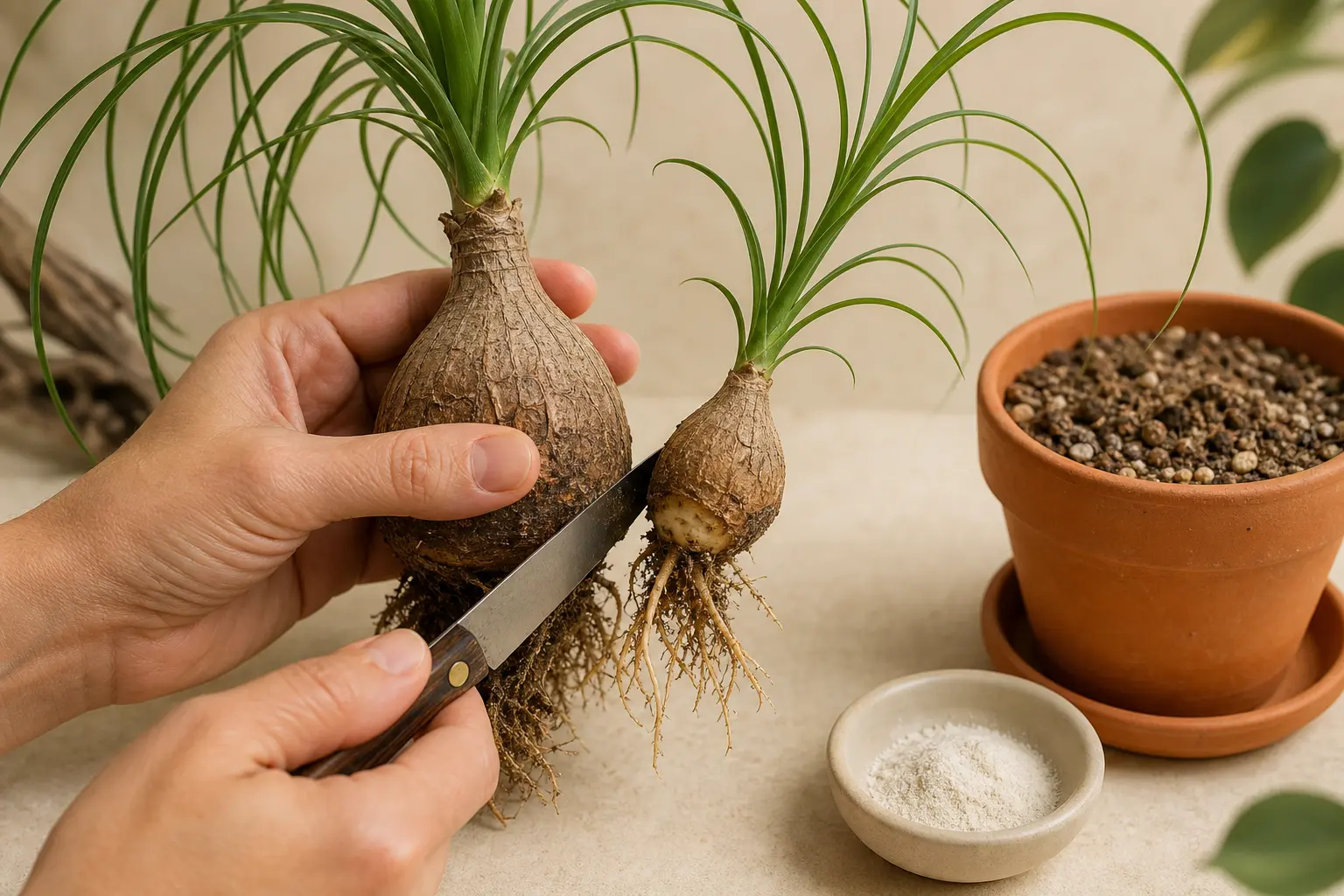
Propagation Guide
Step-by-step instructions for multiplying your plant collection.
Learn how to propagateFrequently Asked Questions
How often should I water my Ponytail Palm?
Is Ponytail Palm safe for cats and dogs?
Why are my Ponytail Palm leaves turning yellow?
How fast does a Ponytail Palm grow?
Why is the caudex of my Ponytail Palm wrinkled?
Can I grow Ponytail Palm outdoors year-round?
Common Problems
Why Are My Plant Leaves Turning Yellow?
Yellowing leaves are one of the most common houseplant problems. The good news is that most causes are easy to identify and fix once you know what to look for.
Read diagnosis guideHow to Fix an Overwatered Plant
Overwatering kills more houseplants than any other cause. The tricky part? The symptoms — yellowing, wilting, drooping — look just like underwatering. Here's how to tell the difference and fix it.
Read diagnosis guideReferences
- [1] Missouri Botanical Garden. Beaucarnea recurvata Plant Finder
- [2] ASPCA. Ponytail Palm Toxicity (Non-Toxic)
- [3] University of Florida IFAS Extension. Beaucarnea recurvata Fact Sheet
- [4] IUCN Red List. Beaucarnea recurvata Conservation Status
Similar Plants
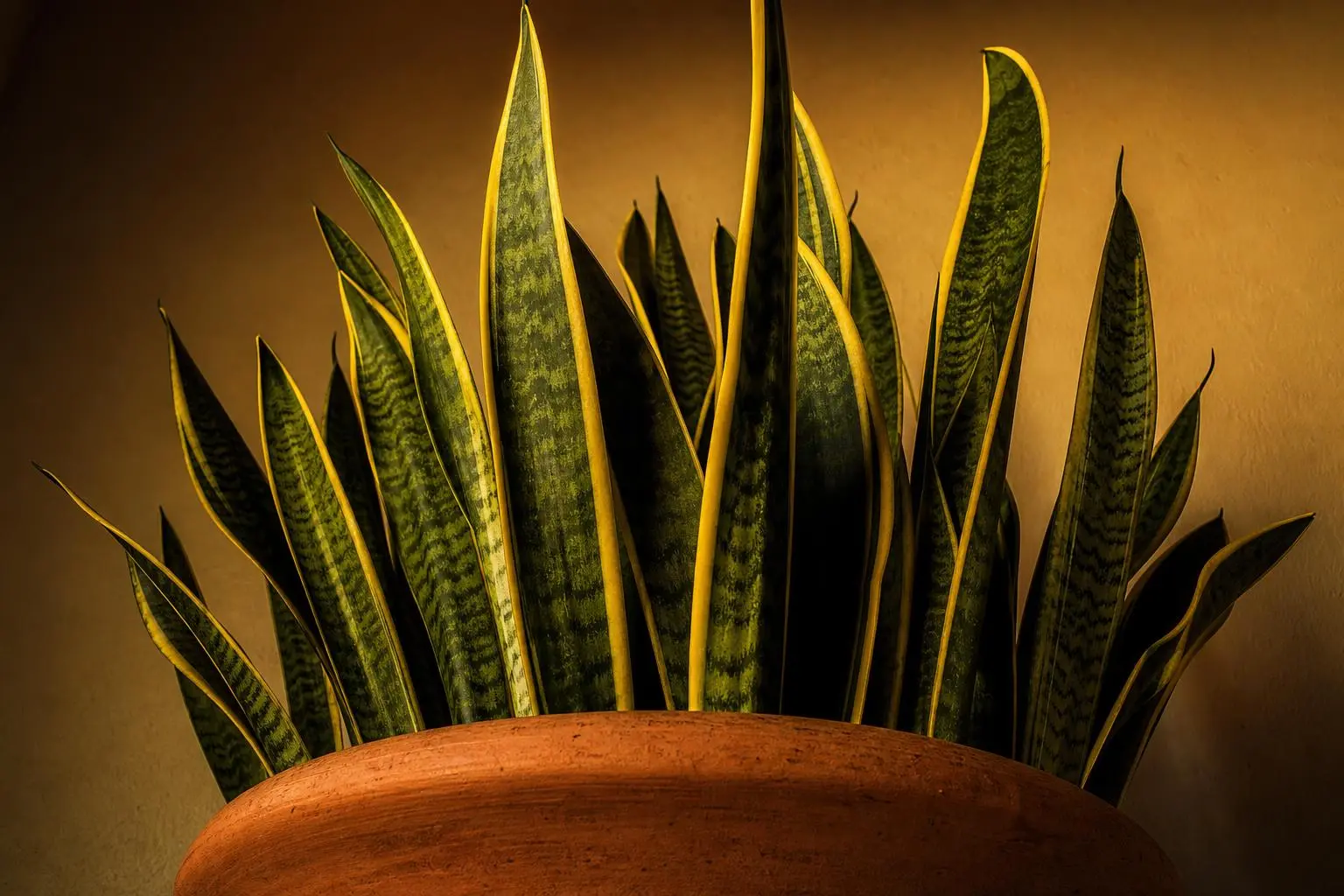
Snake Plant
Dracaena trifasciata
ZZ Plant
Zamioculcas zamiifolia
Jade Plant
Crassula ovata
Aloe Vera
Aloe barbadensis miller