
How to Propagate Ponytail Palm
Ponytail Palm is one of the easiest houseplants to propagate. Here are three reliable methods — choose the one that fits your comfort level and available supplies.
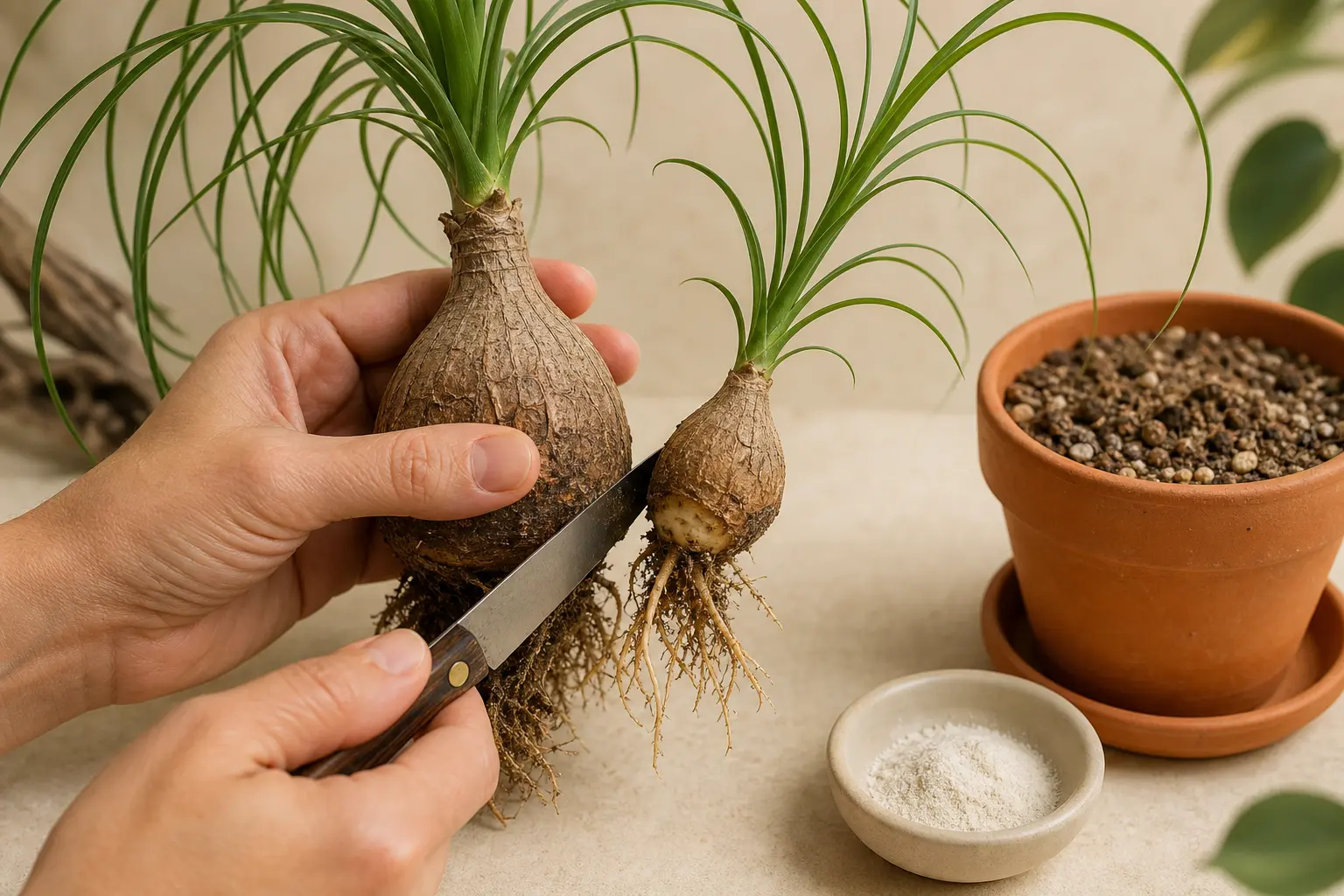
Pup separation method
Mature Ponytail Palms (typically 8+ years old) sometimes produce small offsets called pups that emerge from the side of the caudex. You will need a clean sharp knife, fungicide powder or cinnamon, fresh dry cactus mix, and a small terracotta pot.
- 1 Identify a pup that is at least 4 inches tall with its own visible base swelling.
- 2 In spring, carefully unpot the parent plant and locate where the pup connects to the main caudex.
- 3 Use a clean sharp knife to slice the pup away, including any roots that have formed at its base.
- 4 Dust the cut surfaces on both the parent and pup with cinnamon or fungicide powder to prevent infection.
- 5 Allow the pup to callus in a dry shaded area for 5–7 days before potting.
- 6 Plant the pup in a small pot of dry cactus mix, with the base of the pup at soil level — never bury the swollen base.
- 7 Wait 2–3 weeks before the first light watering to encourage root development.
- 8 Place in bright indirect light at 70–80°F.
Expected timeline: roots establish in 4–8 weeks, new leaves appear in 3–6 months. Success rate: approximately 60–75% with patience.
Success rate: approximately 60–75% with patience.
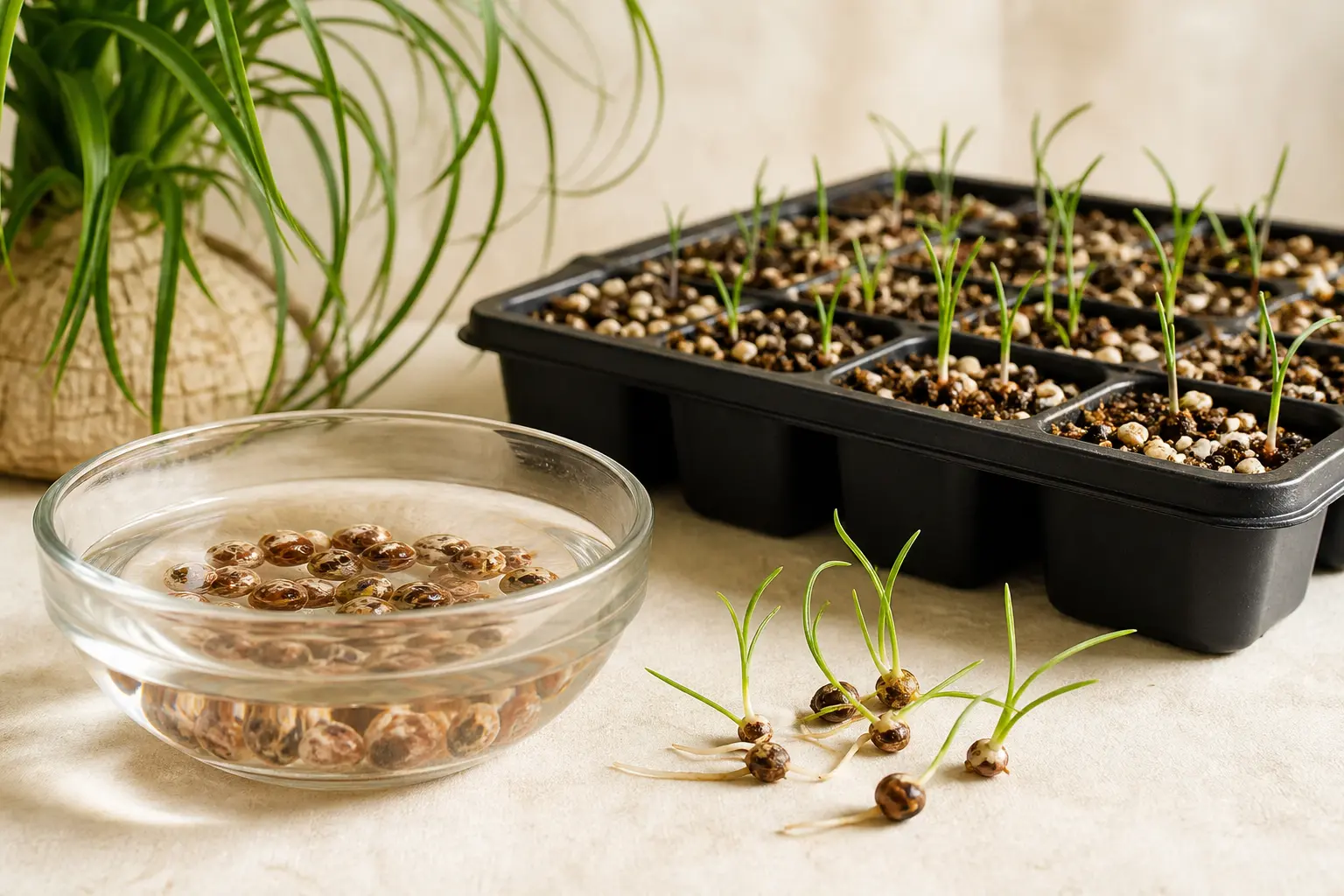
Seed propagation method
You will need fresh Ponytail Palm seeds (available online from specialty growers), a seedling tray with cactus mix, and warmth/light.
- 1 Soak seeds in warm water for 24 hours to soften the hard coat.
- 2 Sow seeds on top of moist cactus mix, lightly pressing them in but not burying.
- 3 Cover with a clear lid or plastic to maintain humidity.
- 4 Place in bright indirect light at 75–85°F (24–29°C).
- 5 Mist lightly only when the surface dries.
- 6 Germination occurs in 3–6 weeks.
- 7 Once seedlings have 2–3 leaves, gradually remove the cover and reduce humidity.
- 8 Transplant to individual small pots when they reach 3–4 inches tall.
Expected timeline: 6 months to a small recognizable plant; 5+ years to a sellable size. Success rate: approximately 40–60% germination from fresh seeds.
Success rate: approximately 40–60% germination from fresh seeds.
Troubleshooting Common Issues
Pup rots after separation
The cut surface was not properly callused before potting, or the pup was watered too soon. Always allow 5–7 days of dry callusing in shade before planting, and wait 2–3 weeks before the first water.
Pup never develops roots
Temperature was too cool or the soil stayed too dry for too long. Maintain 70–80°F bottom warmth (a heat mat helps) and provide very light moisture every 10–14 days after the initial 3-week wait.
Seeds fail to germinate
Old seeds (lose viability quickly), insufficient warmth, or surface dried out. Use only fresh seeds, maintain consistent 75–85°F warmth, and keep the surface lightly moist with a humidity dome.
Propagation Tips
- ✓ Always use clean, sterilized tools to prevent infection
- ✓ Cuttings need bright indirect light — never direct sun
- ✓ Change propagation water every 5–7 days to prevent bacteria
- ✓ Be patient — rooting takes 2–6 weeks depending on the method
- ✓ Spring and summer are the best seasons for propagation