
Ponytail Palm Varieties
A comparison of the most popular Ponytail Palm varieties — learn which one is right for your space and skill level.
| Variety | Key Feature | Care Difficulty | Price Range |
|---|---|---|---|
| Beaucarnea recurvata (Standard) | Single swollen caudex with cascading green leaves up to 3 feet long forming a fountain shape | Easy | Varies |
| Beaucarnea recurvata Multi-Stem | Multiple swollen trunks (2–4) emerging from a shared base, each topped with its own leaf crown | Easy | Varies |
| Beaucarnea guatemalensis | Narrower, straighter leaves with subtle bluish-green tint and more compact upright form | Easy | Varies |
| Beaucarnea stricta | Stiff, narrow, outward-pointing leaves and a sharp architectural silhouette unlike the cascading recurvata | Easy | Varies |
Variety Details
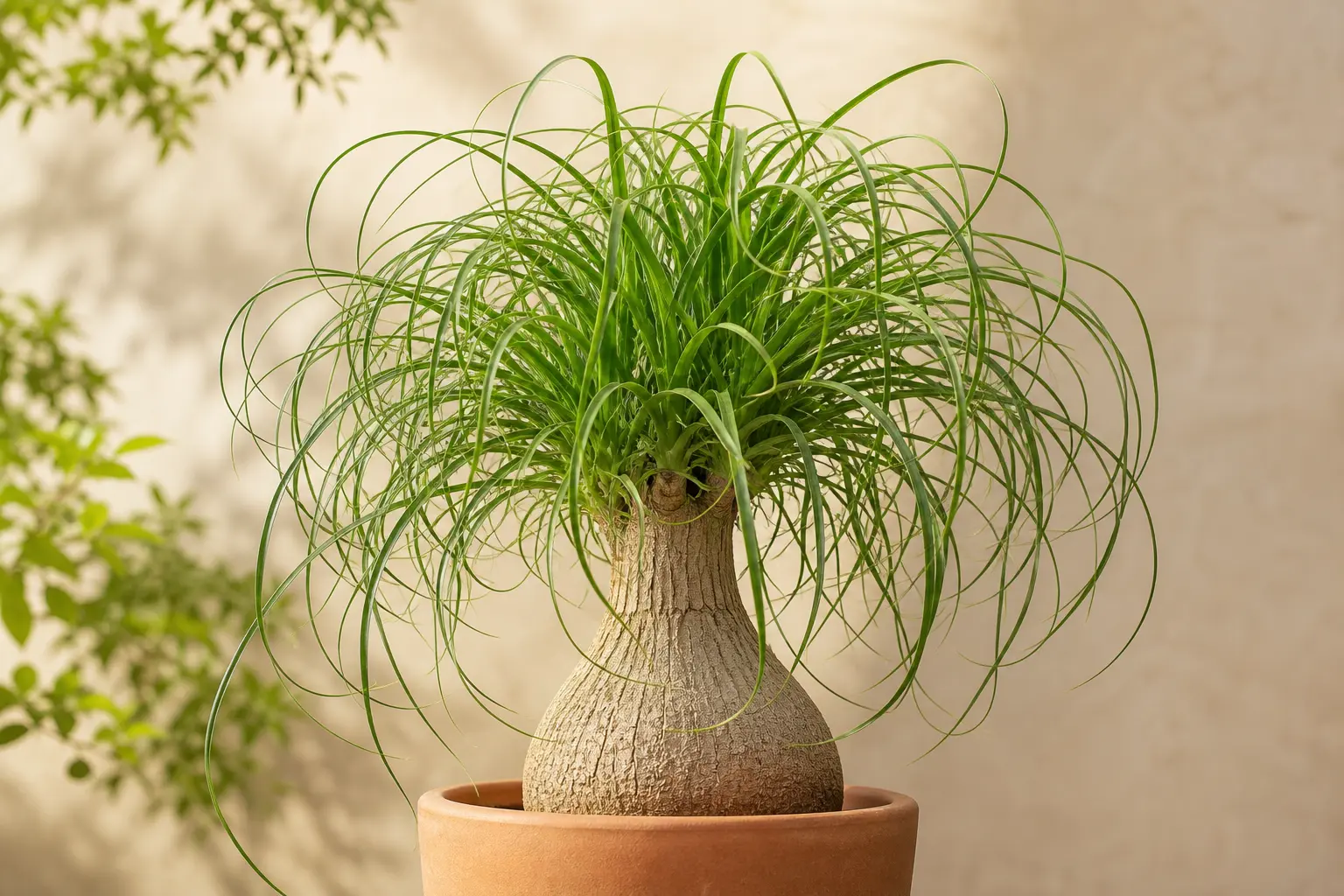
Beaucarnea recurvata (Standard)
The classic Ponytail Palm with a single swollen caudex topped by a fountain of long, thin, curling green leaves. The leaves cascade outward and downward like a ponytail of green hair. Standard Beaucarnea recurvata is the most widely available variety and reaches 3–6 feet indoors over many decades. The bulbous base develops a distinctive corky bark texture as it matures, eventually achieving a beautifully gnarled appearance reminiscent of an old tree.
Distinguishing feature: Single swollen caudex with cascading green leaves up to 3 feet long forming a fountain shape
Care notes: The most forgiving variety — handles a wide range of light from bright indirect to full direct sun. Standard watering and care apply. Excellent first choice for beginners.
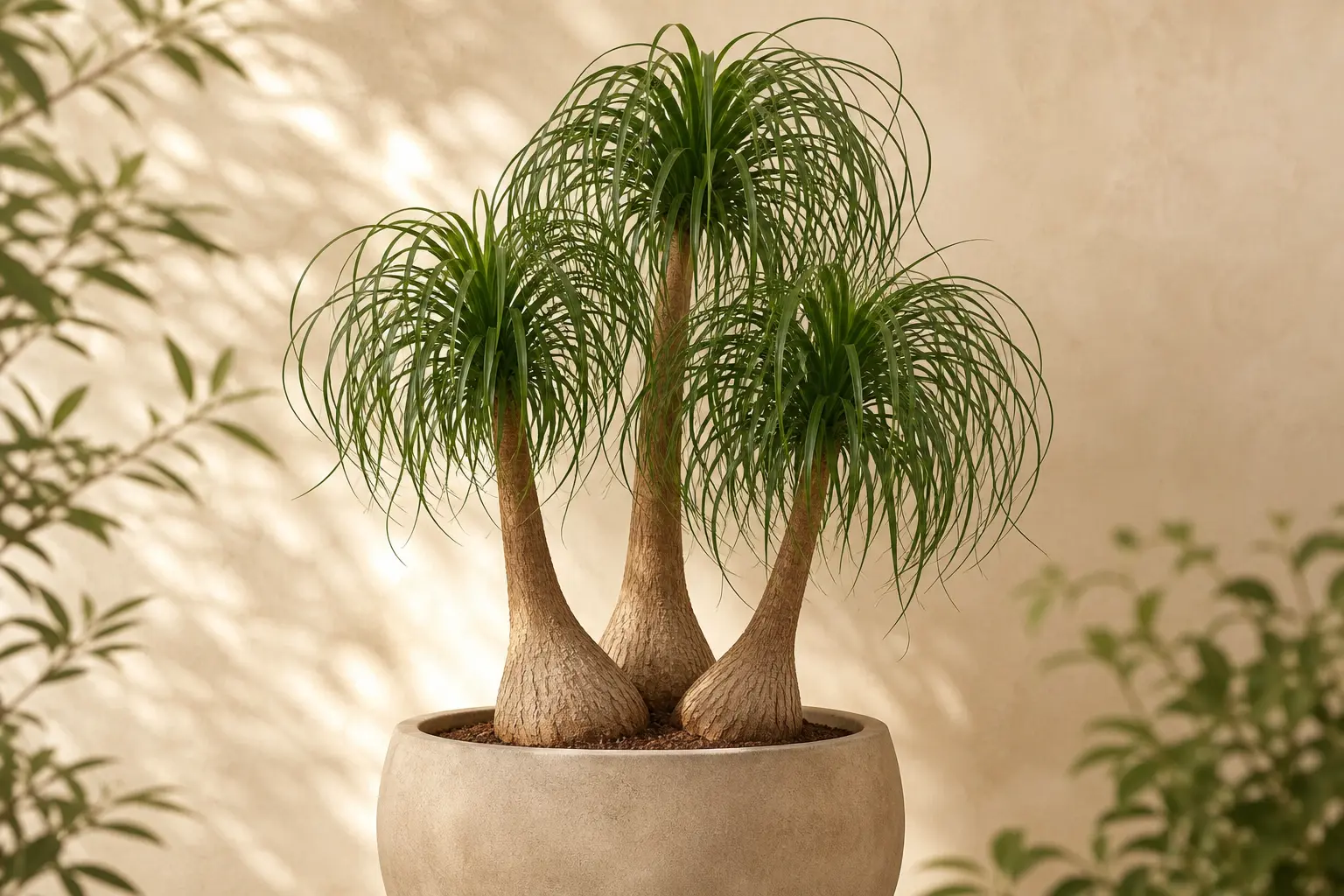
Beaucarnea recurvata Multi-Stem
A trained or naturally branching specimen featuring multiple caudexes (typically 2–4) emerging from a shared base, each with its own crown of leaves. Multi-stem Ponytail Palms are sold at higher price points and create a more sculptural, tree-like appearance. They are popular as floor specimens in modern interiors, where the multiple trunks add visual interest and a Mediterranean or desert aesthetic.
Distinguishing feature: Multiple swollen trunks (2–4) emerging from a shared base, each topped with its own leaf crown
Care notes: Same care as the standard variety, but requires bright direct light to prevent the inner leaves from yellowing due to shading from outer crowns. Rotate frequently for even growth.
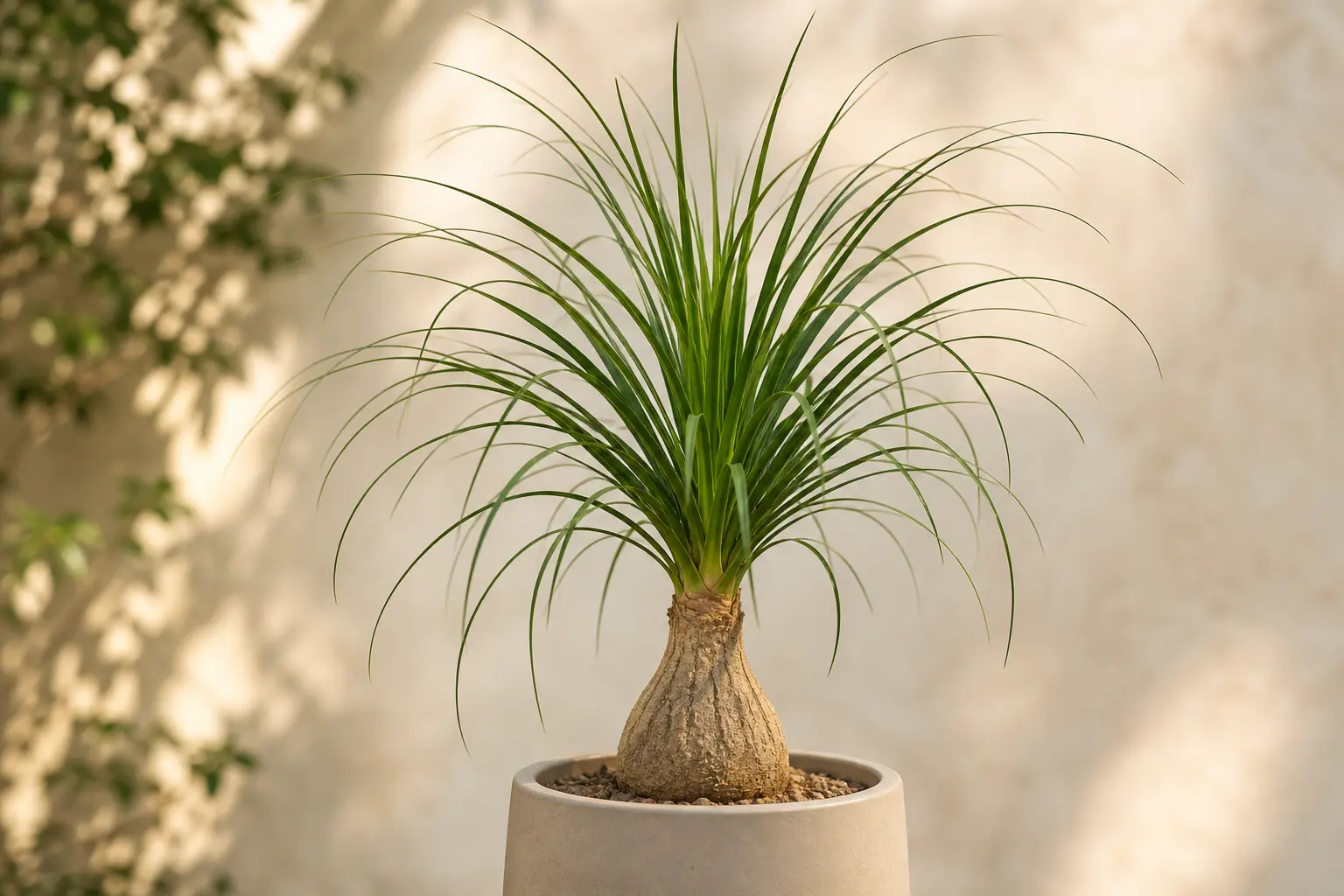
Beaucarnea guatemalensis
A close relative of Beaucarnea recurvata, sometimes sold as the "Guatemalan Ponytail Palm." It features narrower, slightly straighter leaves and a more compact caudex shape. The overall appearance is more upright and less cascading than the standard variety. This species typically stays smaller than recurvata, making it suitable for smaller spaces. The leaves often have a subtle bluish-green tint compared to the bright green of recurvata.
Distinguishing feature: Narrower, straighter leaves with subtle bluish-green tint and more compact upright form
Care notes: Slightly more cold-sensitive than Beaucarnea recurvata — keep above 55°F at all times. Otherwise care is identical: bright light, infrequent deep watering, and well-draining soil.
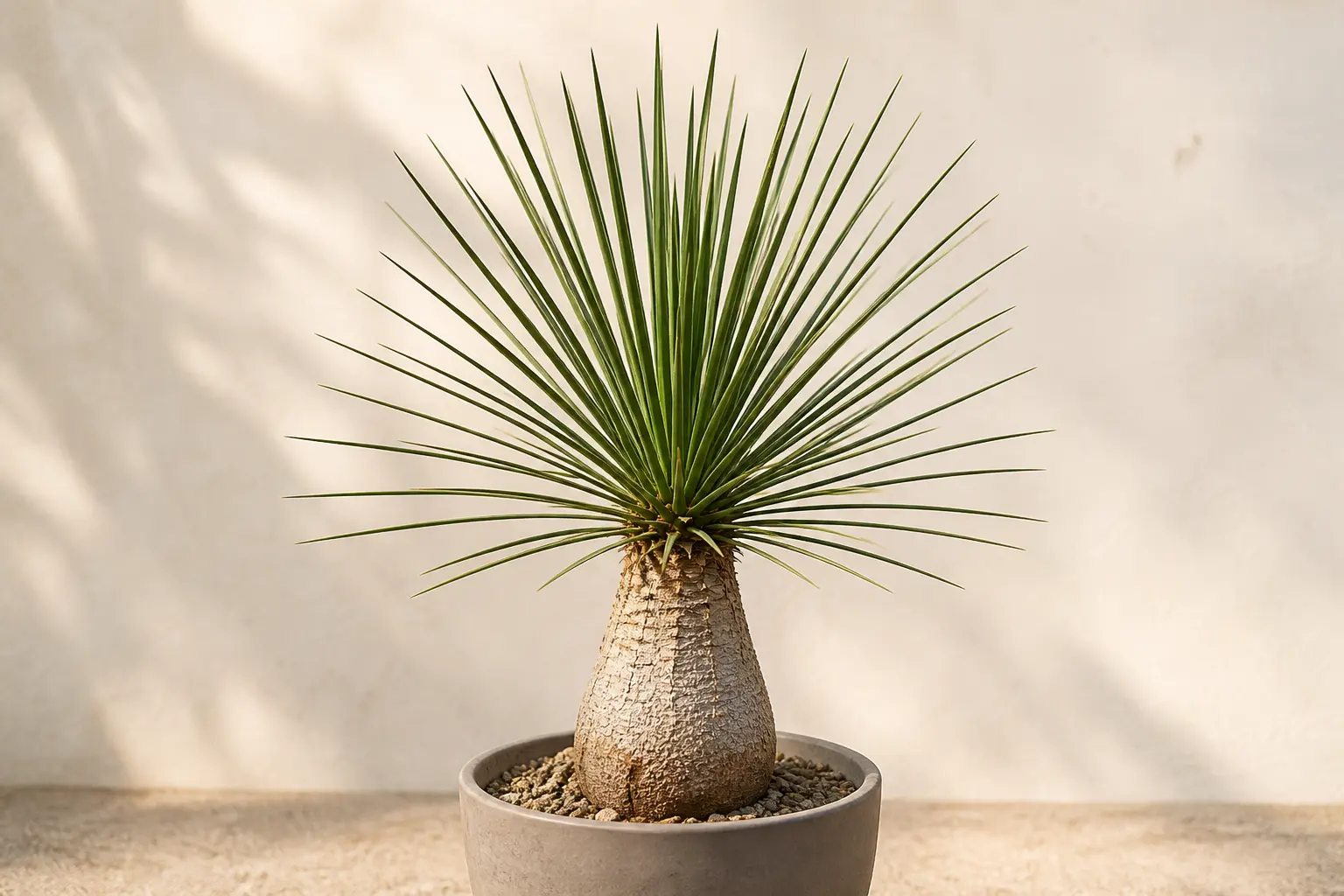
Beaucarnea stricta
A rare relative with even narrower, stiffer, more upright leaves that point outward rather than cascading. The caudex is similar to recurvata but the overall silhouette is sharper and more architectural. Beaucarnea stricta is sometimes available from specialty growers and collectors. It has a striking sculptural quality and is often grown as a bonsai-style specimen due to its compact upright form.
Distinguishing feature: Stiff, narrow, outward-pointing leaves and a sharp architectural silhouette unlike the cascading recurvata
Care notes: More tolerant of dry air and drought than recurvata. Excellent in xeric or desert-style interiors. Requires bright direct light to maintain its upright leaf posture — low light causes leaves to droop unattractively.