
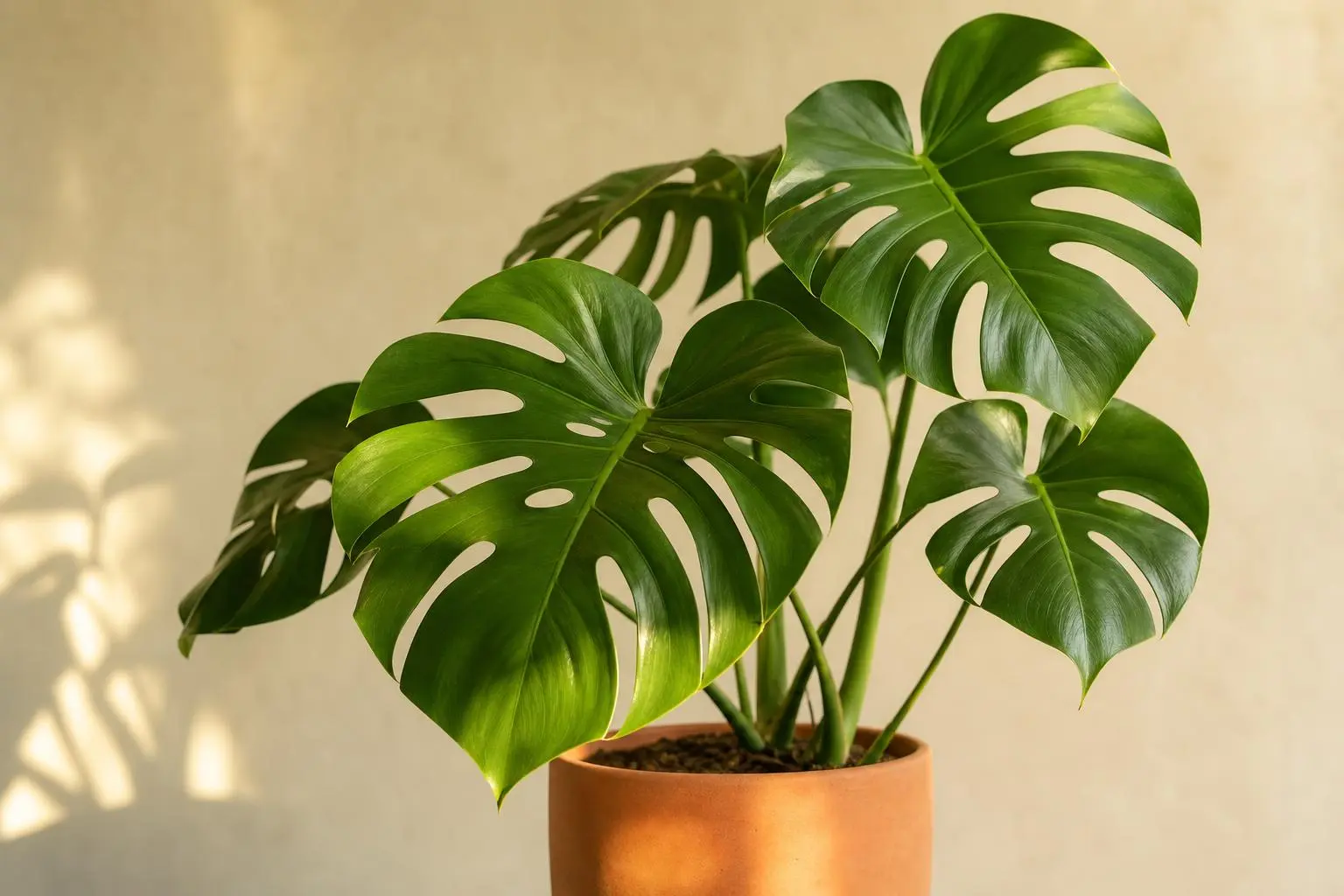
Monstera Deliciosa
Monstera deliciosa
Also known as: Swiss Cheese Plant, Split-Leaf Philodendron, Mexican Breadfruit, Windowleaf
Last updated: Sep 10, 2026
Bright indirect light
When top 2 inches of soil are dry
60–80%
65–85°F (18–30°C)
Well-draining aroid mix (potting soil + perlite + orchid bark)
Balanced liquid NPK 20-20-20, monthly in spring/summer
Beginner friendly
Toxic to pets
Toxic to Pets
Contains insoluble calcium oxalate crystals. If chewed or ingested, these needle-like crystals penetrate oral tissues causing intense burning, swelling of lips and tongue, excessive drooling, vomiting, and difficulty swallowing. Keep away from curious cats, dogs, and small children.
Source: ASPCA Toxic Plant List
Seasonal Care Calendar
| Season | Watering | Fertilizer | Notes |
|---|---|---|---|
| Spring | Every 7–10 days | Start monthly feeding | Begin repotting if needed. Resume regular watering schedule. |
| Summer | Every 7–10 days | Monthly feeding | Active growth period. Can move outdoors to shaded area. Check for pests. |
| Fall | Every 10–14 days | Reduce to every 6 weeks | Growth slows. Reduce watering frequency. Stop fertilizing by late fall. |
| Winter | Every 14–21 days | None | Dormant period. Keep away from cold drafts and heating vents. Mist pole if using. |
Detailed Care Guide
Everything you need to know to keep your Monstera Deliciosa thriving.
Light Requirements
Monstera deliciosa thrives in bright, indirect light — the kind you'd find near an east- or north-facing window, or a few feet back from a south- or west-facing one. In its native Central American rainforest, it grows as a forest-floor juvenile that climbs toward dappled sunlight filtering through the canopy, so it evolved to love brightness without direct exposure.
Direct afternoon sun will scorch the leaves, causing bleached patches and crispy brown edges. On the other hand, very low light won't kill your Monstera quickly, but growth will stall and new leaves will be smaller, darker, and lack fenestrations (those iconic splits and holes). A good rule of thumb: if you can read a book comfortably in the spot without turning on a lamp, your Monstera will be happy there.
If your Monstera is leaning hard toward the window, it's reaching for more light. Rotate the pot a quarter turn each week to encourage even growth. In northern climates during winter, you may need to move it closer to the window or supplement with a grow light for 12–14 hours a day.
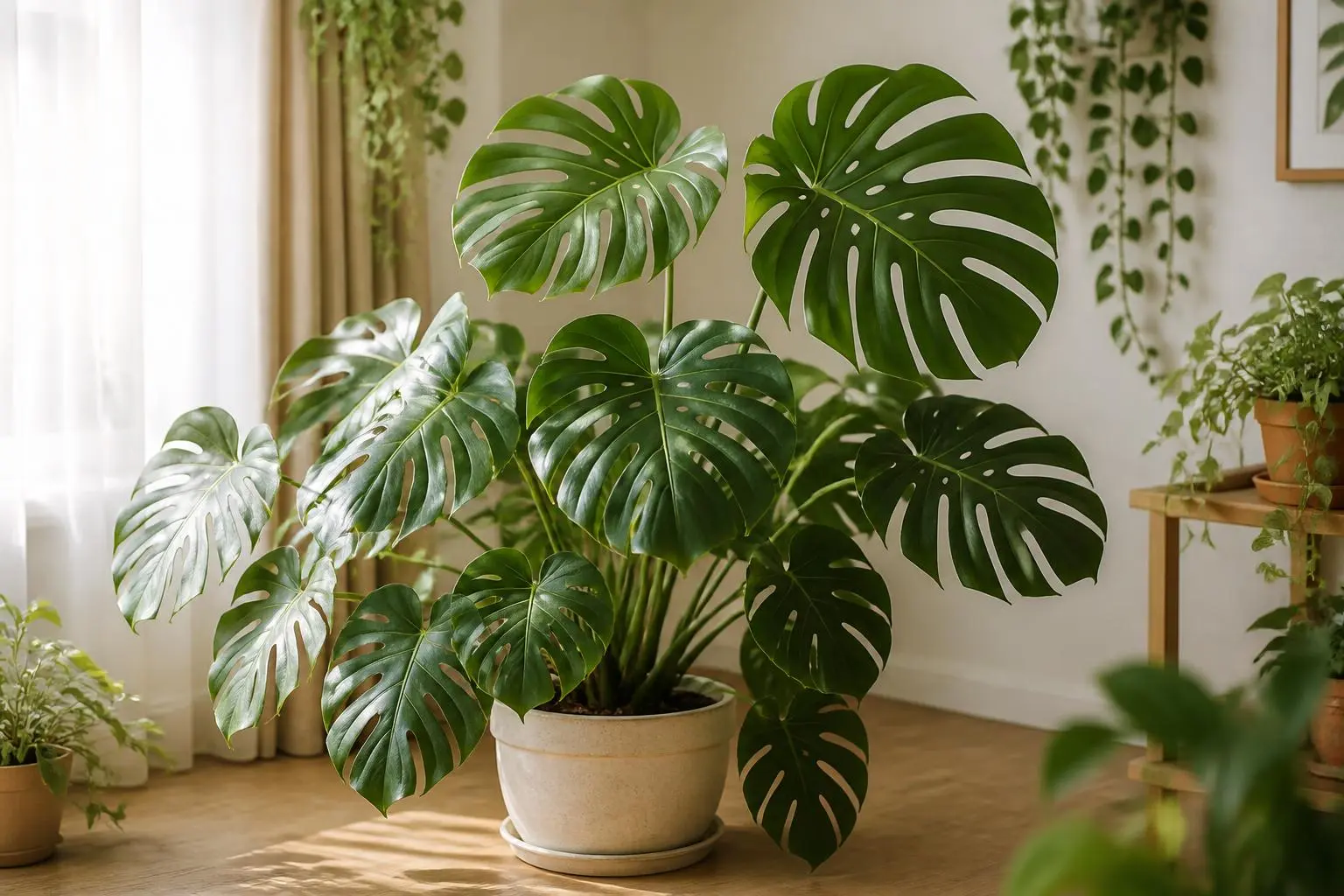
Watering
The single most important rule for Monstera care: wait until the top 2 inches of soil are dry before watering. Overwatering is the #1 killer of Monstera deliciosa — far more dangerous than underwatering.
In spring and summer (the active growing season), this typically means watering every 7–10 days. In fall and winter, when growth slows, cut back to every 14–21 days. Always check the soil with your finger rather than following a rigid schedule — pot size, humidity, and temperature all affect how quickly the soil dries out.
When you do water, give it a thorough soak until water runs freely from the drainage holes. Discard any water that collects in the saucer after 15 minutes — Monstera roots sitting in water will rot. Use room-temperature water; cold water shocks the roots.
Signs of overwatering: leaves turning yellow (especially lower ones), soft mushy stems, soil that stays wet for days, and a sour smell from the pot. Signs of underwatering: dry crispy leaf edges, drooping leaves that perk up after watering, and soil pulling away from the pot edges.
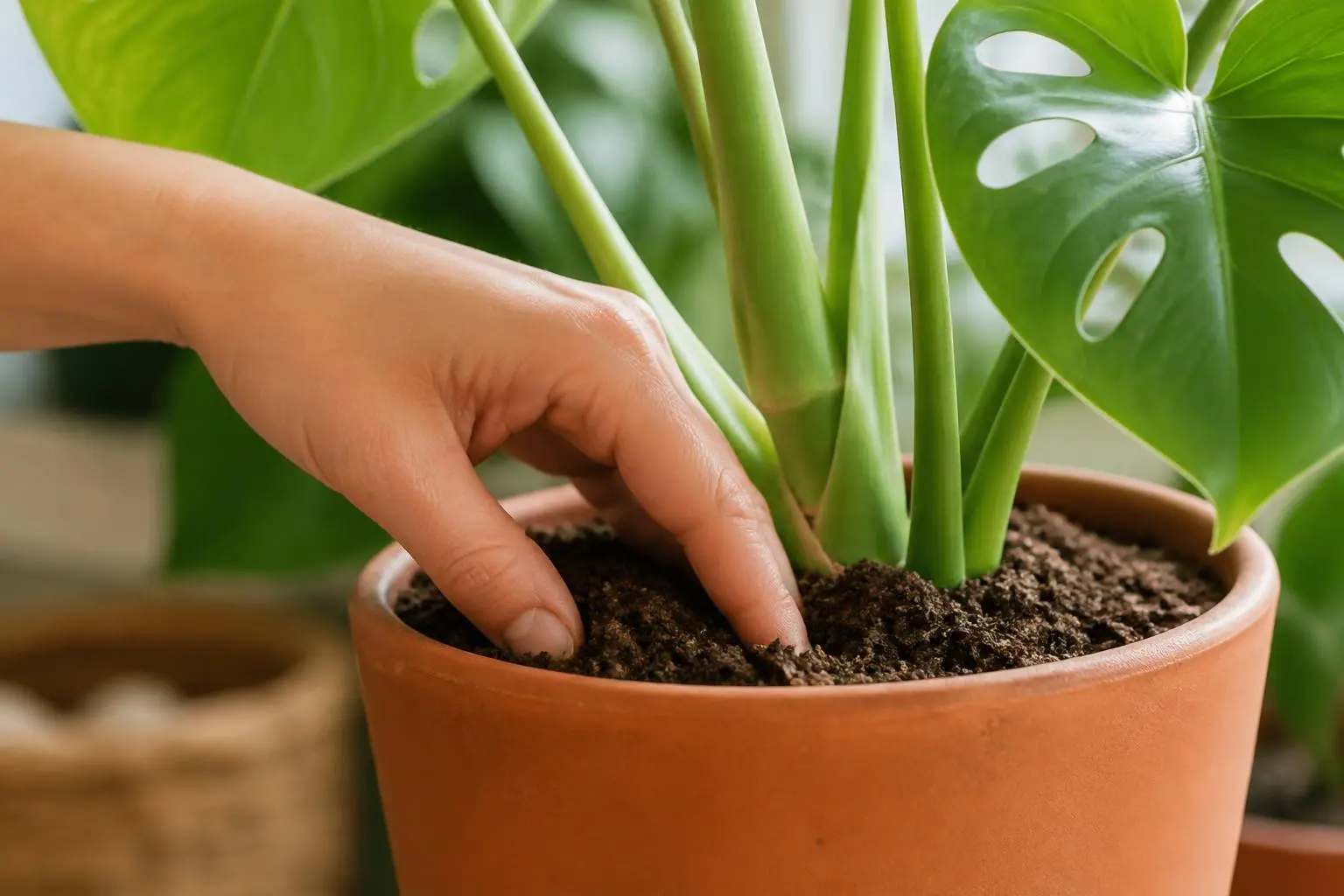
Humidity
As a tropical rainforest native, Monstera deliciosa prefers humidity between 60–80%. Average home humidity (30–50%) is tolerable but not ideal — you may notice brown, crispy leaf tips, which is the plant's way of saying it wants more moisture in the air.
The most effective way to boost humidity is a small humidifier placed within 3–4 feet of the plant. A pebble tray filled with water beneath the pot (making sure the pot sits on the pebbles, not in the water) also helps. Grouping plants together creates a shared microclimate with higher ambient humidity.
Misting is popular but largely ineffective — the water evaporates in minutes and doesn't meaningfully raise humidity. It can also promote fungal growth if done in the evening. If you do mist, do it in the morning so leaves dry before nightfall.
Temperature
Monstera deliciosa prefers temperatures between 65–85°F (18–30°C), which aligns well with typical indoor conditions. It can tolerate brief dips to 50°F (10°C) but will suffer damage below that — leaves may yellow and drop, and growth stops entirely below 55°F.
Avoid placing your Monstera near cold drafts (air conditioning vents, frequently opened exterior doors in winter) or heat sources (radiators, heating vents, fireplaces). Sudden temperature swings stress the plant and can cause leaf drop.
If you move your Monstera outdoors for the summer, bring it back inside when nighttime temperatures consistently drop below 55°F. In USDA zones 10–11, Monstera can be grown outdoors year-round, but it may become invasive — check local regulations before planting in the ground.
Soil
Monstera deliciosa needs well-draining, chunky soil that retains some moisture without staying soggy. A standard potting mix alone is too dense and holds too much water. The ideal mix mimics the loose, organic debris found on a rainforest floor.
Recommended aroid mix: 1 part quality potting soil + 1 part perlite + 1 part orchid bark (or chunky coco coir). This combination provides moisture retention, aeration, and drainage. Adding a handful of horticultural charcoal helps prevent root rot by absorbing excess moisture and impurities.
For a simpler approach, mix 2 parts potting soil with 1 part perlite. It won't drain as well as a full aroid mix but works for most home growers. The pH should be slightly acidic to neutral (5.5–7.0). Avoid garden soil or topsoil — they compact in pots and suffocate roots.
Fertilizer
Feed your Monstera with a balanced liquid fertilizer (NPK 20-20-20) diluted to half strength, applied once a month during the spring and summer growing season. Over-fertilizing causes salt buildup that burns leaf tips and edges, appearing as brown crispy margins.
If you prefer organic options, worm castings top-dressed on the soil or a diluted fish emulsion every 4–6 weeks works well. Slow-release granular fertilizer (like Osmocote) mixed into the soil at the start of spring provides a steady nutrient supply for 3–4 months.
Stop fertilizing entirely from late fall through winter when the plant is in its resting period. If you notice white crust on the soil surface or drainage holes, that's salt buildup — flush the soil with plenty of water next time you water to leach out excess minerals.
Repotting
Repot your Monstera every 2–3 years, or when you see roots circling the bottom of the pot or growing out of the drainage holes. The best time to repot is in spring or early summer when the plant is actively growing and can recover quickly from root disturbance.
Choose a pot only 2–3 inches larger in diameter than the current one. Going too large means excess soil stays wet too long, inviting root rot. Always use a pot with drainage holes — there are no exceptions for Monstera.
To repot: water the plant a day before to make root ball removal easier. Gently slide it out, loosen circling roots with your fingers, and trim any black or mushy roots with sterilized scissors. Place fresh aroid mix in the new pot, position the plant at the same depth it was before, and fill in around the sides. Water thoroughly and keep in a slightly shadier spot for a week to reduce transplant shock.
Support & Training
In the wild, Monstera deliciosa climbs trees using its aerial roots. Indoors, providing a support structure encourages larger leaf growth and a more natural, upright shape. Without support, the plant will sprawl and the stems may break under their own weight as leaves grow larger.
A moss pole is the gold standard — the aerial roots will grow into the moist sphagnum, anchoring the plant and providing additional moisture uptake. To train: gently tie the main stem to the pole with soft plant ties or twine every 6–8 inches. Mist the moss pole regularly to encourage root attachment.
Alternatives include coco coir poles, wooden boards (aerial roots grip rough bark), and trellises. Bamboo stakes work as temporary support but don't offer the moisture benefit of moss. Insert the support at repotting time to avoid damaging established roots.
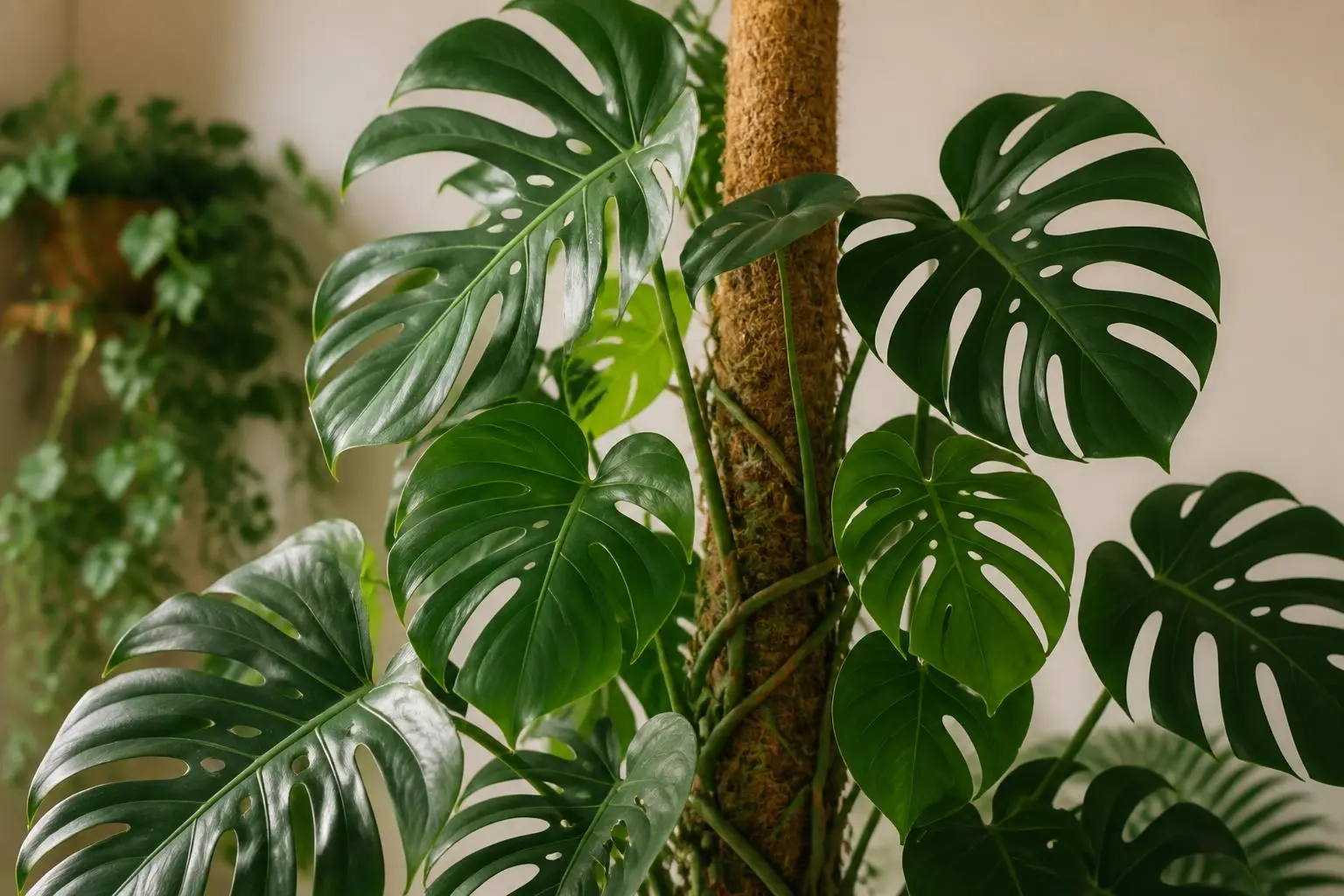
Why Do Monstera Leaves Have Holes?
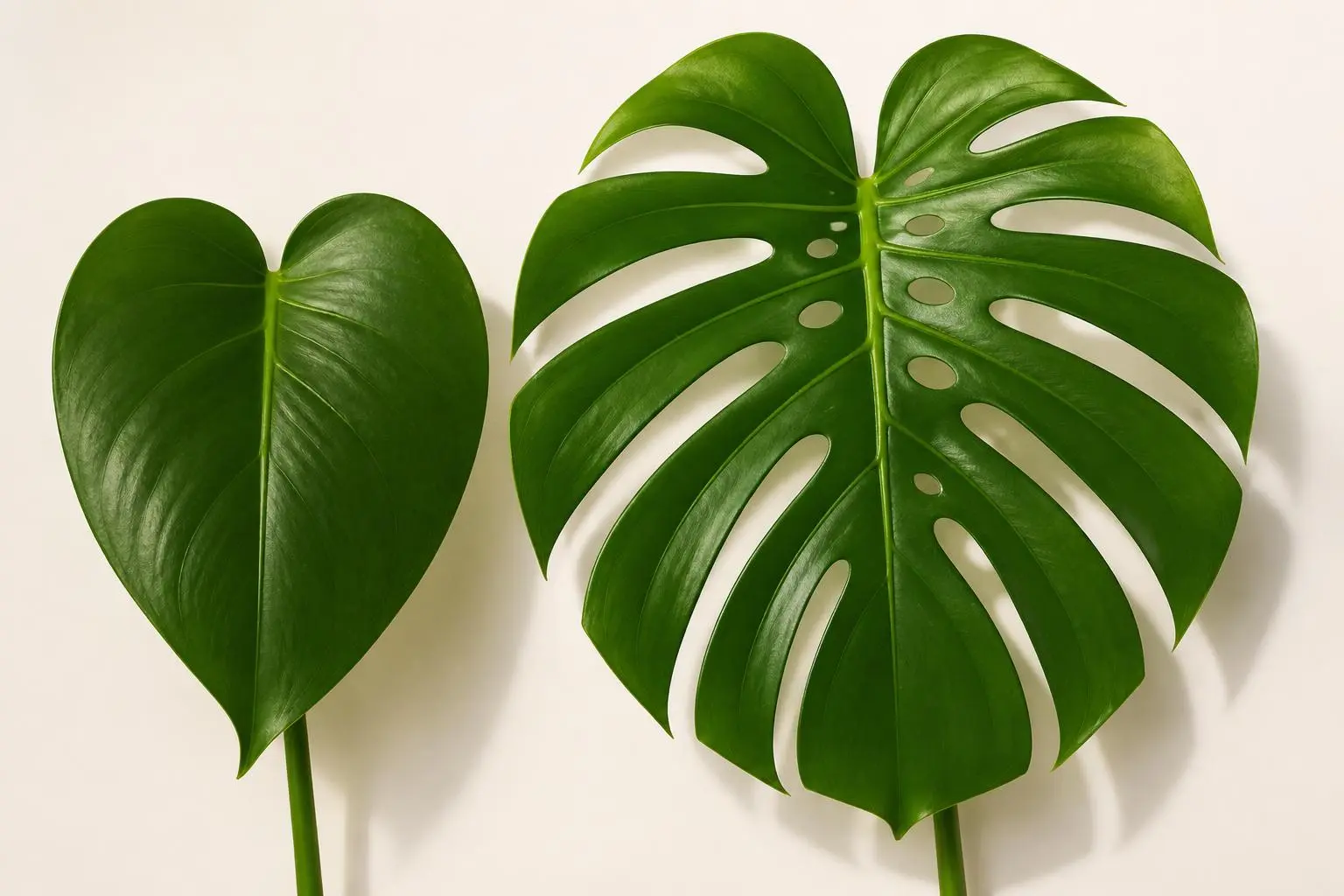
The holes and splits in Monstera leaves — called fenestrations — are one of nature's most elegant adaptations. Scientists believe there are two primary evolutionary reasons:
1. Hurricane resistance:*In its native Central American habitat, Monstera grows in regions prone to heavy rain and strong winds. Solid leaves catch the wind like a sail and can be torn or snapped. The holes allow wind and rain to pass through, reducing drag and damage.
2. Light filtration:*As a hemiepiphyte that starts on the dark forest floor and climbs toward the canopy, juvenile Monstera leaves are solid and heart-shaped to maximize light capture in low conditions. As the plant climbs higher and receives more light, it "switches" to fenestrated leaves — the holes allow dappled sunlight to reach the lower leaves below, benefiting the entire plant.
Young Monstera plants (under 2–3 years) produce solid leaves. Fenestrations begin as the plant matures and receives adequate light. If your adult Monstera isn't developing splits, it likely needs more bright indirect light or more time to mature.
Our Experience
In my dry NYC apartment with forced-air heating, I found that my Monstera's leaves started browning at the tips within a week of skipping the humidifier. Now I run a small humidifier within 3 feet and the new leaves come in perfectly healthy — no more crispy tips.
— Grown indoors in USDA Zone 7a, south-facing window, winter heating season
I use a moss pole from day one. When the plant was small, I loosely tied the stems with plant velcro. By the second year, the aerial roots grabbed on naturally and the leaves grew twice as large — the support really makes a difference. I keep the pole moist by misting it every other day.
— Grown indoors in USDA Zone 7a, bright indirect light, year-round
When I switched from tap water to filtered water for watering, the brown tips on new leaves disappeared completely within a month. My city water has high chlorine and minerals — Monstera is sensitive to both. Now I let tap water sit out overnight if I don't have filtered water.
— Municipal water with high chlorine, indoor environment
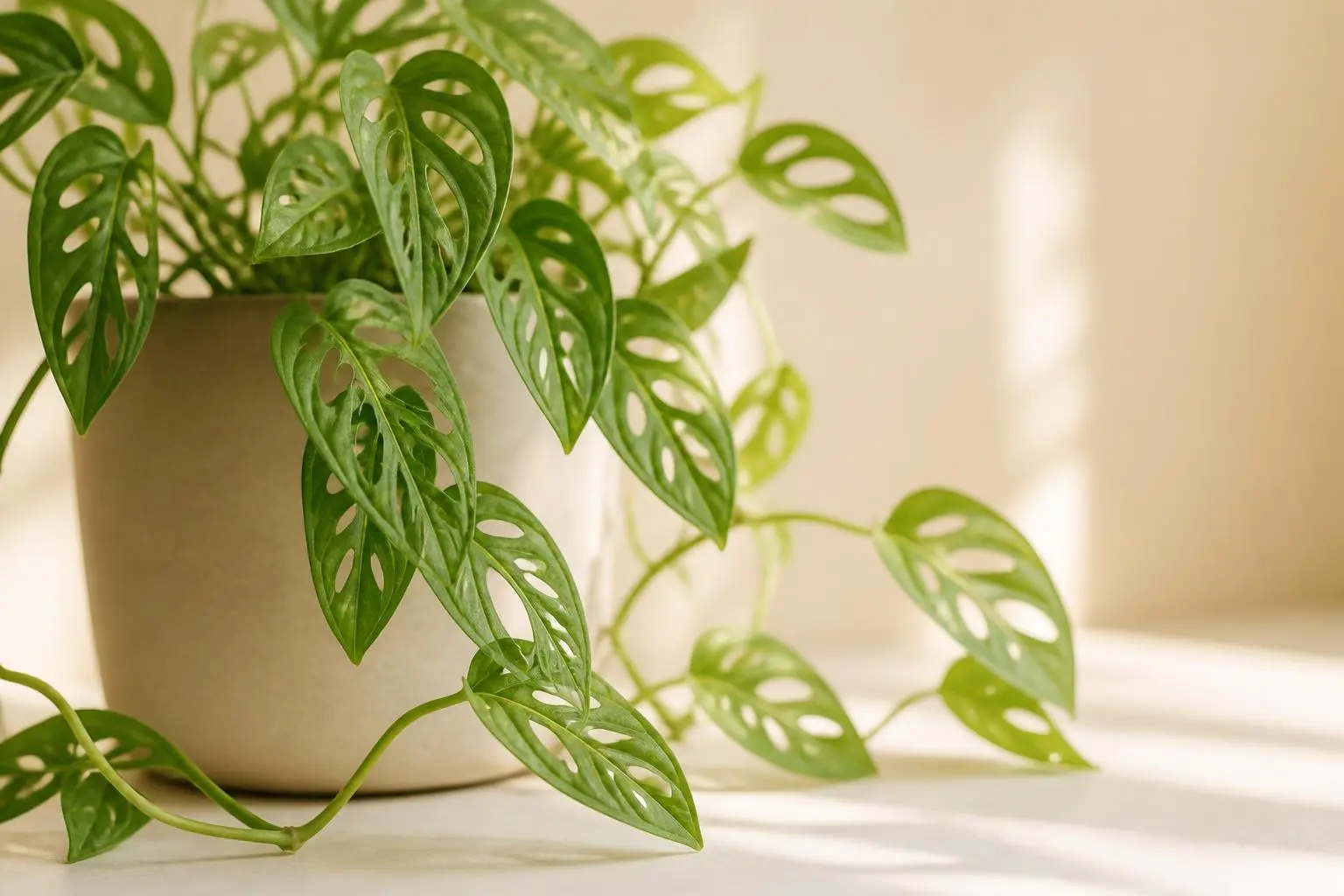 Adansonii
 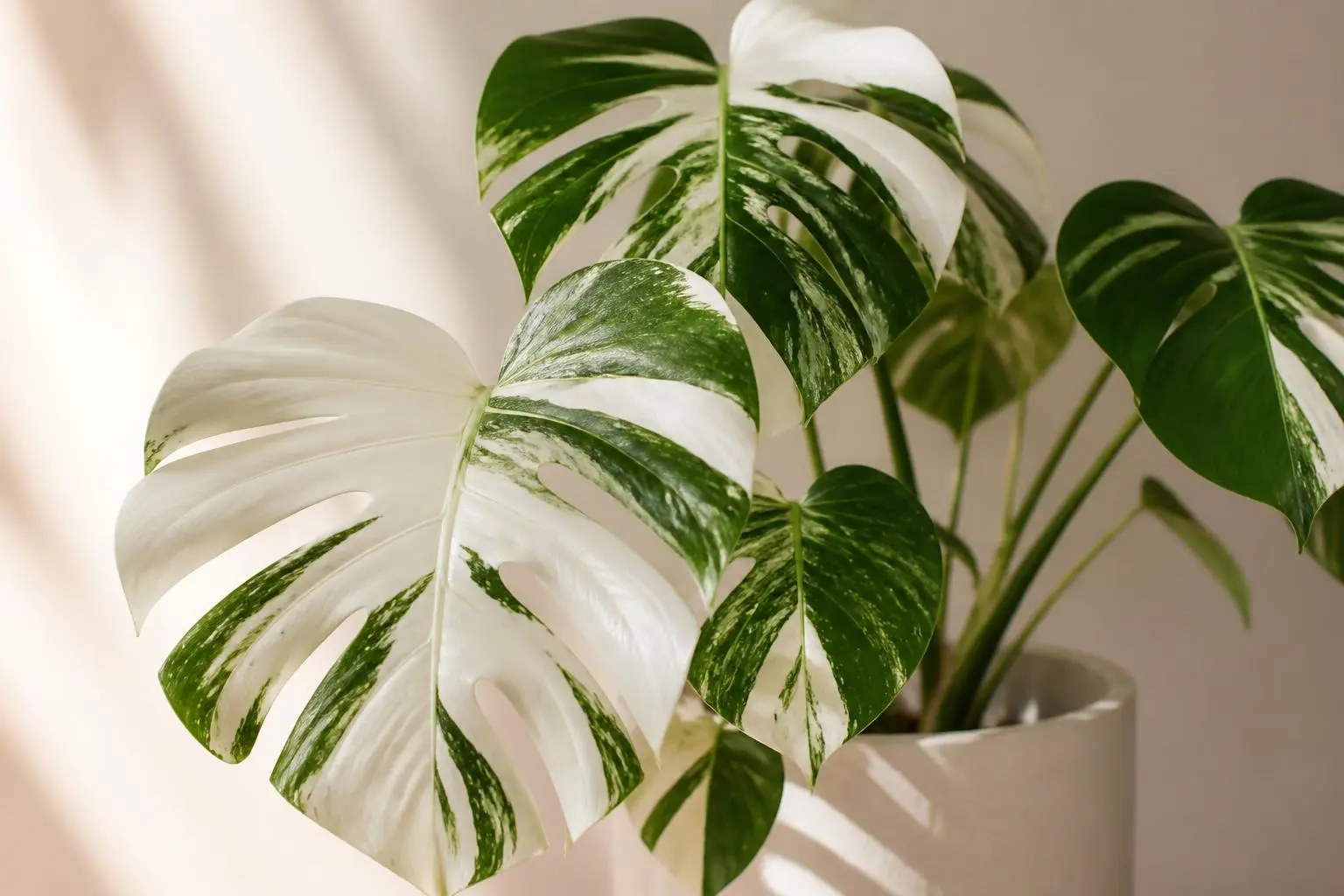 Albo
Albo 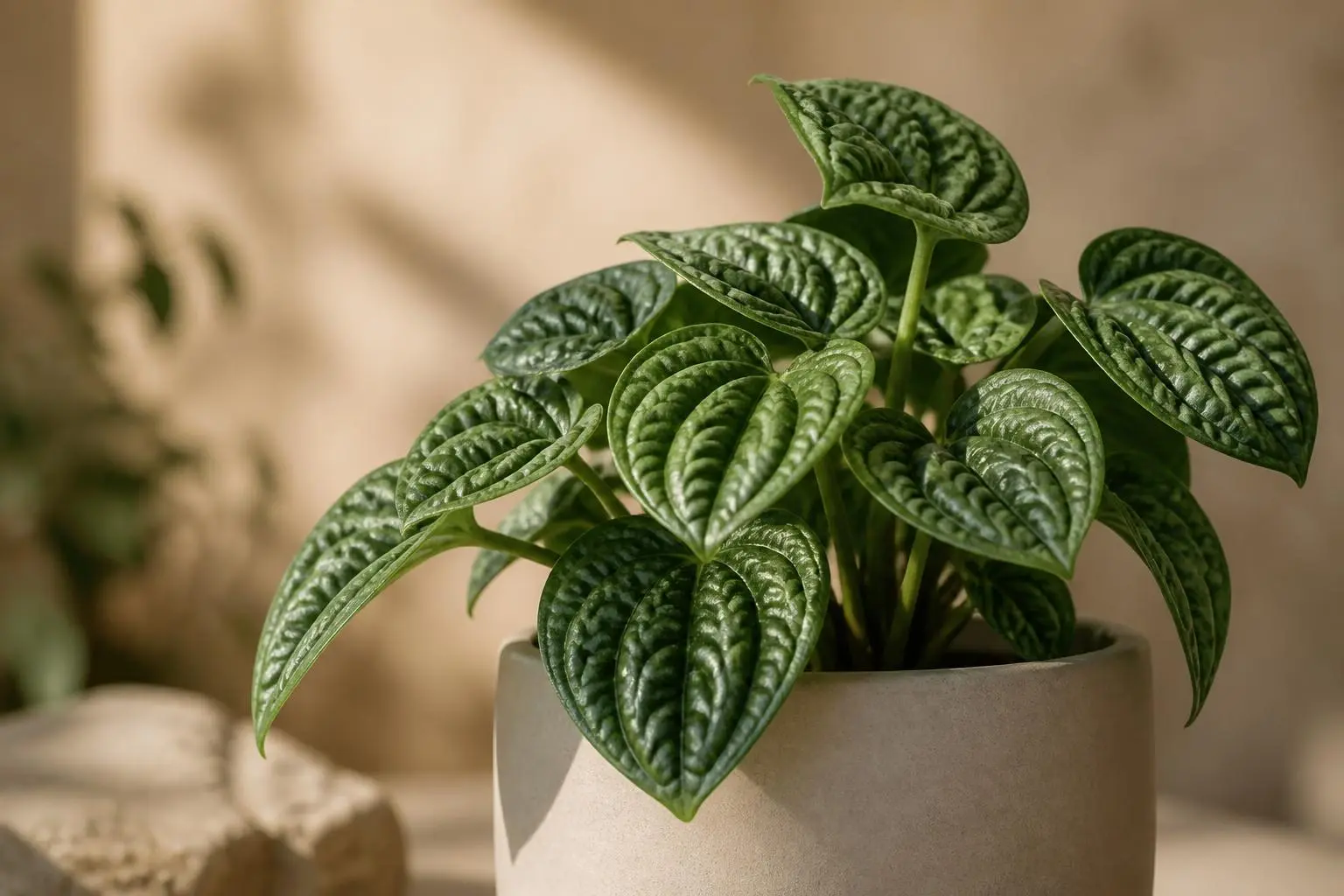 Peru
Peru Compare Varieties
Explore different cultivars side-by-side and find the best match for your space.
Browse all varieties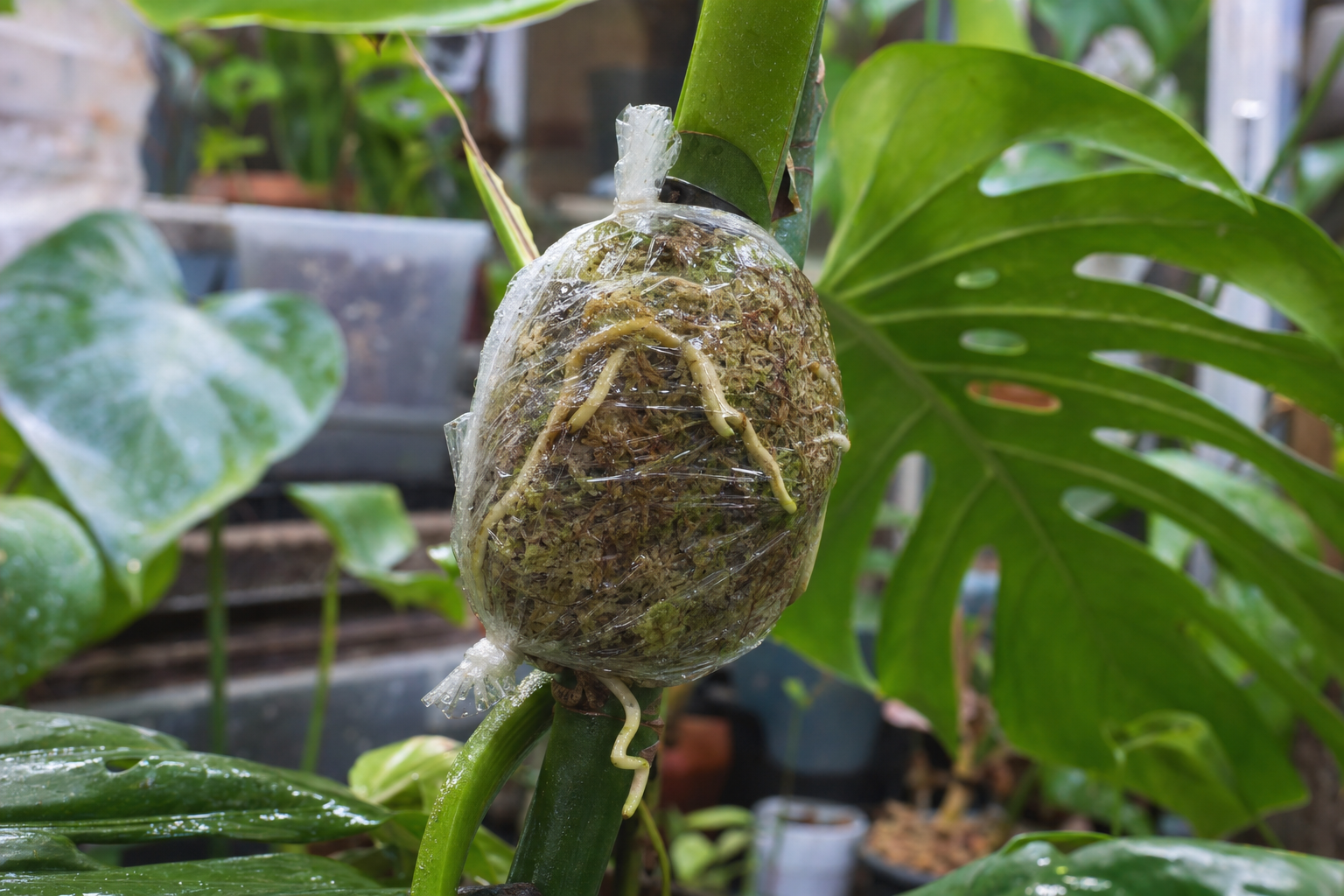
Propagation Guide
Step-by-step instructions for multiplying your plant collection.
Learn how to propagateFrequently Asked Questions
How often should I water my Monstera deliciosa?
Why are my Monstera leaves turning yellow?
Why doesn't my Monstera have holes or splits in the leaves?
Is Monstera deliciosa toxic to cats and dogs?
Can Monstera deliciosa grow in low light?
Should I mist my Monstera?
How do I propagate Monstera deliciosa?
What is the best soil for Monstera deliciosa?
Why does my Monstera have brown spots on the leaves?
Does my Monstera need a moss pole?
Common Problems
Why Are My Plant Leaves Turning Yellow?
Yellowing leaves are one of the most common houseplant problems. The good news is that most causes are easy to identify and fix once you know what to look for.
Read diagnosis guideHow to Fix an Overwatered Plant
Overwatering kills more houseplants than any other cause. The tricky part? The symptoms — yellowing, wilting, drooping — look just like underwatering. Here's how to tell the difference and fix it.
Read diagnosis guideReferences
- [1] Royal Horticultural Society. Monstera deliciosa
- [2] ASPCA. Monstera deliciosa Toxicity
- [3] University of Florida IFAS Extension. Monstera deliciosa — Primitive Plants in the Landscape
- [4] International Aroid Society. Monstera deliciosa Liebm.
- [5] University of Wisconsin-Madison. Why do Monstera leaves have holes? Fenestration research
Similar Plants
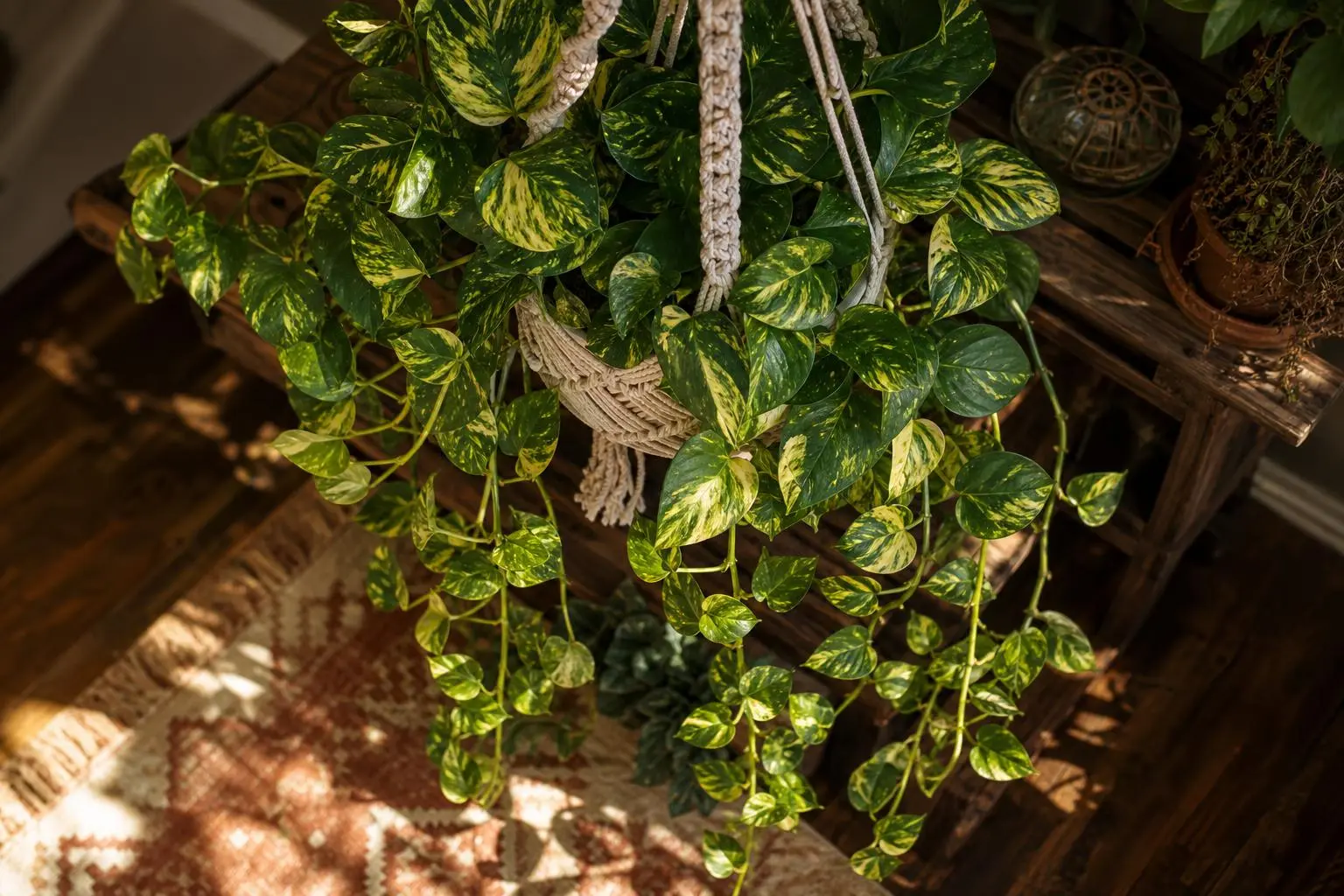
Pothos
Epipremnum aureum
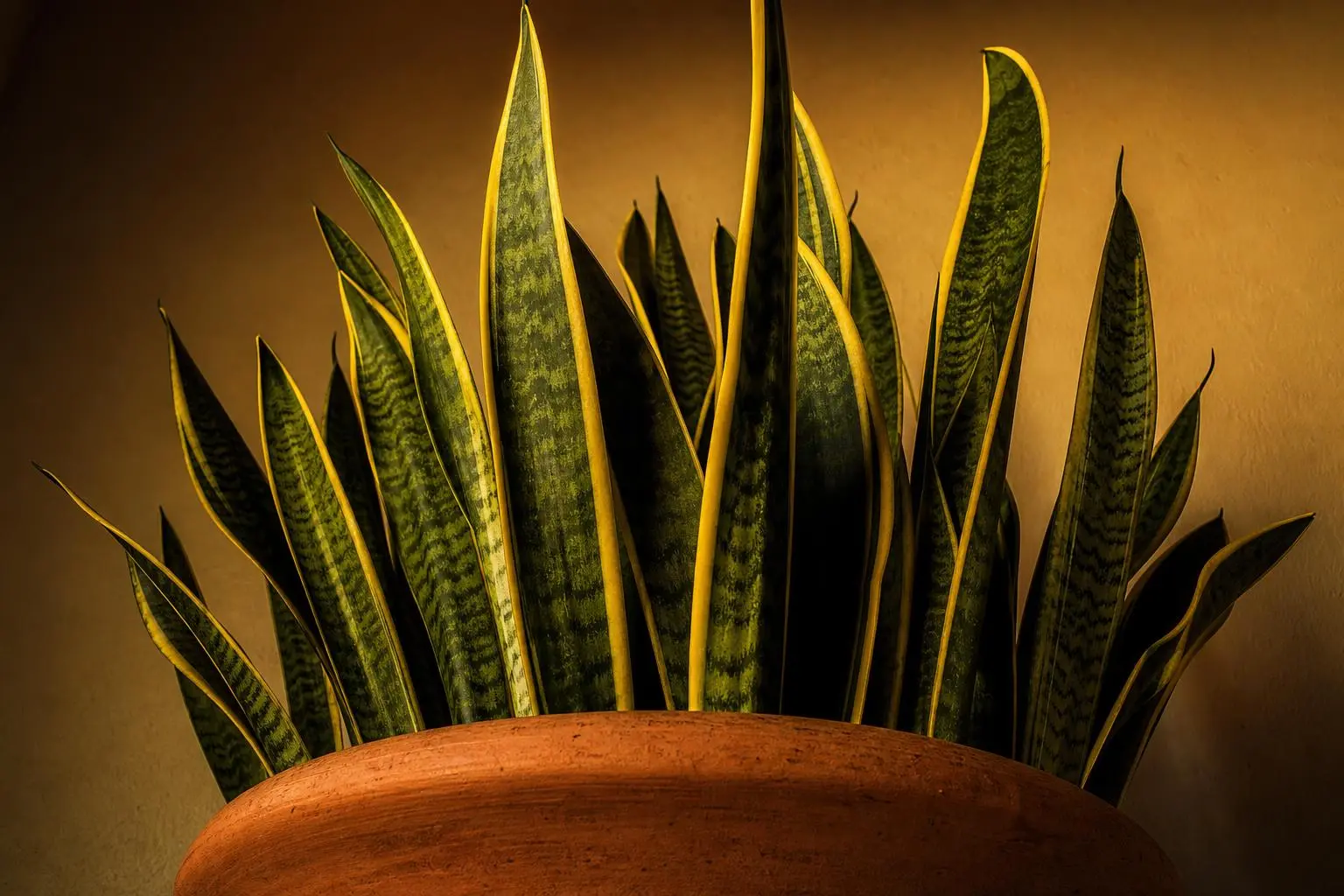
Snake Plant
Dracaena trifasciata
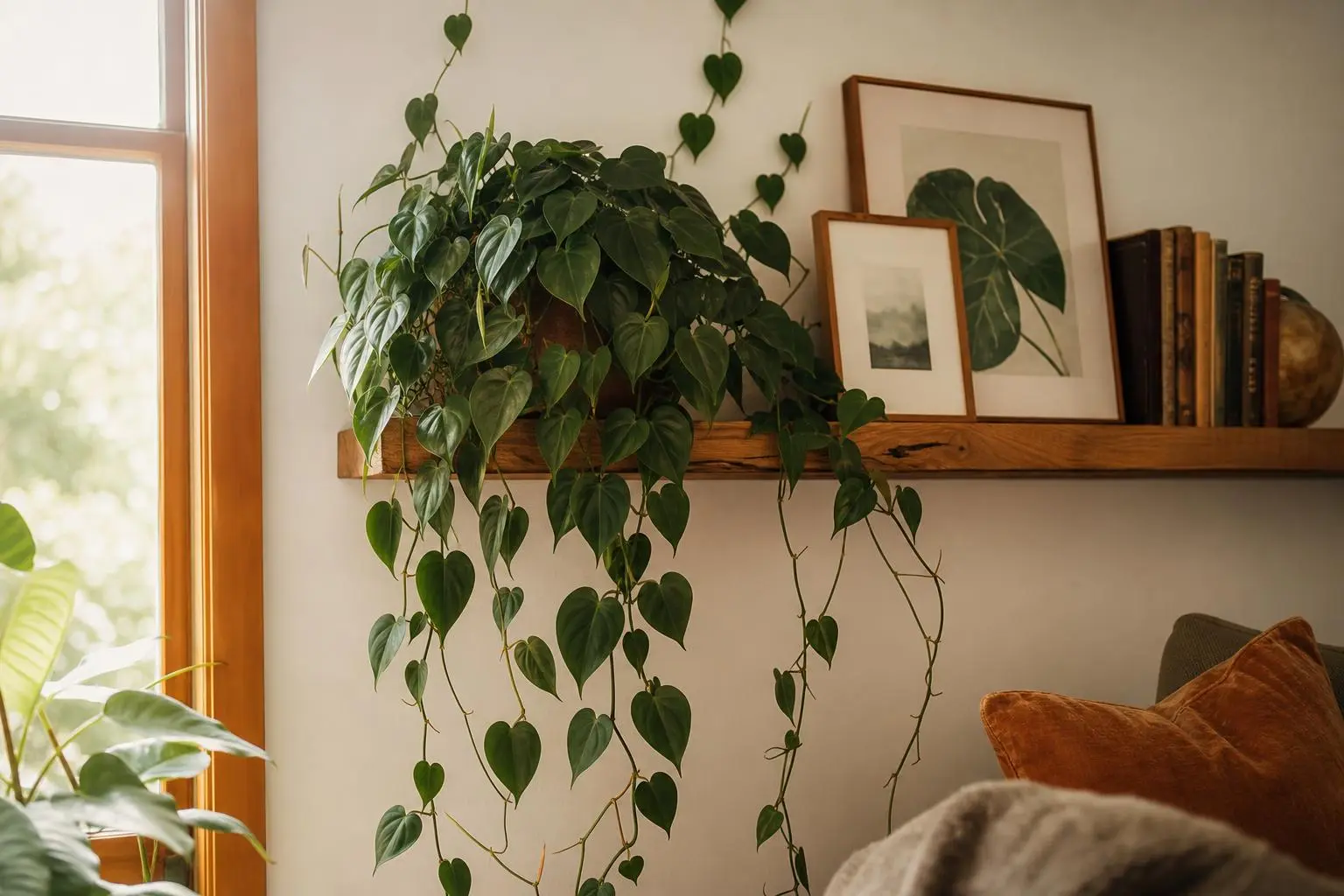
Philodendron
Philodendron hederaceum