
Monstera Deliciosa Varieties
A comparison of the most popular Monstera Deliciosa varieties — learn which one is right for your space and skill level.
| Variety | Key Feature | Care Difficulty | Price Range |
|---|---|---|---|
| Monstera Deliciosa | Large split leaves with natural holes, up to 3 feet long on mature plants; thick leathery texture with deep green coloring | Easy | $15–$50 |
| Monstera Adansonii | Narrow, elongated leaves with many oval perforations; vining/trailing growth habit; thinner, more delicate leaf texture than deliciosa | Easy | $15–$40 |
| Monstera Peru (Karstenianum) | Thick, bullate (puckered/ridged) leaves with deep veining and no fenestrations; compact climbing habit with densely spaced leaves | Easy–Moderate | $25–$60 |
| Monstera Thai Constellation | Stable creamy-yellow variegation on every leaf; no risk of reverting; larger leaves with irregular cream splotches and speckles | Moderate | $100–$300+ |
| Monstera Albo Borsigiana | Unstable pure white variegation patches on deep green; smaller leaves than standard deliciosa; faster vining habit with longer internodes | Moderate–Hard | $200–$2,000+ |
| Monstera Standleyana | Narrow lance-shaped leaves with white or yellow speckles and streaks; no fenestrations; compact vining habit | Easy | Varies |
Variety Details
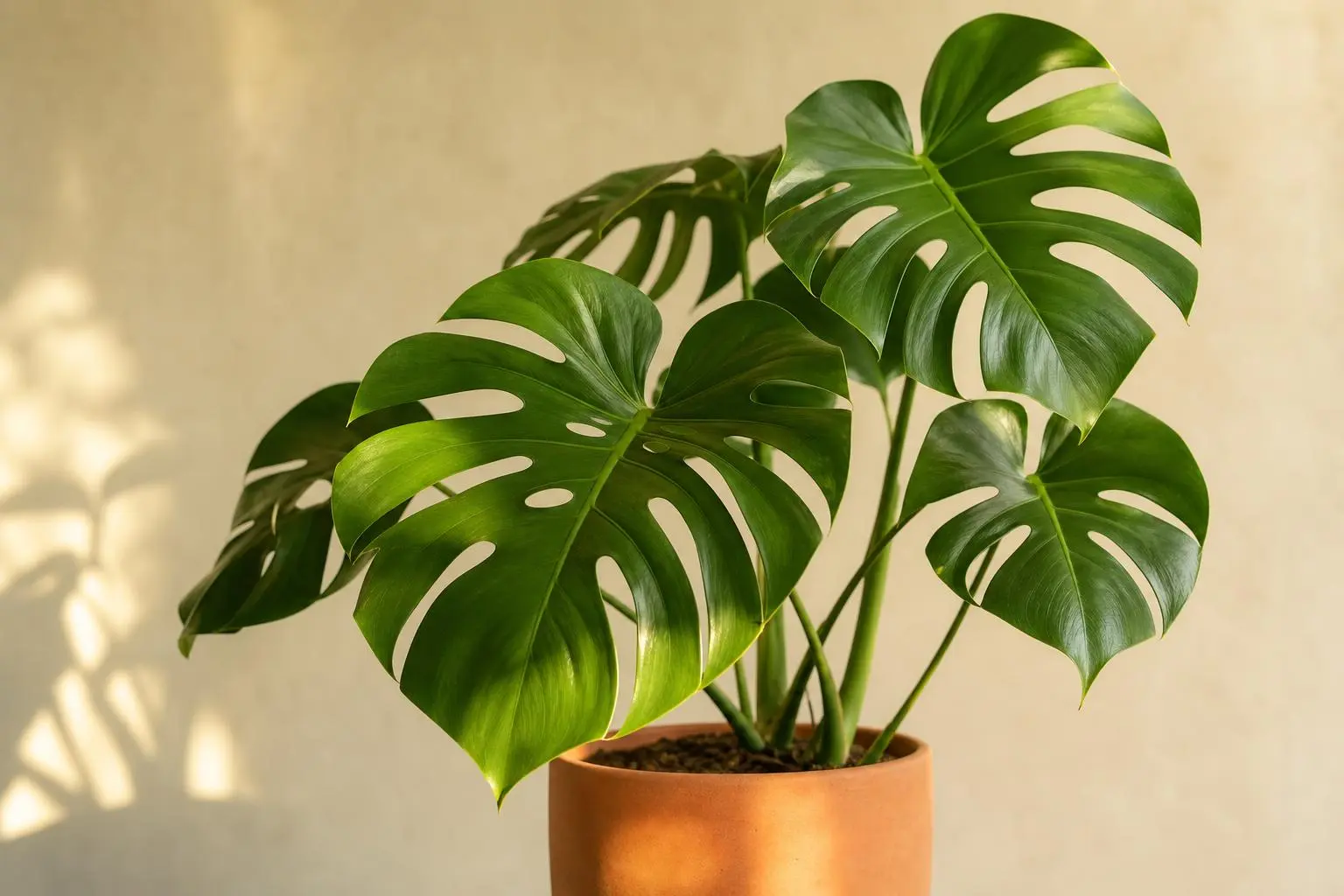
Monstera Deliciosa
The classic Swiss Cheese Plant with large, dramatic split leaves that can reach up to 3 feet long on mature specimens. This is the variety most people picture when they hear "Monstera" — a bold, architectural statement plant with thick, leathery, deep green leaves that develop characteristic fenestrations (holes) and deep splits as the plant matures. Juvenile plants start with solid, heart-shaped leaves, and the iconic splits begin appearing around the 2–3 year mark under proper light conditions. It is the most common and affordable Monstera variety, widely available in garden centers and big-box stores starting at around $15–$30 for a small plant.
Distinguishing feature: Large split leaves with natural holes, up to 3 feet long on mature plants; thick leathery texture with deep green coloring
Care notes: Standard Monstera care applies — bright indirect light, water when top 2 inches of soil are dry, and provide a moss pole for climbing support. This is the most forgiving of all Monstera varieties, tolerating minor care mistakes and adapting well to average home conditions. Growth rate is moderate to fast, producing several new leaves per growing season when happy. Benefits greatly from a support structure to encourage larger leaf development.
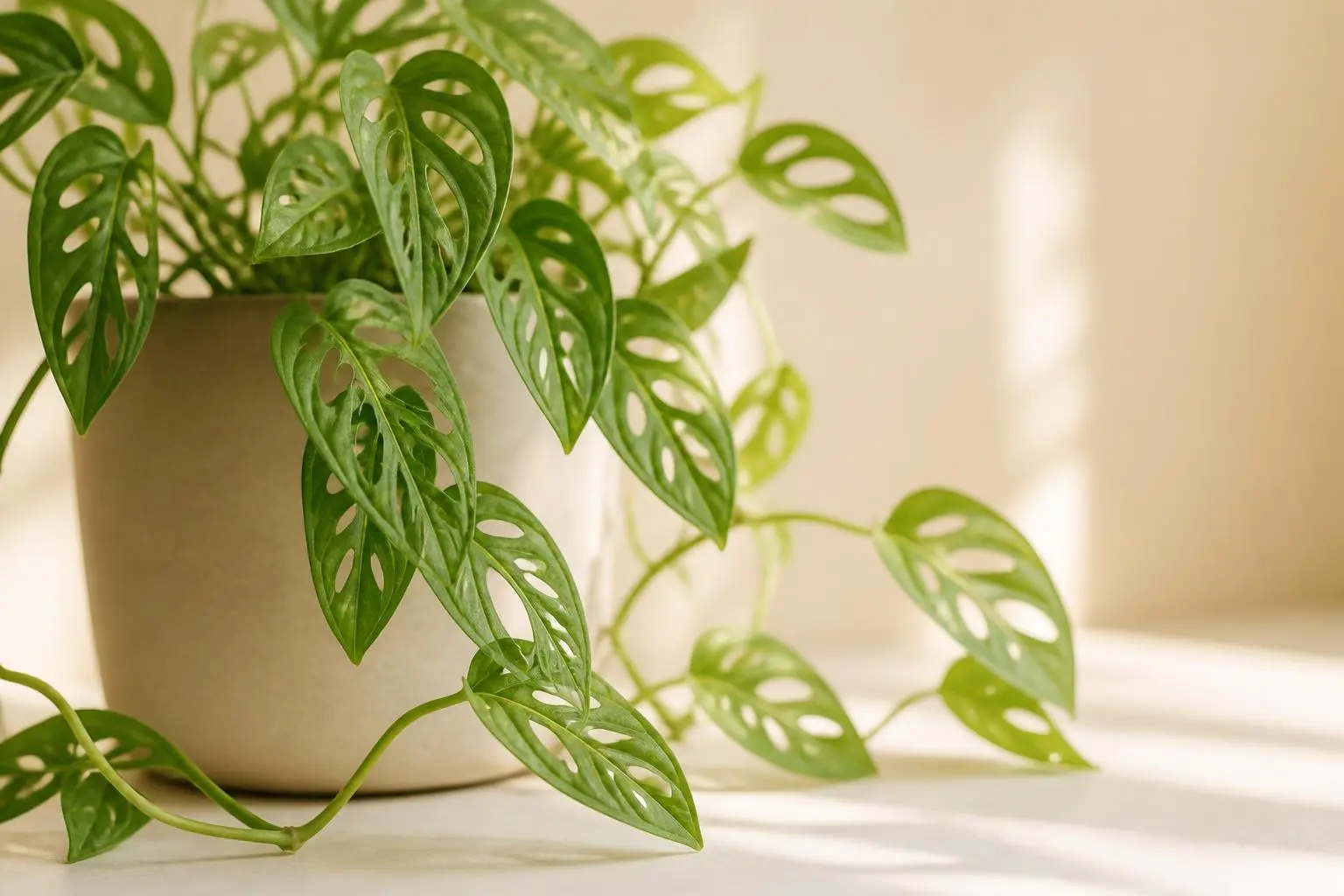
Monstera Adansonii
A smaller-leafed species with more numerous, oval-shaped holes rather than the deep splits of deliciosa. Often called the "Swiss Cheese Vine" for its trailing, vining habit that makes it perfect for hanging baskets or training along a shelf. The leaves are narrow and elongated, typically 5–8 inches long, with a delicate, papery texture that gives the plant a more refined, airy appearance compared to the bold deliciosa. The holes are symmetrically arranged along the leaf midrib and can cover nearly half the leaf surface area. Very popular and moderately priced at $15–$40, depending on size.
Distinguishing feature: Narrow, elongated leaves with many oval perforations; vining/trailing growth habit; thinner, more delicate leaf texture than deliciosa
Care notes: Similar care to deliciosa but prefers slightly higher humidity (65–80%) and more consistent moisture. More prone to spider mites, especially in dry indoor environments, so regular inspection of leaf undersides is important. Propagates extremely easily in water — roots appear within 7–10 days. Growth rate is faster than deliciosa when given a trellis or support to climb. Leaves remain relatively small unless the plant is allowed to climb, which triggers larger mature foliage. Slightly less tolerant of neglect than deliciosa.
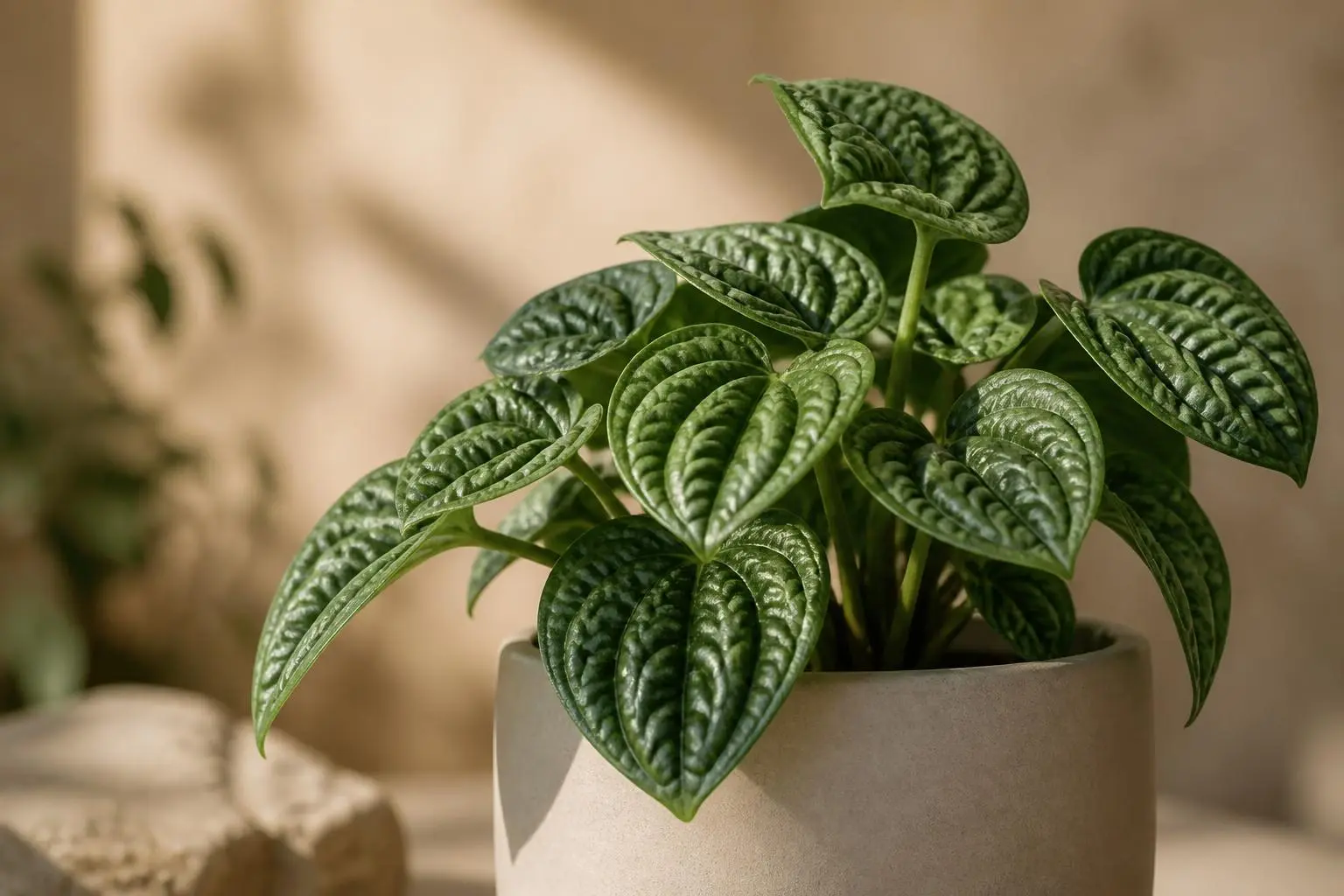
Monstera Peru (Karstenianum)
A compact, distinctive variety with thick, puckered, ridged leaves and absolutely no holes or splits — a surprising contrast to the fenestrated Monstera most people know. The leaves are deep green with pronounced bullate (puckered) texture and deep veining that gives them a leathery, almost reptilian appearance. Leaves are broadly oval, 4–6 inches long, and significantly thicker than other Monstera species. The plant grows as a compact climber with shorter internodes, making it well-suited for smaller spaces where a full-size deliciosa would be too large. Moderately available through specialty plant shops and online sellers, typically priced at $25–$60.
Distinguishing feature: Thick, bullate (puckered/ridged) leaves with deep veining and no fenestrations; compact climbing habit with densely spaced leaves
Care notes: More tolerant of lower light than deliciosa due to its solid, thicker leaves that capture light efficiently. Water less frequently than other Monsteras — the thick leaves store significant moisture, making it more drought-tolerant. Allow the soil to dry out almost completely between waterings. Growth rate is notably slower than deliciosa or adansonii. Slightly harder to find than other varieties, but worth seeking out for its unique texture. Less demanding of humidity than the fenestrated species.
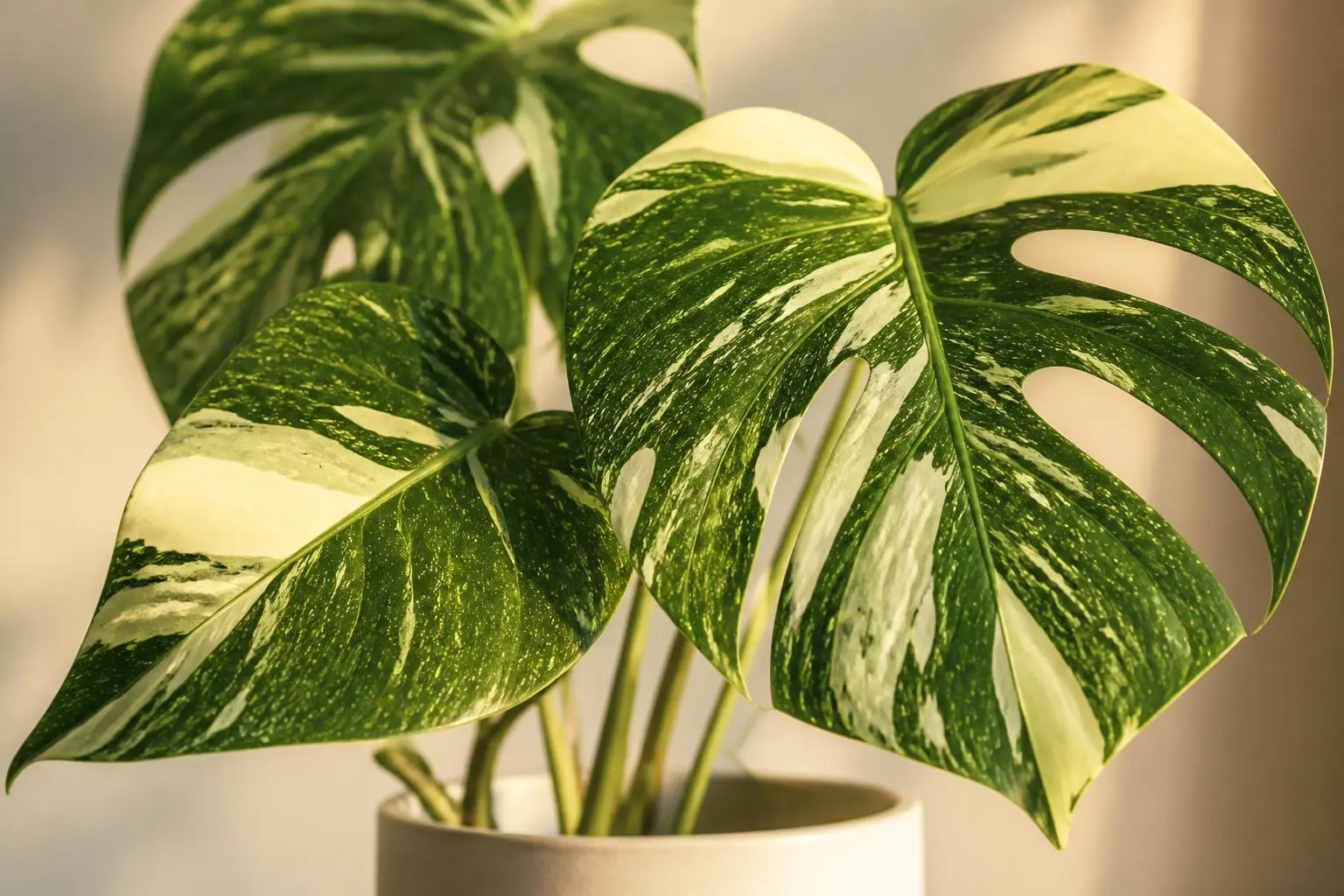
Monstera Thai Constellation
A stunning, stable variegated variety with cream-yellow splotches scattered across every leaf like a starry night sky. Unlike the unpredictable Albo, this variety was lab-created in Thailand using tissue culture, which means every leaf will have some degree of variegation — it will never revert to all-green or produce an all-white leaf. The cream-yellow patches range from small speckles to large sectors, creating a unique pattern on each leaf. Leaves tend to be slightly larger and broader than the standard deliciosa, though growth is noticeably slower due to the reduced chlorophyll in variegated areas. A highly sought-after collector plant, typically priced at $100–$300+ for established specimens.
Distinguishing feature: Stable creamy-yellow variegation on every leaf; no risk of reverting; larger leaves with irregular cream splotches and speckles
Care notes: Needs more bright indirect light than the standard deliciosa to compensate for the reduced chlorophyll in cream-colored areas, but avoid direct sun which will burn the lighter portions. More sensitive to overwatering — the variegated areas are thinner and more prone to rot. Water when the top 2 inches of soil are dry, and ensure excellent drainage. Growth rate is slower than non-variegated deliciosa, producing 2–4 new leaves per growing season. Maintains humidity above 60% for best results. Worth the investment for its reliable, permanent variegation.
Monstera Albo Borsigiana
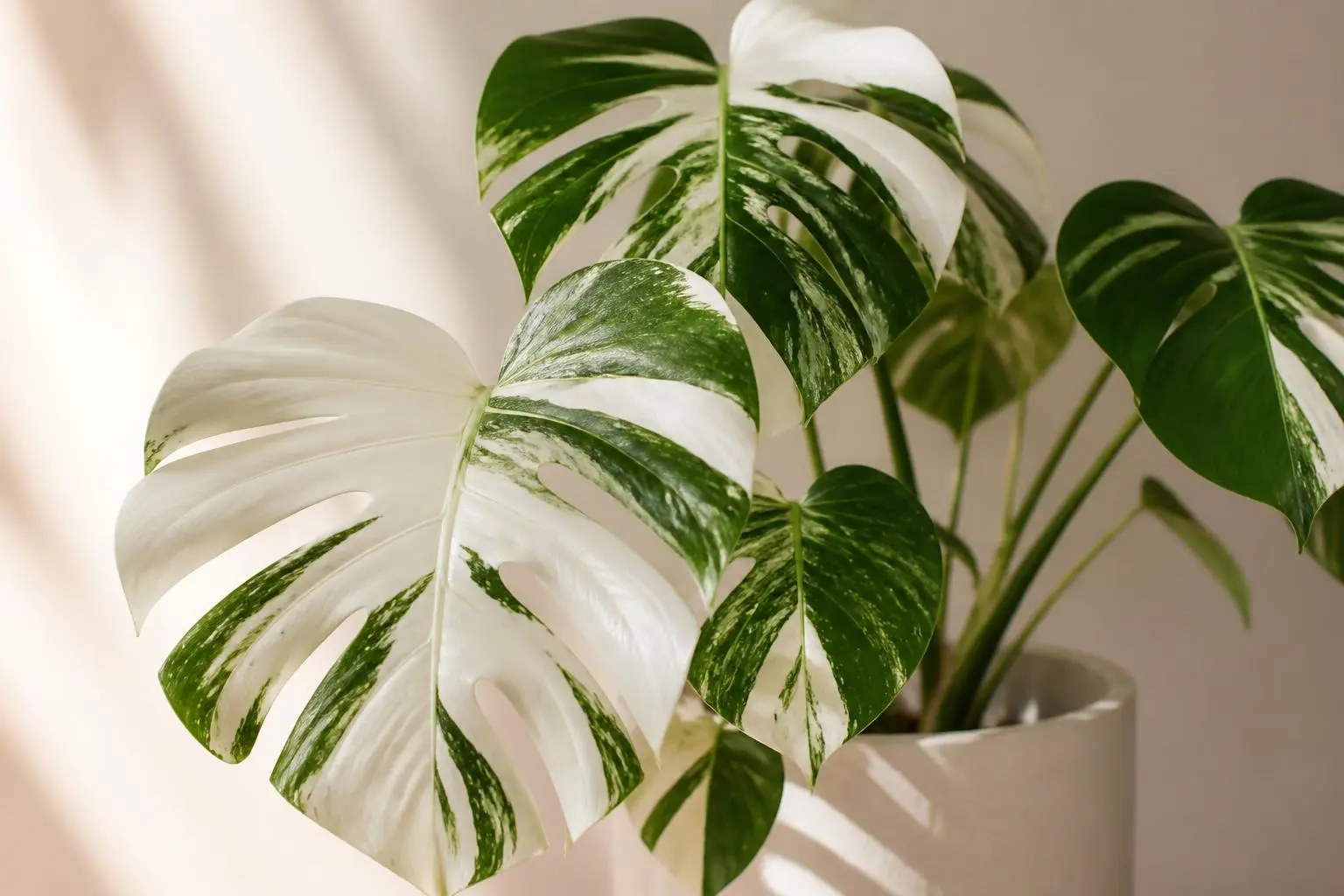
A naturally occurring variegated form with striking pure white patches that create dramatic contrast against the deep green leaf surface. Unlike Thai Constellation, the variegation is genetically unstable — individual leaves can range from mostly green with small white sectors to nearly all-white. This unpredictability is part of its appeal, as a beautifully variegated leaf can be breathtaking, but it also means the plant may produce fully green or fully white leaves over time. The leaves are slightly smaller than standard deliciosa and the plant has a faster vining habit. This is the most expensive Monstera variety, with well-variegated specimens commanding $200–$2,000+ depending on the quality and extent of variegation.
Distinguishing feature: Unstable pure white variegation patches on deep green; smaller leaves than standard deliciosa; faster vining habit with longer internodes
Care notes: The most demanding Monstera to care for. White portions cannot photosynthesize, so the plant needs significantly more bright indirect light to sustain itself — but direct sun will quickly burn the white areas, turning them brown. High humidity (70%+) is strongly recommended to prevent the white areas from browning at the edges. All-white leaves should be pruned off as they drain the plant's energy without contributing any photosynthesis. Very prone to browning on white areas, especially in dry conditions. Water slightly less than standard deliciosa since the white portions are thinner and more susceptible to rot. A collector plant that requires dedicated attention.
Monstera Standleyana
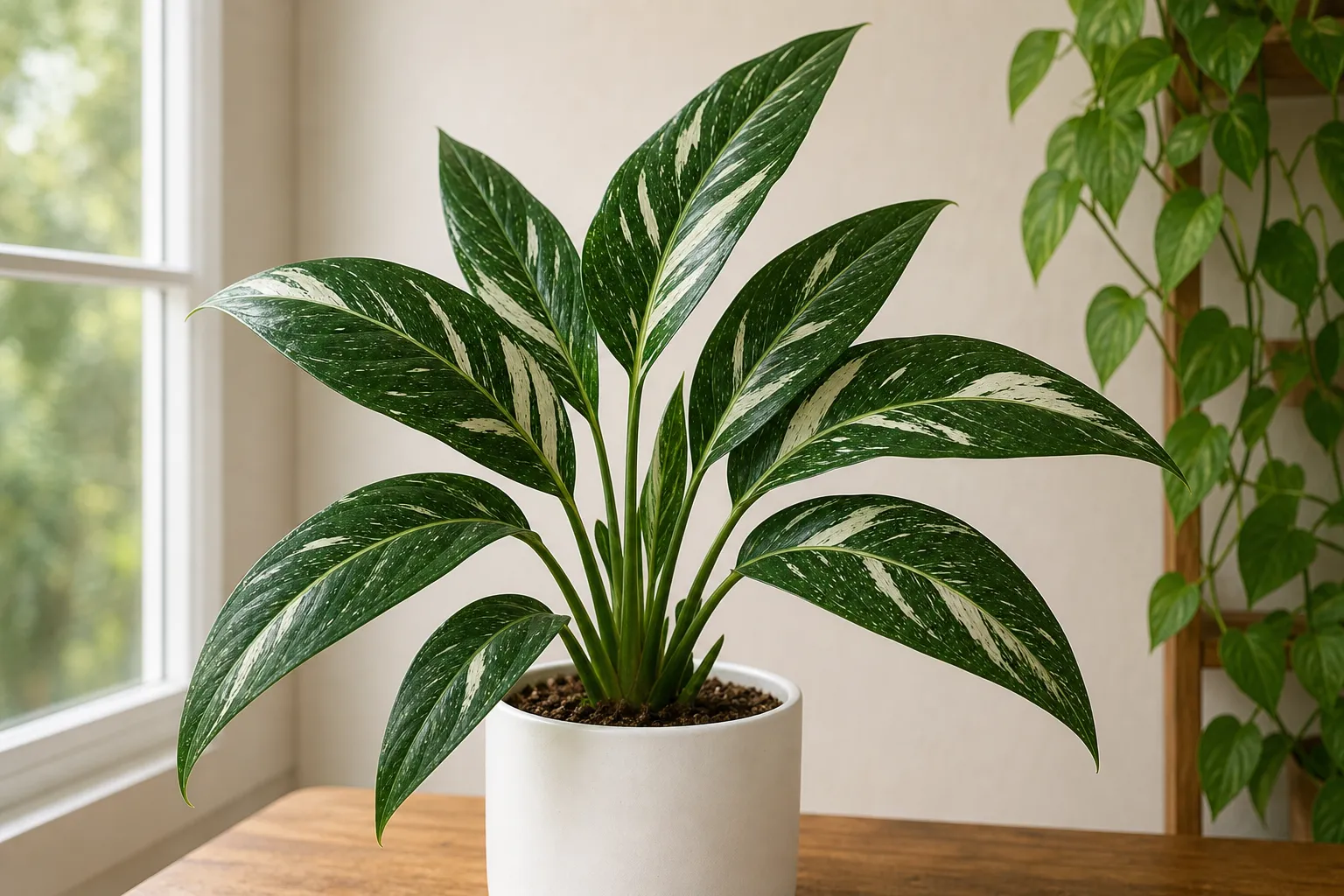
A unique and lesser-known Monstera species with narrow, lance-shaped leaves that feature striking white or yellow speckles and streaks against a dark green background. Unlike deliciosa, the leaves do not develop fenestrations or splits — they remain solid and elongated, typically 4–7 inches long and 1–2 inches wide. The variegation pattern is unpredictable, with some leaves showing dramatic white streaking and others appearing mostly green. The plant has a compact, vining habit that makes it ideal for smaller spaces, trailing from a shelf, or climbing a small trellis. Still relatively uncommon in mainstream garden centers but increasingly available from specialty sellers, typically priced at $30–$80.
Distinguishing feature: Narrow lance-shaped leaves with white or yellow speckles and streaks; no fenestrations; compact vining habit
Care notes: Care is similar to adansonii but with slightly lower humidity needs. Prefers bright indirect light to maintain variegation — in low light, the speckling may fade and new leaves will emerge mostly green. Water when the top inch or two of soil is dry. Growth rate is slow to moderate. The variegation is unstable and can revert, so prune any all-green stems to encourage variegated growth. Less prone to pests than adansonii. A good choice for Monstera collectors who want something different without the extreme price tag of Thai Constellation or Albo.