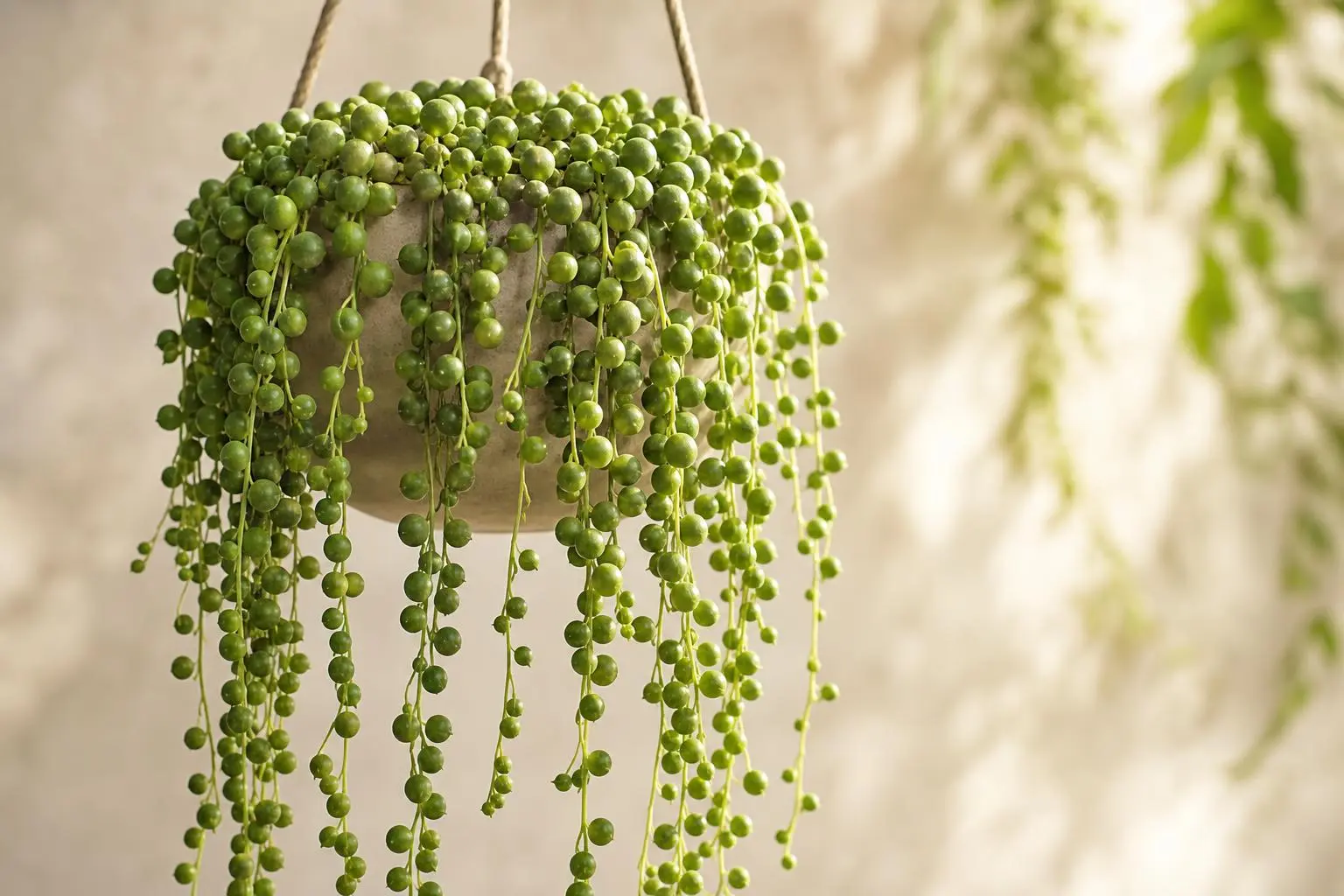
String of Pearls
Senecio rowleyanus
Also known as: String of Beads, Rosary Vine, Pearl Plant, Curio rowleyanus
Last updated: Sep 10, 2026
Bright indirect light to some direct morning sun
When soil is completely dry (every 14–21 days)
30–50%
60–80°F (16–27°C)
Well-draining cactus/succulent mix with extra perlite
Balanced liquid fertilizer diluted to quarter, every 2 months in spring/summer
Intermediate
Toxic to pets
Toxic to Pets
Contains pyrrolizidine alkaloids that are toxic to cats and dogs according to the ASPCA. Ingestion can cause vomiting, diarrhea, and lethargy. Prolonged exposure can cause liver damage. Keep away from pets and small children.
Source: ASPCA Toxic Plant List
Seasonal Care Calendar
| Season | Watering | Fertilizer | Notes |
|---|---|---|---|
| Spring | Every 14–21 days | Start bi-monthly feeding | Begin repotting if needed. Resume regular watering. Best time to propagate. |
| Summer | Every 14–21 days | Bi-monthly feeding | Active growth. Keep away from hot afternoon sun. Ensure good air circulation. |
| Fall | Every 21–28 days | Stop | Growth slows. Reduce watering significantly. Stop fertilizing. |
| Winter | Every 3–4 weeks | None | Semi-dormant. Water very sparingly — just enough to prevent shriveling. Keep warm. |
Detailed Care Guide
Everything you need to know to keep your String of Pearls thriving.
Light Requirements
String of Pearls needs bright indirect light — at least 6 hours daily. A south- or east-facing window where it receives some direct morning sun is ideal. The "window" stripe on each pearl is a natural adaptation that allows light into the leaf interior, so these plants are designed to maximize available light.
In low light, the pearls become elongated and spaced far apart on the stems as the plant stretches toward the light source. The strands lose their full, beaded appearance and look sparse and leggy. Conversely, too much direct afternoon sun scorches the pearls, causing them to turn brown and shrivel.
A bright windowsill where the plant receives gentle morning sun and bright indirect light the rest of the day is the sweet spot. If you notice the pearls flattening or elongating, move it to a brighter location. Rotate the pot a quarter turn each week for even growth on all sides.
String of Pearls also grows well under grow lights, making it suitable for offices and rooms without natural windows.

Watering
Water your String of Pearls only when the soil is completely dry — typically every 14–21 days in spring/summer and every 3–4 weeks in fall/winter. This is the single most critical aspect of care, and the one most people get wrong.
Overwatering is the #1 killer. The pearls turn mushy, translucent, and brown. The stems rot at the base. Once rot sets in, it's very difficult to save the plant. Always err on the side of underwatering — shriveled pearls from dehydration can be revived; rotten pearls cannot.
When you do water, use the "soak and dry" method: give it a thorough watering until water runs from the drainage holes, then don't water again until the soil is completely dry. Bottom watering works well — set the pot in a dish of water for 15–20 minutes and let the soil wick up moisture from below. This keeps the fragile pearls and stems dry.
Signs of underwatering: pearls shriveling and becoming wrinkled, looking deflated. Signs of overwatering: pearls turning mushy, translucent, and brown; stems rotting at the soil line.

Humidity
String of Pearls prefers low to moderate humidity (30–50%), which is what most homes provide. As a desert succulent, it actually suffers in high humidity — damp, humid conditions promote fungal diseases and stem rot.
Never mist your String of Pearls. The water sits on the round leaves and in the crevices between them, promoting rot. Unlike tropical houseplants, String of Pearls has zero need for increased humidity — it evolved in arid African conditions.
If you live in a very humid climate, ensure excellent air circulation around the plant. A small fan nearby can help. Avoid placing in bathrooms or kitchens where humidity is naturally higher, unless those rooms have excellent ventilation.
In air-conditioned or heated homes, the plant does just fine — average home humidity is perfect for this succulent.
Temperature
String of Pearls prefers temperatures between 60–80°F (16–27°C). It can tolerate brief dips to 40°F (4°C) but will suffer damage below that. Freezing temperatures are fatal.
Avoid placing near heating vents, radiators, or fireplaces — the hot, dry air can cause the pearls to shrivel. Also avoid cold drafts from air conditioning vents. Consistent, moderate temperatures are ideal.
During summer, String of Pearls can go outdoors in a spot with bright indirect light and good air circulation. Bring it inside when nighttime temperatures drop below 50°F. They are hardy in USDA zones 9–11 but are typically grown as houseplants.
Soil
String of Pearls requires extremely well-draining soil — even more so than many succulents. Standard cactus/succulent mix is a good start, but amending it with extra perlite is essential.
Recommended mix: 1 part cactus/succulent soil + 1 part perlite. Some growers use a 1:1:1 mix of succulent soil, perlite, and pumice. The goal is soil that water runs through almost immediately, never pooling on the surface.
The pH should be slightly acidic to neutral (6.0–7.0). Avoid potting soils with added moisture-retaining crystals — they're the opposite of what this desert plant needs. The soil should feel gritty and loose, not spongy or dense.
If your String of Pearls is in soil that stays damp for more than a day after watering, repot it into a lighter, chunkier mix immediately — soggy soil will kill this plant.
Fertilizer
String of Pearls is a very light feeder. Fertilize with a balanced liquid fertilizer diluted to quarter strength (not half — even less than other succulents), applied every 2 months during spring and summer only.
Over-fertilizing causes more problems than under-fertilizing for this plant. Salt buildup burns the roots and causes the pearls to shrivel. If you notice white crust on the soil surface, flush the pot with plenty of water.
Most String of Pearls grow well without any fertilizer at all. If your plant is growing slowly, ensure it's getting enough light before reaching for fertilizer — light is almost always the limiting factor, not nutrients.
Stop fertilizing entirely from fall through winter. Resume when new growth appears in spring.
Repotting
Repot your String of Pearls every 2–3 years, or when the soil has broken down and no longer drains well. These plants have shallow, delicate root systems and don't need frequent repotting.
Choose a pot only 1 inch larger in diameter. Shallow pots (like azalea pots or bulb pans) are better than deep ones — the roots don't go deep, and deep pots hold too much soil that stays wet. Terracotta is ideal because it wicks away moisture. Always ensure drainage holes.
Be extremely careful when repotting — the strands are fragile and pearls fall off easily. Handle the plant by the root ball, not by the strands. Coil the trailing strands gently on top of the soil or let them drape over the edge of the new pot.
Don't water for 3–5 days after repotting to let any damaged roots heal. Then resume the normal watering schedule.
Our Experience
Bottom watering was the game-changer for my String of Pearls. I set the pot in a dish of water for 15 minutes and let it soak up moisture from below. This keeps the delicate pearls and stems dry while the roots get the water they need. Since I switched to this method, I haven't lost a single strand to rot.
— Indoor windowsill, south-facing, bottom watering method
I nearly killed my String of Pearls by overwatering — the pearls were turning mushy and translucent. I cut away all the rotten strands, repotted in fresh succulent soil with extra perlite, and waited 3 weeks before watering. The healthy strands recovered and I learned that less is absolutely more with this plant.
— Indoor overwatering recovery, repotting, spring
For propagation, I coil a long strand in a circle on top of fresh succulent soil and pin it down with paperclips every few inches. Within 2–3 weeks, roots grow from each pinned section. I end up with a much fuller plant than I would from individual cuttings. It's the "circle of life" method!
— Indoor propagation, spring, succulent soil mix
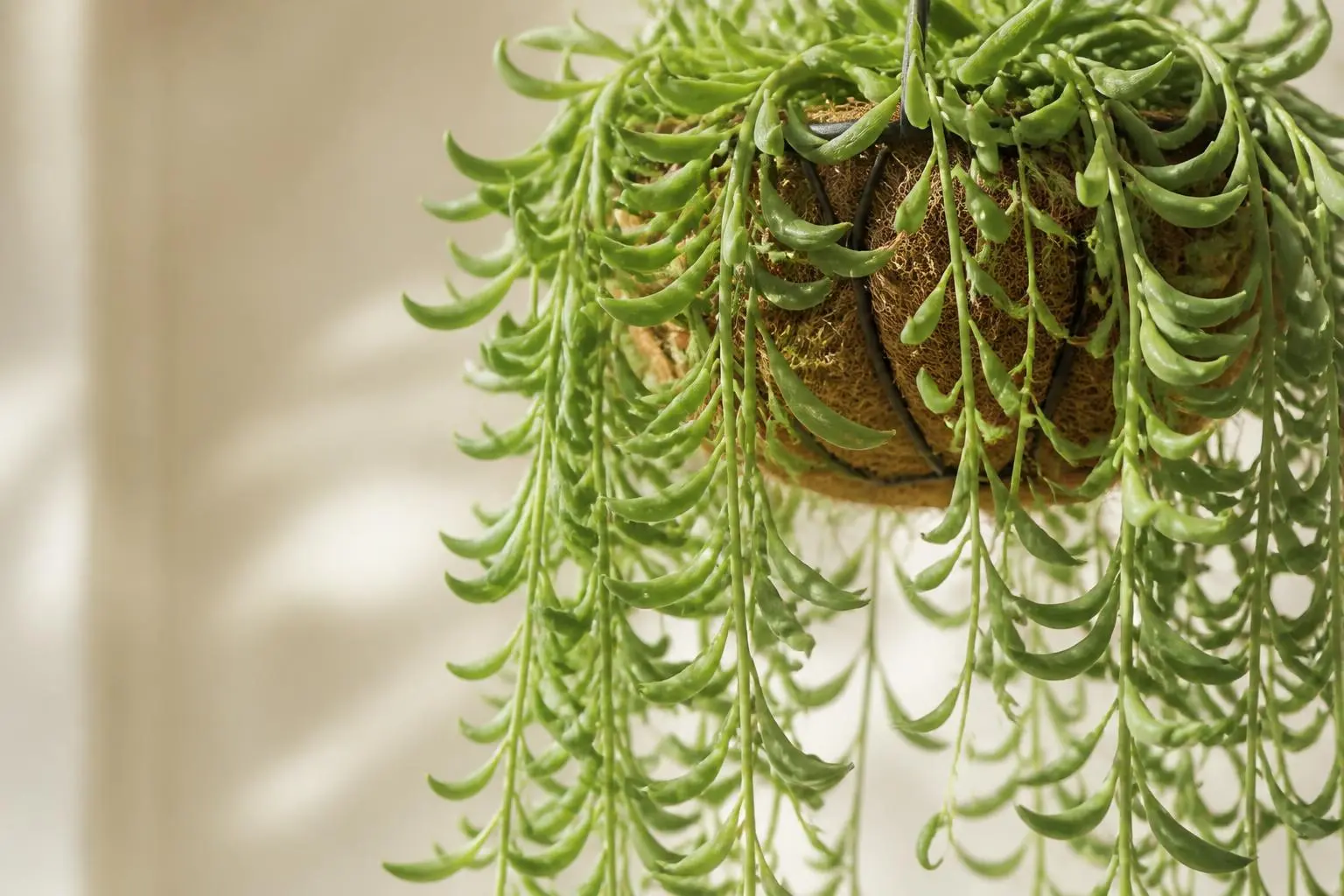 String Of Bananas
 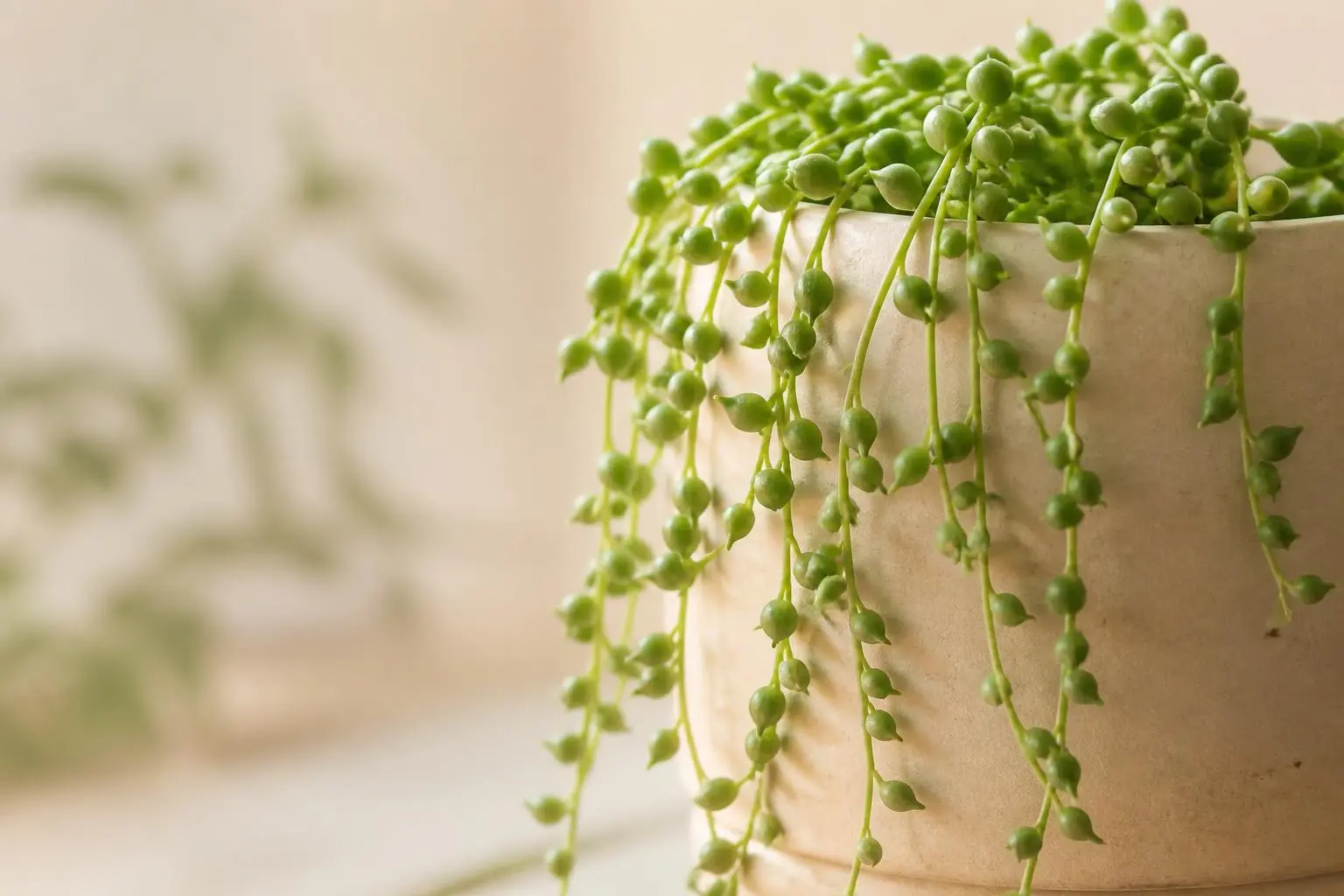 String Of Tears
 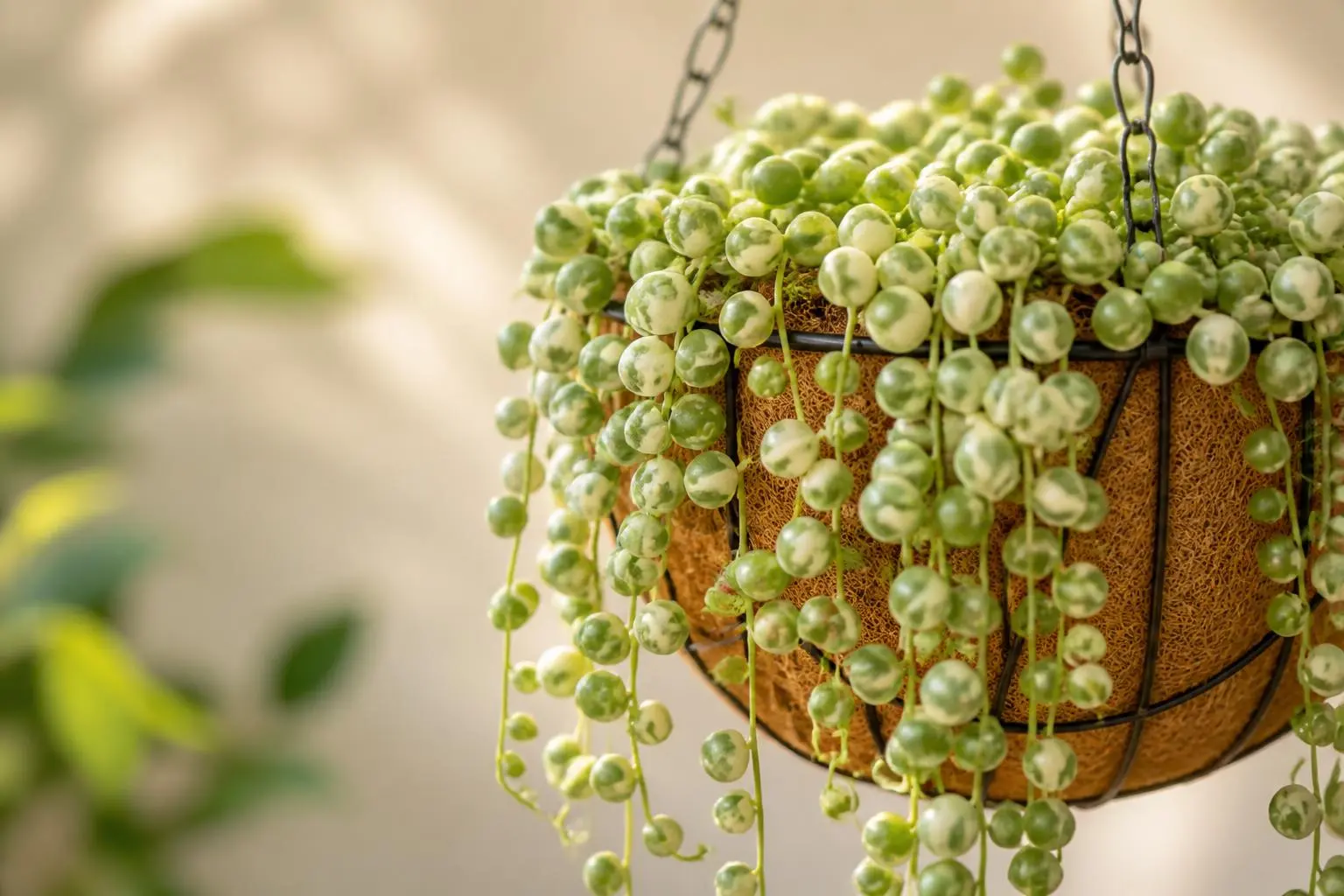 Variegated
 Compare Varieties
Explore different cultivars side-by-side and find the best match for your space.
Browse all varieties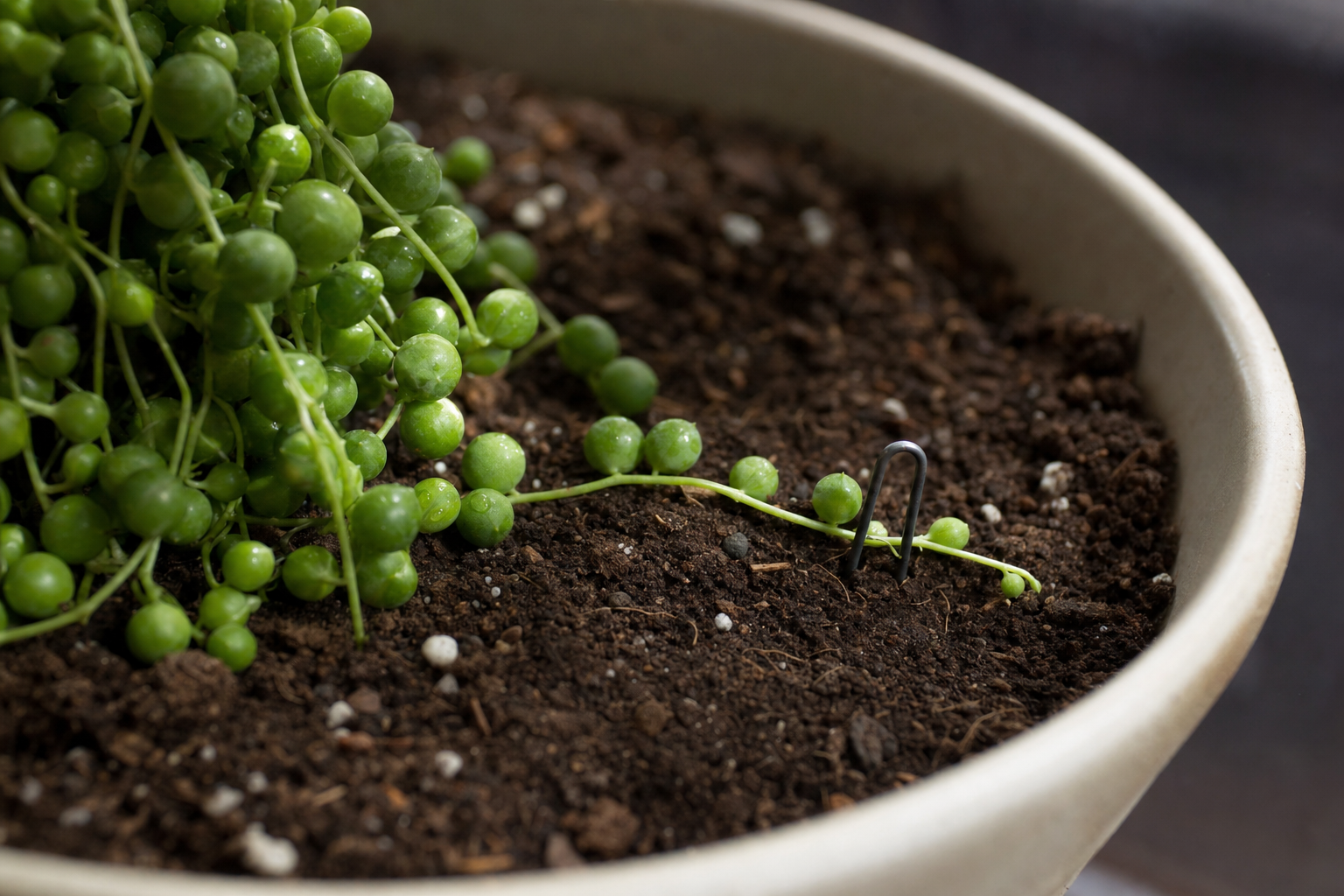
Propagation Guide
Step-by-step instructions for multiplying your plant collection.
Learn how to propagateFrequently Asked Questions
How often should I water String of Pearls?
Why is my String of Pearls shriveling?
How do I propagate String of Pearls?
How much light does String of Pearls need?
Why is my String of Pearls dying?
Is String of Pearls toxic to pets?
Common Problems
Why Are My Plant Leaves Turning Yellow?
Yellowing leaves are one of the most common houseplant problems. The good news is that most causes are easy to identify and fix once you know what to look for.
Read diagnosis guideHow to Fix an Overwatered Plant
Overwatering kills more houseplants than any other cause. The tricky part? The symptoms — yellowing, wilting, drooping — look just like underwatering. Here's how to tell the difference and fix it.
Read diagnosis guideReferences
- [1] Royal Horticultural Society. Senecio rowleyanus
- [2] ASPCA. Senecio rowleyanus Toxicity
- [3] South African National Biodiversity Institute. Senecio rowleyanus
- [4] University of Connecticut Plant Database. Senecio rowleyanus — String of Pearls