
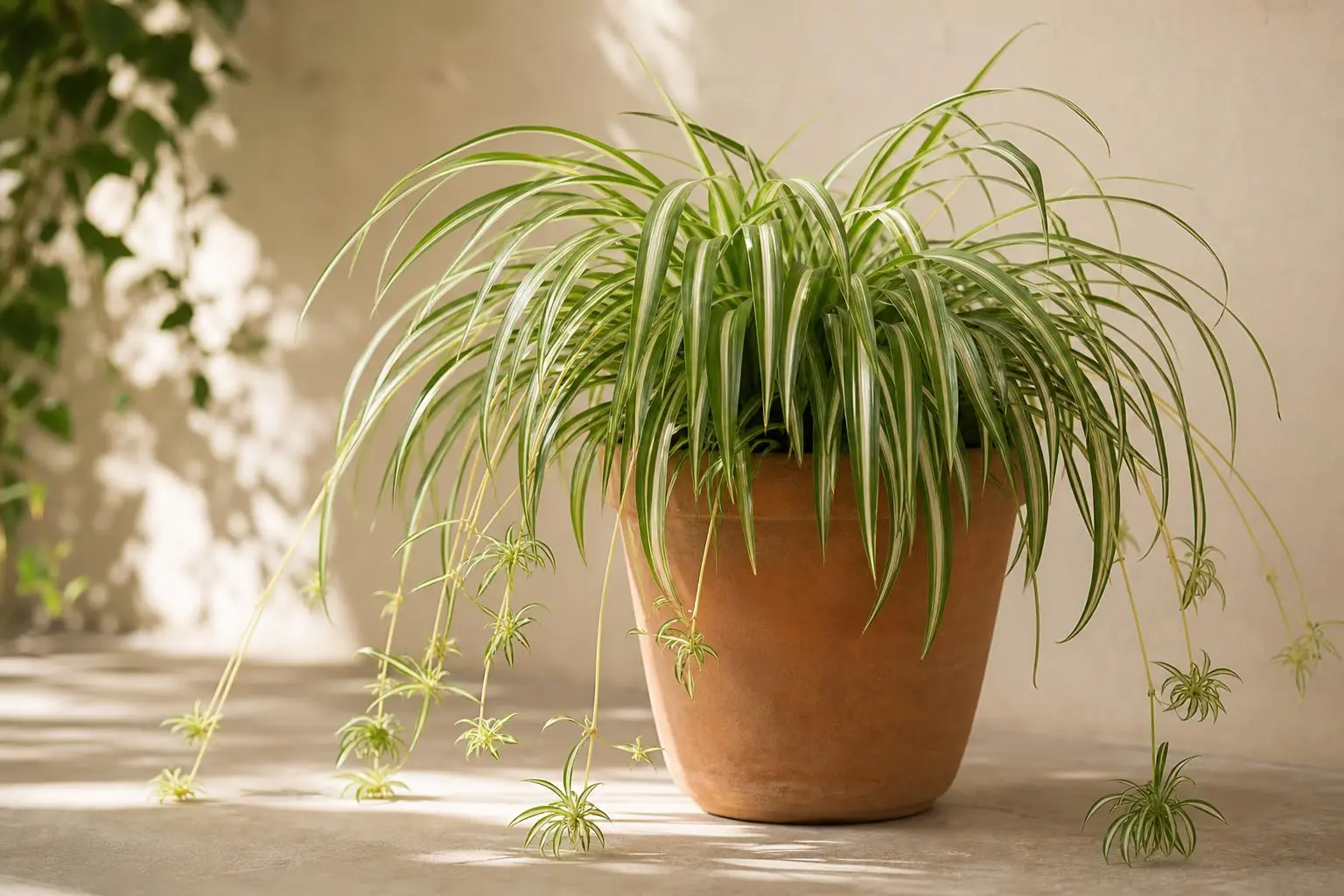
Spider Plant
Chlorophytum comosum
Also known as: Airplane Plant, Ribbon Plant, Spider Ivy, Hen and Chickens
Last updated: Sep 10, 2026
Medium to bright indirect light
When top inch of soil is dry
40–60%
55–80°F (13–27°C)
Well-draining potting mix with perlite
Balanced liquid fertilizer, every 2 weeks in spring/summer
Beginner friendly
Pet safe
Seasonal Care Calendar
| Season | Watering | Fertilizer | Notes |
|---|---|---|---|
| Spring | Every 7–10 days | Start biweekly feeding | Begin repotting if needed. Propagate baby plantlets. Resume regular watering. |
| Summer | Every 7–10 days | Biweekly feeding | Peak growing season — most babies produced. Can move outdoors to shaded area. Watch for pests. |
| Fall | Every 10–14 days | Reduce to monthly | Growth slows. Reduce watering. Stop fertilizing by late fall. Remove any dead leaves. |
| Winter | Every 14–21 days | None | Dormant period. Keep away from cold drafts and heating vents. Use filtered water to prevent brown tips. |
Detailed Care Guide
Everything you need to know to keep your Spider Plant thriving.
Light Requirements
Spider Plants are wonderfully adaptable when it comes to light. They thrive in medium to bright indirect light — a spot near an east- or north-facing window is ideal, or a few feet back from a south- or west-facing window where they receive filtered light.
They can tolerate lower light conditions better than many houseplants, making them great for offices and dimmer rooms. However, in very low light, growth slows significantly, the variegation on striped varieties fades, and the plant may stop producing babies. Conversely, too much direct sunlight scorches the leaves, causing bleached white patches and brown crispy tips.
If your Spider Plant's leaves are losing their variegation and turning solid green, it may be getting too little light. Move it to a brighter spot gradually — sudden exposure to bright light can cause sunburn. Rotate the pot a quarter turn each week for even, symmetrical growth.

Watering
Water your Spider Plant when the top inch of soil feels dry to the touch — typically every 7–10 days in spring/summer and every 14–21 days in fall/winter. Spider Plants are more forgiving of underwatering than overwatering, thanks to their fleshy tuberous roots that store moisture.
Overwatering is the most common mistake. Signs include yellowing leaves, mushy roots, and a generally wilted appearance even though the soil is wet. If the soil stays soggy for more than a day after watering, it's either too dense, the pot lacks drainage, or you're watering too frequently.
One important note: Spider Plants are sensitive to fluoride and chlorine in tap water, which is a leading cause of brown leaf tips. Use filtered water, rainwater, or let tap water sit out overnight to allow chemicals to dissipate. Water thoroughly until it drains from the bottom, then empty the saucer after 15 minutes.

Humidity
Spider Plants prefer moderate humidity between 40–60%, which aligns with average home conditions. They're more tolerant of dry air than tropical plants like Calathea or Boston Fern, making them easy to grow in most homes without extra humidity equipment.
In very dry environments (below 30% humidity, common in heated homes during winter), you may notice brown crispy tips on the leaves. While this is partly caused by fluoride sensitivity, low humidity makes it worse. A small humidifier nearby or grouping plants together can help.
Misting is generally not recommended for Spider Plants — the water droplets can sit in the leaf crevices and promote fungal growth. A pebble tray is a better low-effort option if you need to boost humidity.
Temperature
Spider Plants are comfortable in temperatures between 55–80°F (13–27°C), which matches most indoor environments perfectly. They can tolerate brief dips to 35°F (2°C) but will suffer damage if exposed to freezing temperatures — leaves will blacken and the plant may die.
Avoid placing your Spider Plant near cold drafts (air conditioning vents, exterior doors in winter) or heat sources (radiators, heating vents, fireplaces). Sudden temperature fluctuations stress the plant and can cause leaf drop or tip browning.
Spider Plants enjoy spending the summer outdoors in a shaded spot, but bring them back inside when nighttime temperatures drop below 50°F. They are hardy in USDA zones 9–11 and can be grown outdoors year-round in those regions.
Soil
A well-draining, lightweight potting mix is ideal for Spider Plants. Standard potting soil works, but amending it improves drainage and prevents the root rot that Spider Plants are prone to in soggy conditions.
Recommended mix: 2 parts quality potting soil + 1 part perlite. This provides good aeration and drainage while retaining enough moisture for the roots. For even better results, add a handful of orchid bark or coco coir for extra chunkiness.
Spider Plants have thick, tuberous roots that store water, so they actually prefer the soil to dry out between waterings. A heavy, dense mix that stays wet is the enemy. The pH should be slightly acidic to neutral (6.0–7.0). Avoid garden soil or topsoil in pots — they compact and suffocate roots over time.
Fertilizer
Feed your Spider Plant with a balanced liquid fertilizer (NPK 10-10-10 or 20-20-20) diluted to half strength, applied every 2 weeks during the spring and summer growing season. Spider Plants are light feeders — more is not better.
Over-fertilizing causes brown leaf tips (the salt buildup burns the foliage) and can actually reduce baby production. If you notice white crust on the soil surface, flush the pot with plenty of water to leach out excess salts.
Organic alternatives like worm castings top-dressed on the soil work well for a slow-release approach. Stop fertilizing entirely from late fall through winter when growth naturally slows. Resume feeding when you see new growth in spring.
Repotting
Repot your Spider Plant every 1–2 years, or when you see roots growing out of the drainage holes or circling the top of the soil. Spider Plants have vigorous root systems and can quickly become pot-bound — in fact, they actually bloom and produce more babies when slightly root-bound, so don't rush to upsize.
Choose a pot only 1–2 inches larger in diameter than the current one. Going too large means excess soil stays wet, increasing the risk of root rot. Always use a pot with drainage holes. Hanging baskets are particularly popular for Spider Plants to showcase their trailing babies.
To repot: water the plant a day before for easier removal. Gently loosen the root ball — Spider Plant roots are thick and fleshy, so don't be afraid to untangle them. Trim any black or mushy roots. Place in the new pot with fresh soil at the same depth, water thoroughly, and keep in a slightly shadier spot for a few days to recover.
Our Experience
I switched from tap water to filtered water for my Spider Plants and the brown tips disappeared within a month. Our city water has high fluoride, which Spider Plants absolutely hate. If you don't have a filter, let tap water sit out for 24 hours — it helps but doesn't eliminate the problem entirely.
— Municipal water with high fluoride, indoor environment, year-round
My Spider Plant produced zero babies for a year until I let it get slightly root-bound. Once the roots filled the pot, it started blooming tiny white flowers and producing babies like crazy. Now I only repot when the roots are literally bursting out — being snug in its pot seems to trigger reproduction.
— Grown indoors in USDA Zone 7a, east-facing window, year-round
I propagate baby plantlets by pinning them directly into moist soil while still attached to the parent plant. Using a bent paperclip to hold the base down works perfectly. After 2 weeks, they're rooted and I snip the connection. This method has a near 100% success rate compared to water propagation.
— Indoor propagation, spring/summer, standard potting mix
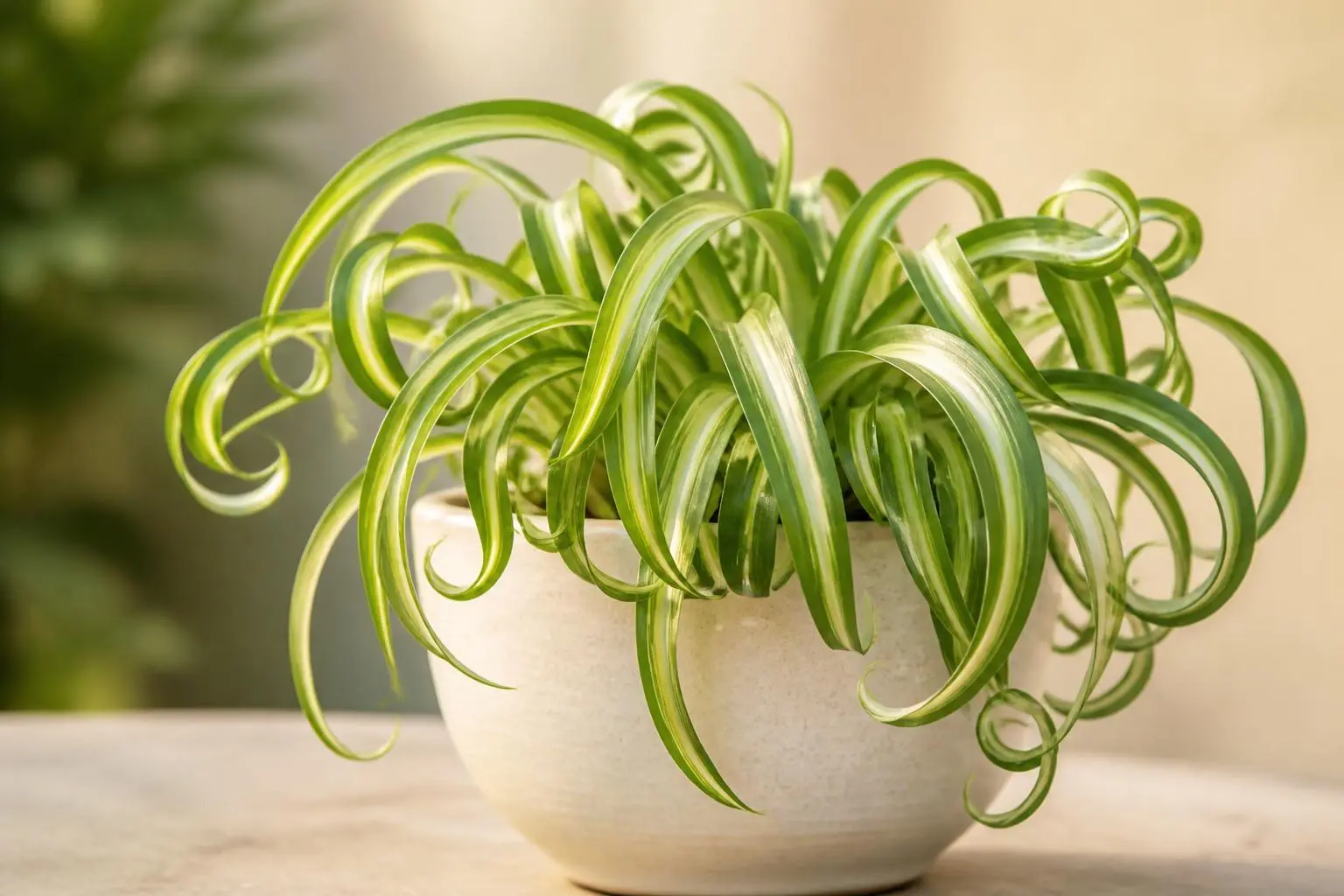 Bonnie
 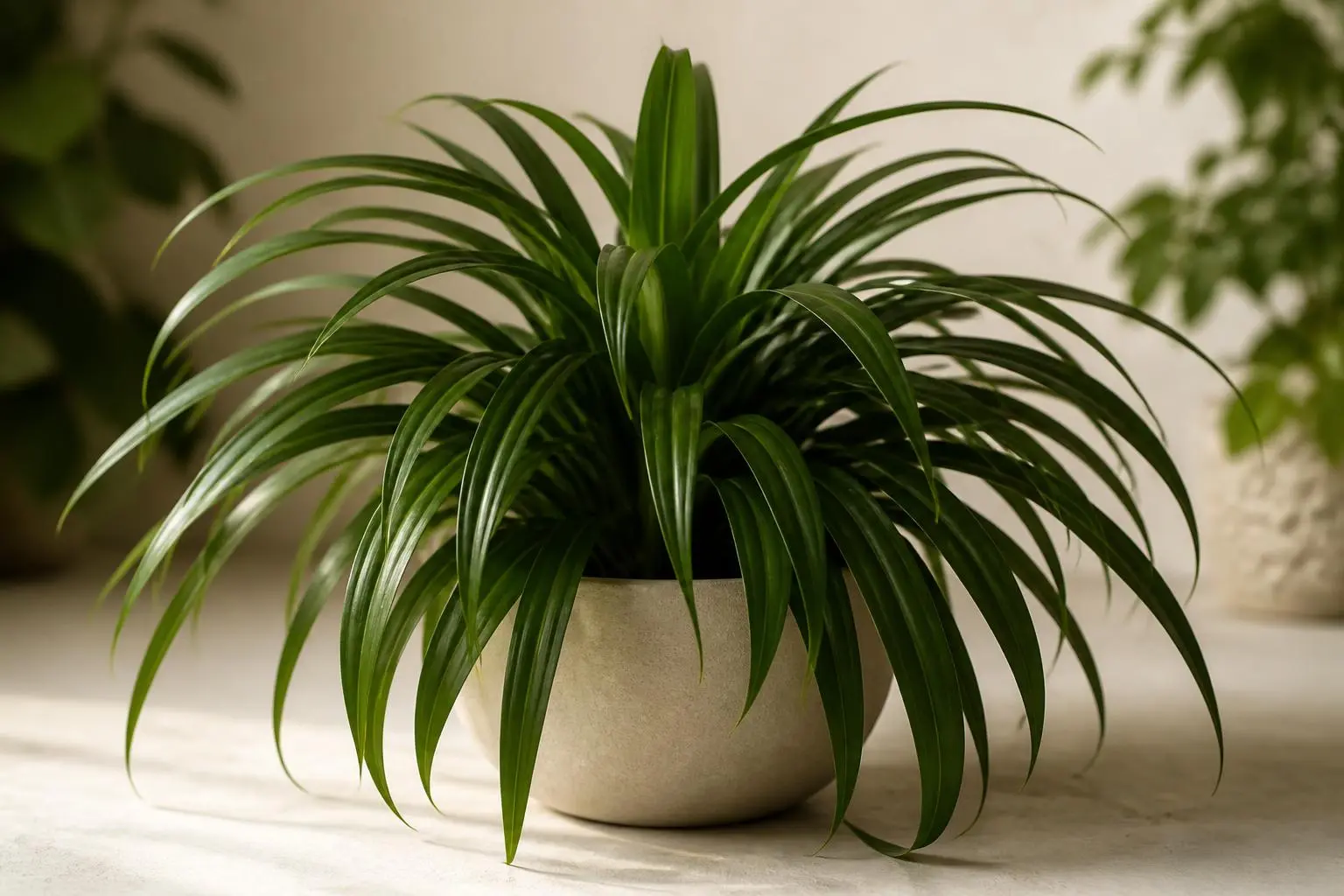 Solid Green
 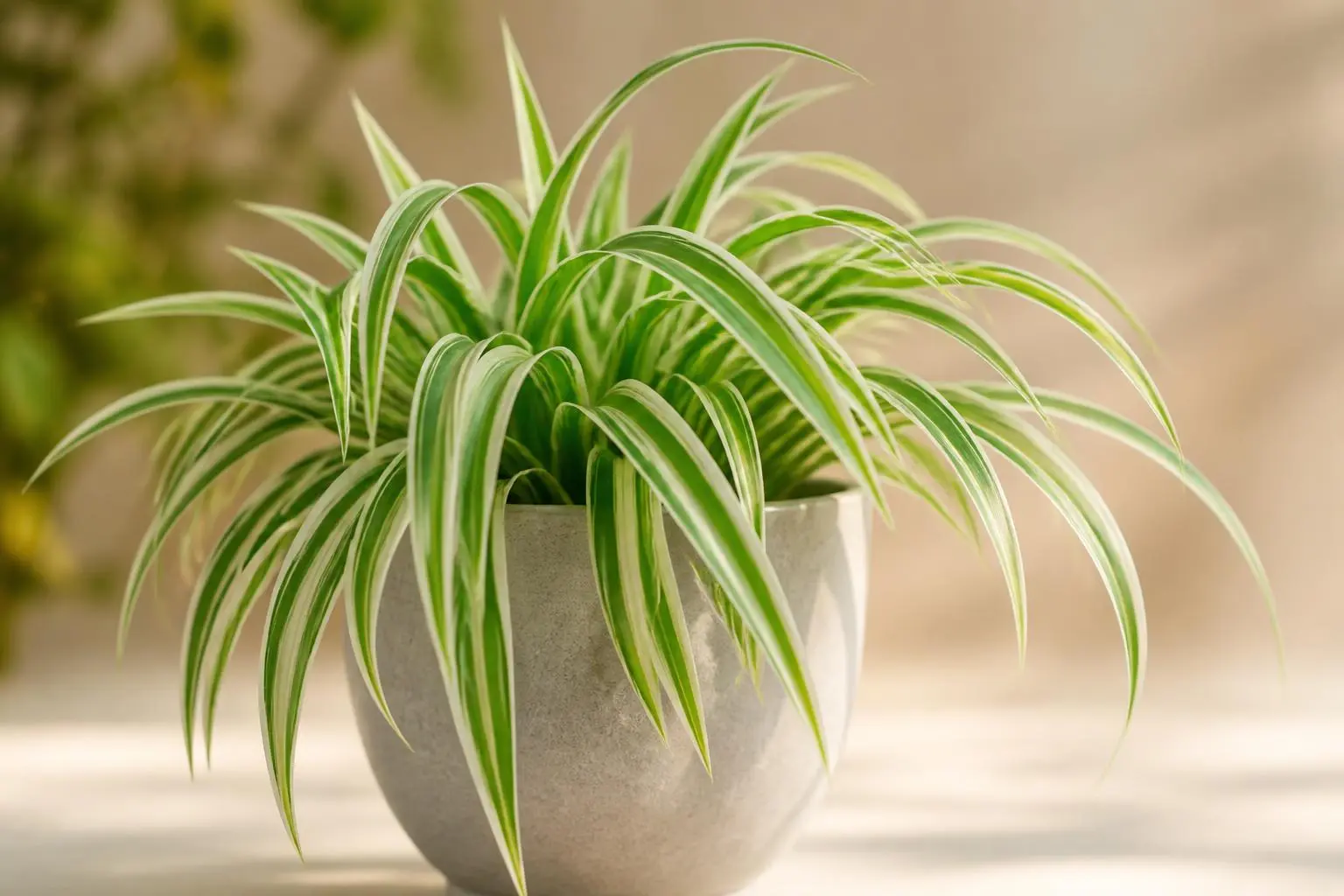 Variegatum
 Compare Varieties
Explore different cultivars side-by-side and find the best match for your space.
Browse all varieties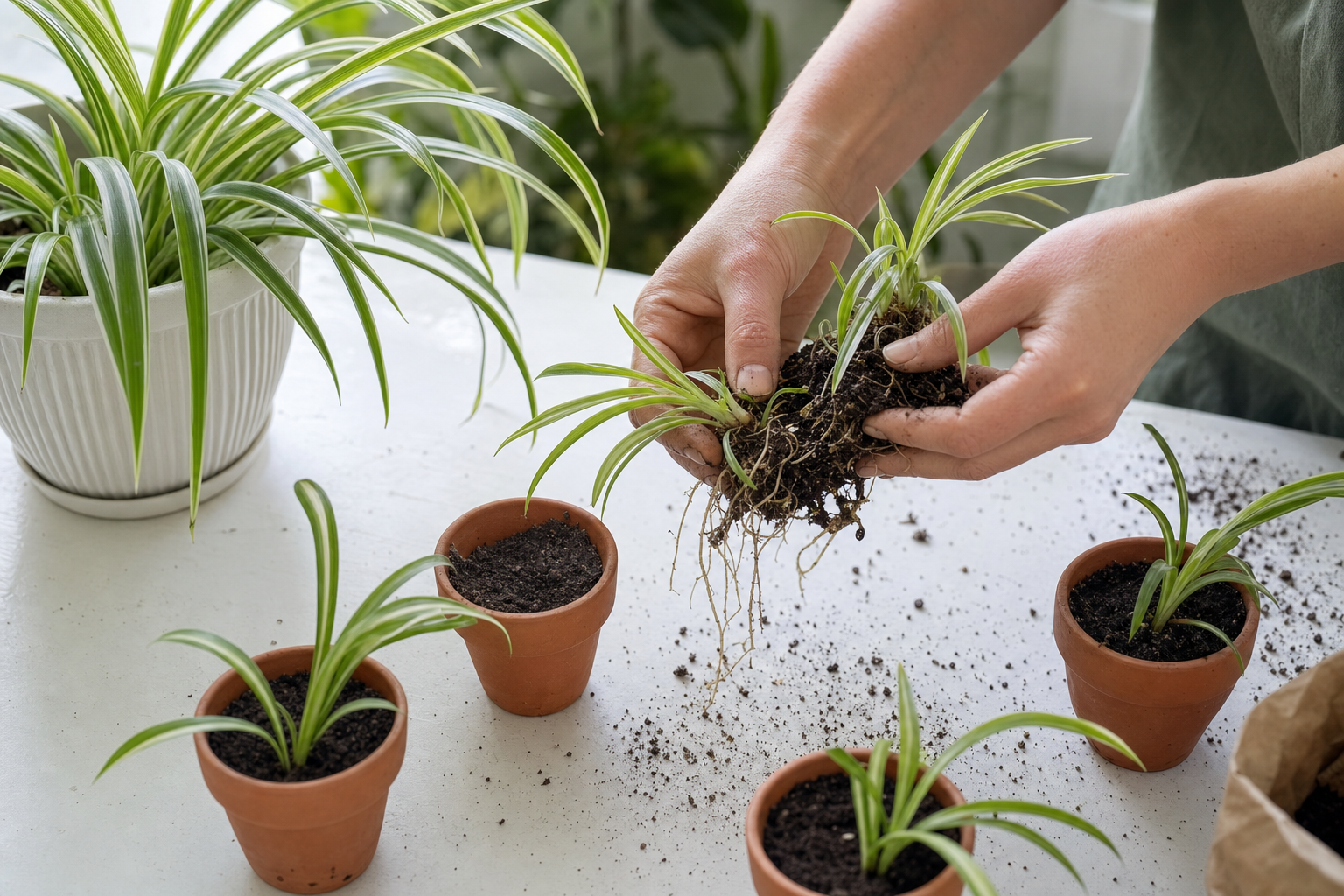
Propagation Guide
Step-by-step instructions for multiplying your plant collection.
Learn how to propagateFrequently Asked Questions
How often should I water my Spider Plant?
Why does my Spider Plant have brown tips?
How do I propagate Spider Plant babies?
Are Spider Plants safe for cats and dogs?
How much light does a Spider Plant need?
Why isn't my Spider Plant producing babies?
Should I cut the brown tips off my Spider Plant?
Common Problems
Why Are My Plant Leaves Turning Yellow?
Yellowing leaves are one of the most common houseplant problems. The good news is that most causes are easy to identify and fix once you know what to look for.
Read diagnosis guideHow to Fix an Overwatered Plant
Overwatering kills more houseplants than any other cause. The tricky part? The symptoms — yellowing, wilting, drooping — look just like underwatering. Here's how to tell the difference and fix it.
Read diagnosis guideReferences
- [1] Royal Horticultural Society. Chlorophytum comosum
- [2] ASPCA. Chlorophytum comosum Non-Toxicity
- [3] University of Florida IFAS Extension. Chlorophytum comosum — Spider Plant
- [4] NASA Clean Air Study. Interior Landscape Plants for Indoor Air Pollution Abatement
Similar Plants
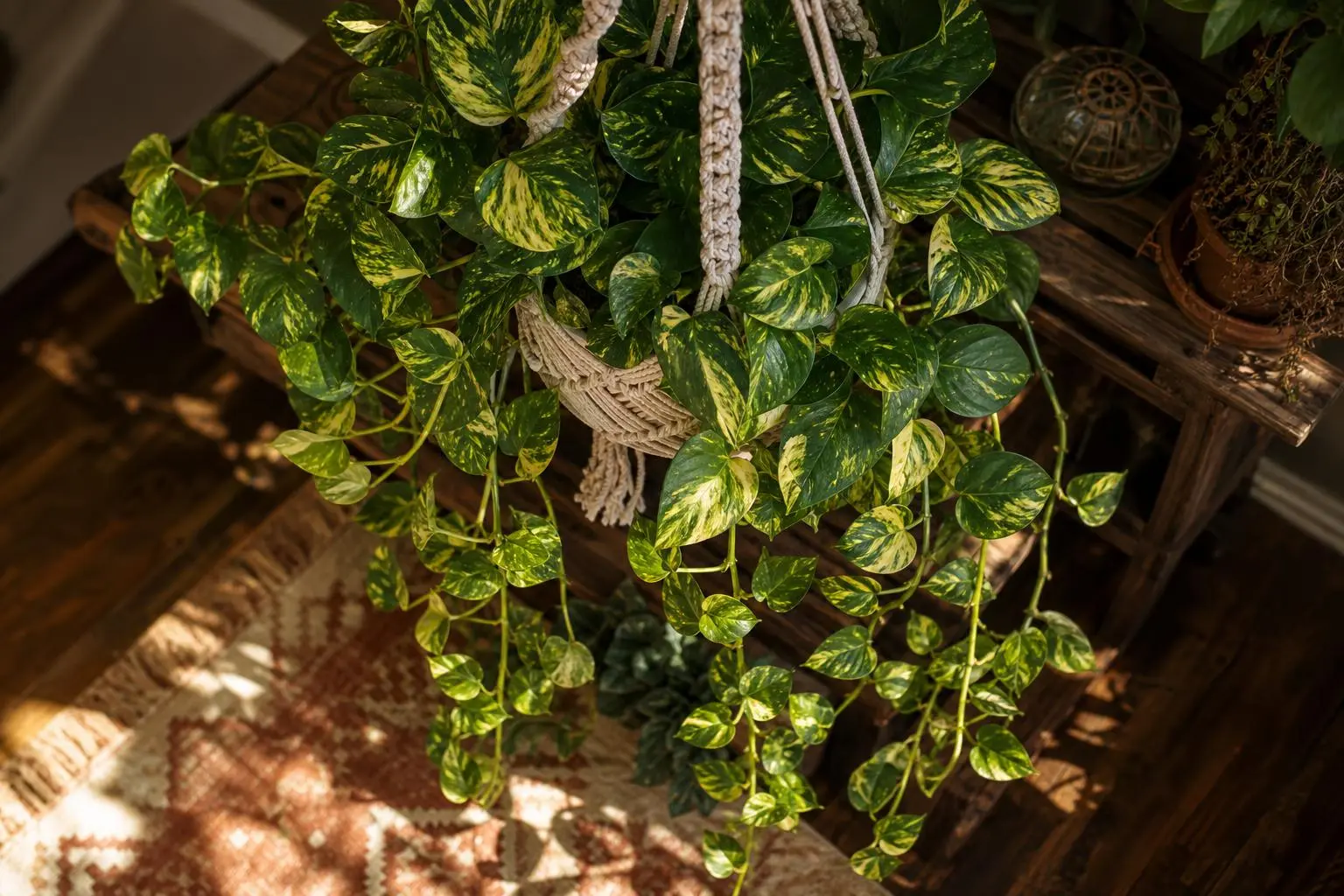
Pothos
Epipremnum aureum
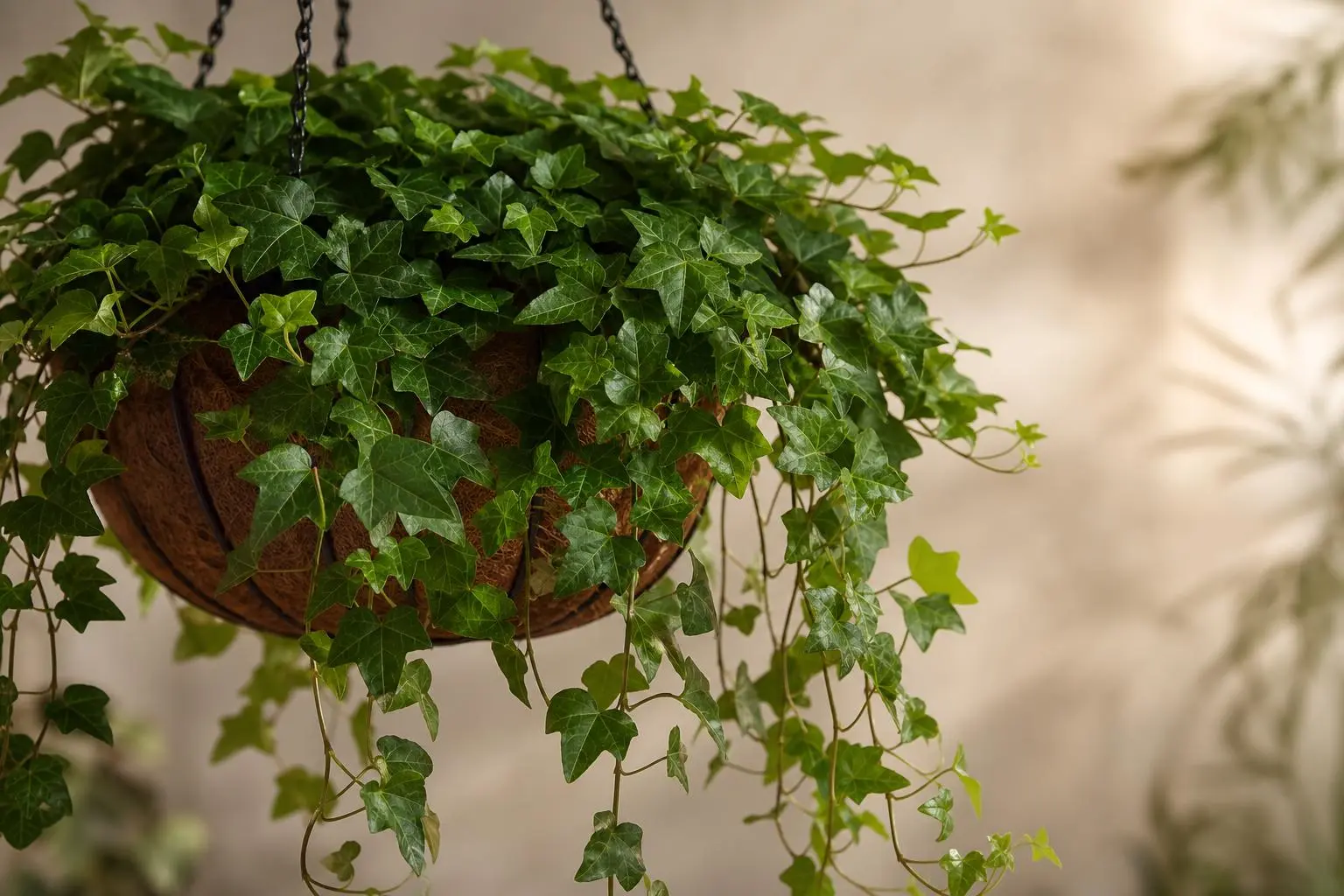
English Ivy
Hedera helix
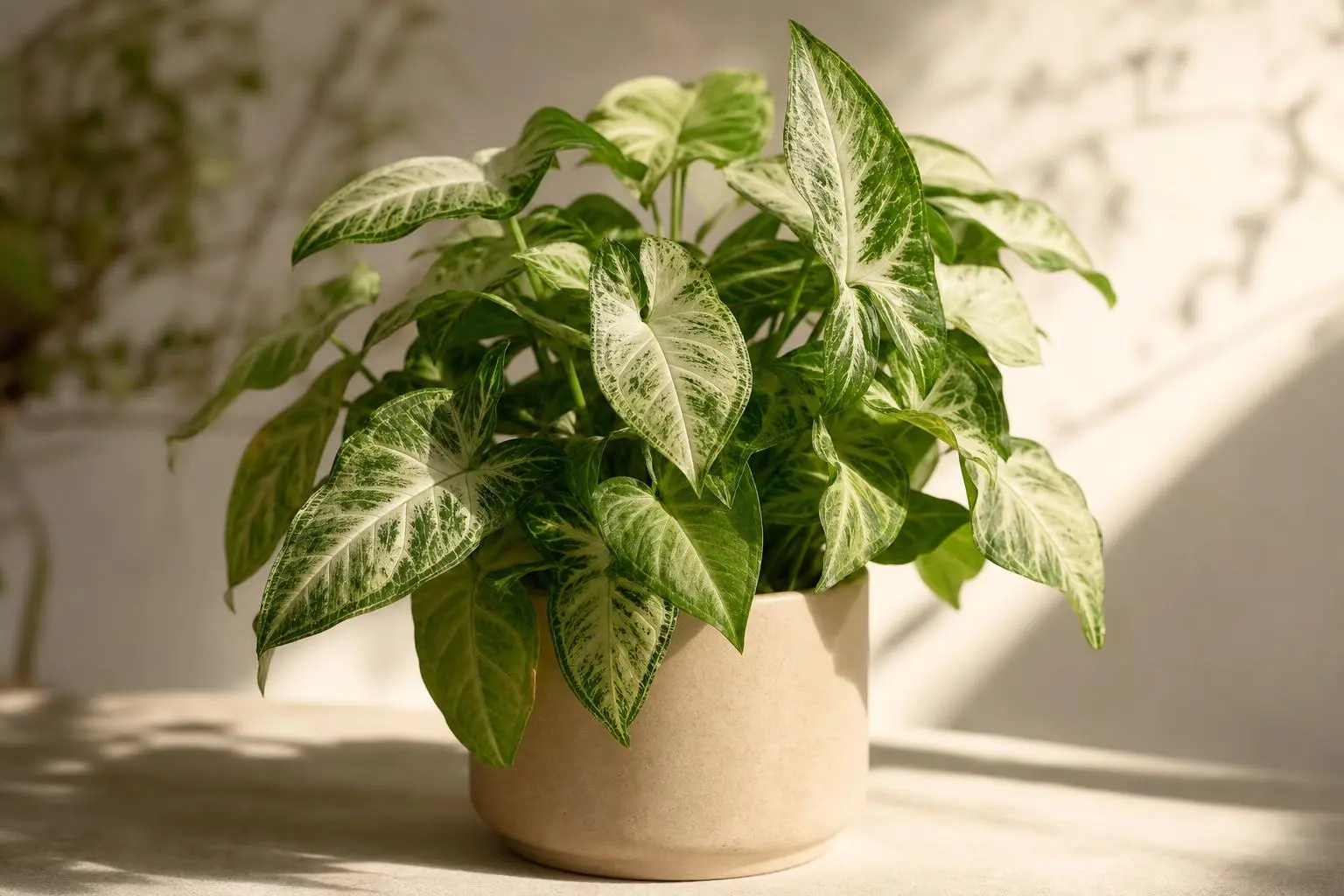
Arrowhead Plant
Syngonium podophyllum