
String of Pearls Varieties
A comparison of the most popular String of Pearls varieties — learn which one is right for your space and skill level.
| Variety | Key Feature | Care Difficulty | Price Range |
|---|---|---|---|
| Senecio rowleyanus (Standard) | Perfectly round pea-sized green pearls with a translucent leaf window stripe; iconic beaded trailing appearance up to three feet long | Easy | Varies |
| String of Bananas (Senecio radicans) | Elongated banana-shaped leaves instead of round pearls; larger thicker leaves with a translucent window; faster growing and more forgiving than standard | Easy | Varies |
| Variegated String of Pearls | Green and creamy-white striped variegated pearls; each leaf displays a unique pattern; rare and significantly slower growing than standard | Easy | Varies |
| String of Tears (Senecio citriformis) | Teardrop-shaped leaves with pointed tips and wider rounded bases; translucent leaf windows visible when backlit; brush-like white flowers | Easy | Varies |
Variety Details
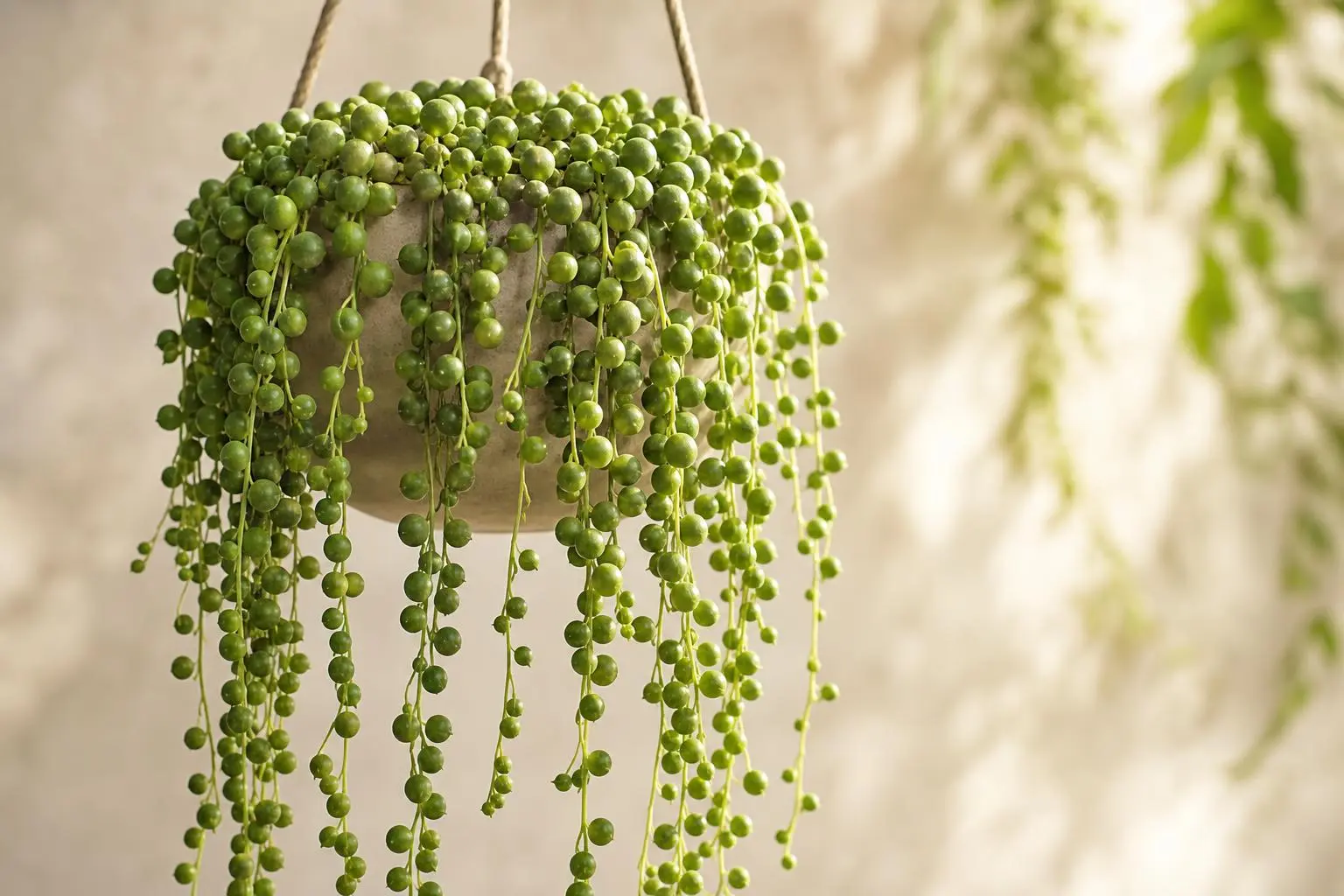
Senecio rowleyanus (Standard)
The iconic String of Pearls that has become one of the most photographed and shared houseplants on social media, featuring perfectly round, pea-sized green leaves strung along slender trailing stems like a living beaded curtain. Each pearl has a narrow translucent stripe — called a leaf window — running along one side, an evolutionary adaptation that allows light to penetrate deep into the leaf interior for efficient photosynthesis in the shaded crevices where the plant grows natively. Native to the arid regions of southwest Africa, specifically Namibia and the Eastern Cape of South Africa, this species grows as a groundcover trailing over rocks and between shrubs in its natural habitat. Indoors, healthy strands can trail two to three feet long, creating a dramatic cascading effect in hanging baskets. The standard form is the most widely available variety, found in most garden centers for eight to fifteen dollars, though large established specimens command premium prices.
Distinguishing feature: Perfectly round pea-sized green pearls with a translucent leaf window stripe; iconic beaded trailing appearance up to three feet long
Care notes: Standard String of Pearls care applies — this is the baseline against which all other varieties are measured. Water only when the soil is completely dry using the soak-and-dry method, typically every fourteen to twenty-one days in spring and summer and every three to four weeks in fall and winter. Overwatering is the single greatest threat; the pearls turn mushy and translucent, and stem rot sets in rapidly with no easy cure. Requires at least six hours of bright indirect light daily, with some gentle direct morning sun being ideal. In low light, the pearls elongate and space far apart, destroying the prized beaded appearance. Bottom watering is strongly recommended to keep the fragile pearls dry while hydrating the roots. Use a well-draining mix of equal parts succulent soil and perlite, and never mist the plant.
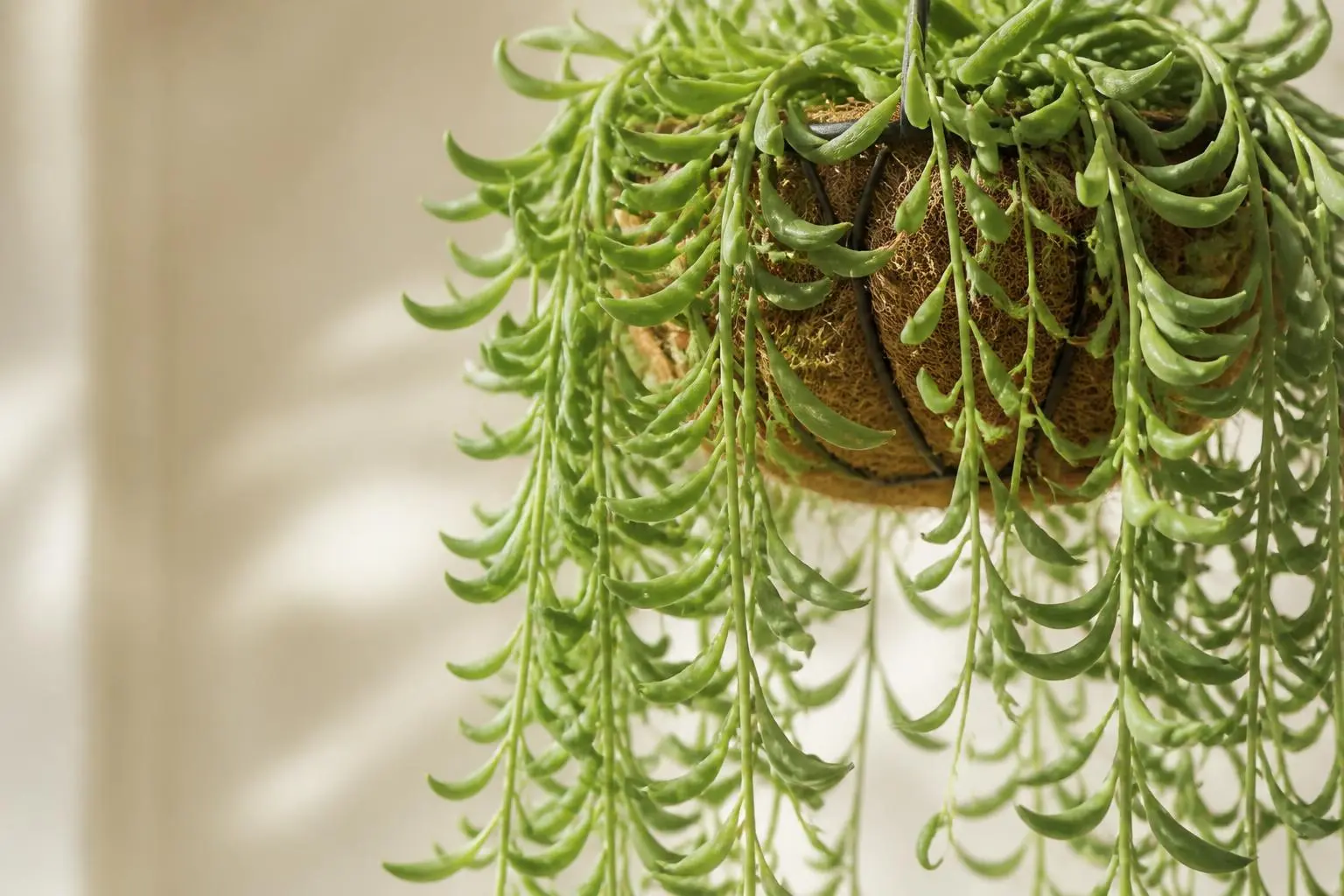
String of Bananas (Senecio radicans)
A closely related species that is often recommended as the easier alternative to String of Pearls, featuring elongated, curved leaves that resemble tiny green bananas rather than round pearls. The banana-shaped leaves are larger, thicker, and more robust than the delicate round pearls of rowleyanus, making this variety significantly more tolerant of the occasional care mistake that would devastate its round-leaved cousin. Native to similar arid regions of southern Africa, Senecio radicans trails just as dramatically, with strands reaching three to four feet long, and produces small, cinnamon-scented white flowers in late winter and spring that the standard String of Pearls rarely produces indoors. The leaves also feature the translucent window stripe, though it is less visible due to the elongated shape. String of Bananas is widely available and typically costs the same as or slightly less than standard String of Pearls, making it an excellent value.
Distinguishing feature: Elongated banana-shaped leaves instead of round pearls; larger thicker leaves with a translucent window; faster growing and more forgiving than standard
Care notes: Significantly easier to grow than String of Pearls, making it the ideal choice for anyone who has struggled with the standard variety or who tends to overwater. The larger, thicker leaves store more water and tolerate a wider range of moisture conditions, including occasional slight overwatering that would immediately rot rowleyanus. Adapts better to lower light conditions, though it still needs bright indirect light to maintain compact, full growth — in low light the bananas elongate and the strands become sparse. Water using the same soak-and-dry method but with slightly more frequency, every ten to fourteen days in the growing season, as the larger leaves use water faster. Bottom watering is still recommended. Produces small white flowers with a pleasant spicy-cinnamon fragrance in late winter, a bonus rarely seen on standard String of Pearls indoors.
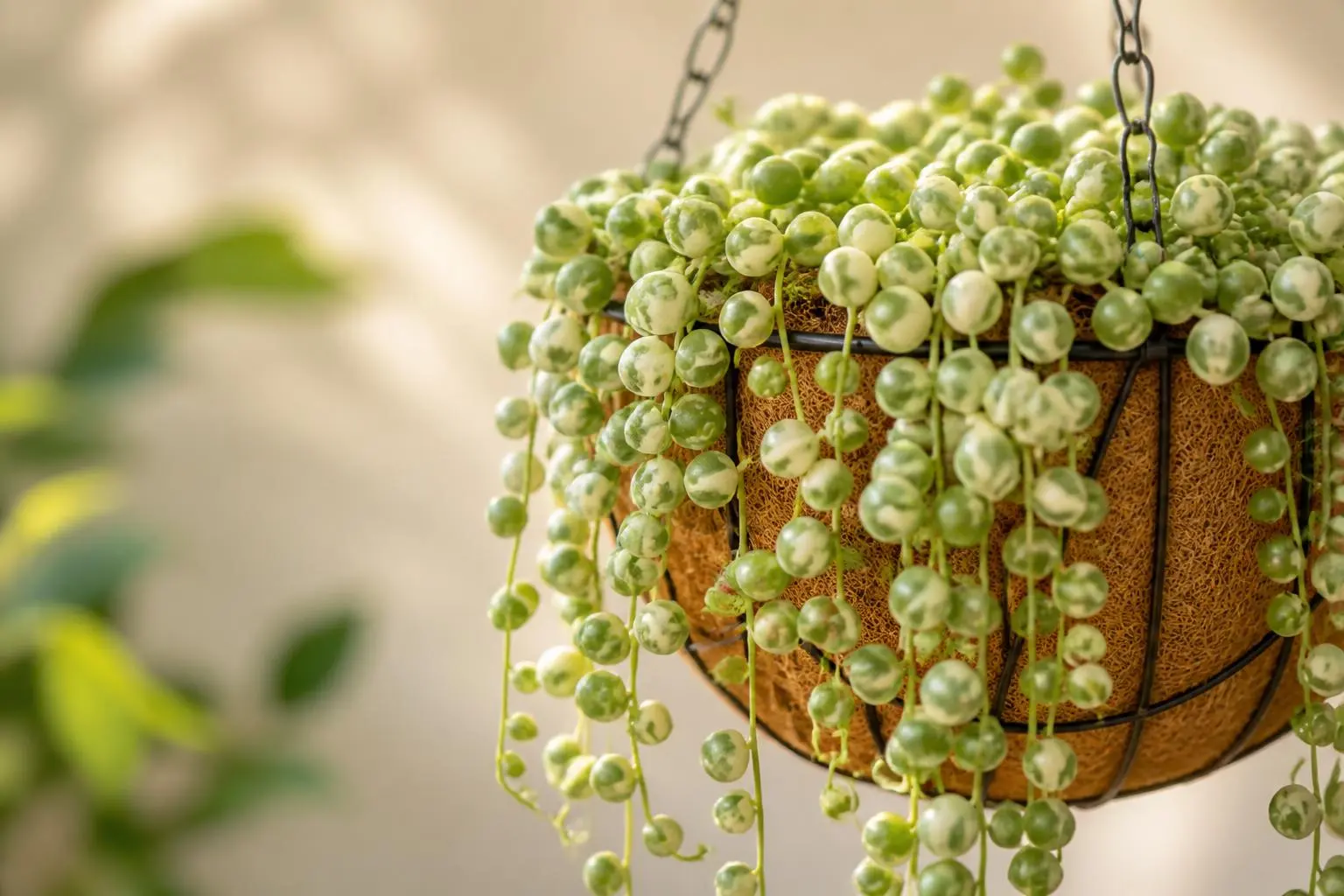
Variegated String of Pearls
A rare and highly sought-after form of String of Pearls featuring green and creamy-white striped pearls that create a beautiful two-tone effect along each trailing strand. The variegation ranges from subtle white speckles to bold cream stripes covering half the pearl surface, with each leaf displaying a slightly different pattern. The white portions lack chlorophyll, which significantly slows the growth rate — this variety grows perhaps half as fast as the standard green form and produces shorter trailing strands of one to two feet. Variegated String of Pearls appeared as a natural sport mutation and has been propagated vegetatively to maintain the coloring, though the variegation can be unstable, occasionally producing all-green or all-white pearls that should be pruned to maintain the desired pattern. Due to its rarity and slow growth, this variety commands premium prices of twenty to fifty dollars for even small plants, and well-established specimens with long trailing strands can exceed one hundred dollars from specialty growers.
Distinguishing feature: Green and creamy-white striped variegated pearls; each leaf displays a unique pattern; rare and significantly slower growing than standard
Care notes: More demanding than both the standard String of Pearls and String of Bananas, requiring consistently bright indirect light to maintain its variegation — in insufficient light the plant produces more chlorophyll and the white stripes gradually revert to green. The white portions of the leaves are structurally weaker and far more susceptible to sunburn, rot, and physical damage, so handle with extra care and avoid direct sun exposure beyond gentle morning rays. More sensitive to overwatering than the standard form; allow the soil to dry completely and wait an extra day or two beyond what you would for standard rowleyanus before watering. Bottom watering is essential to keep the delicate variegated pearls dry. Fertilize very sparingly at quarter strength during spring and summer only. Prune any all-green strands promptly as they will outgrow the variegated portions, and remove all-white pearls that cannot photosynthesize.
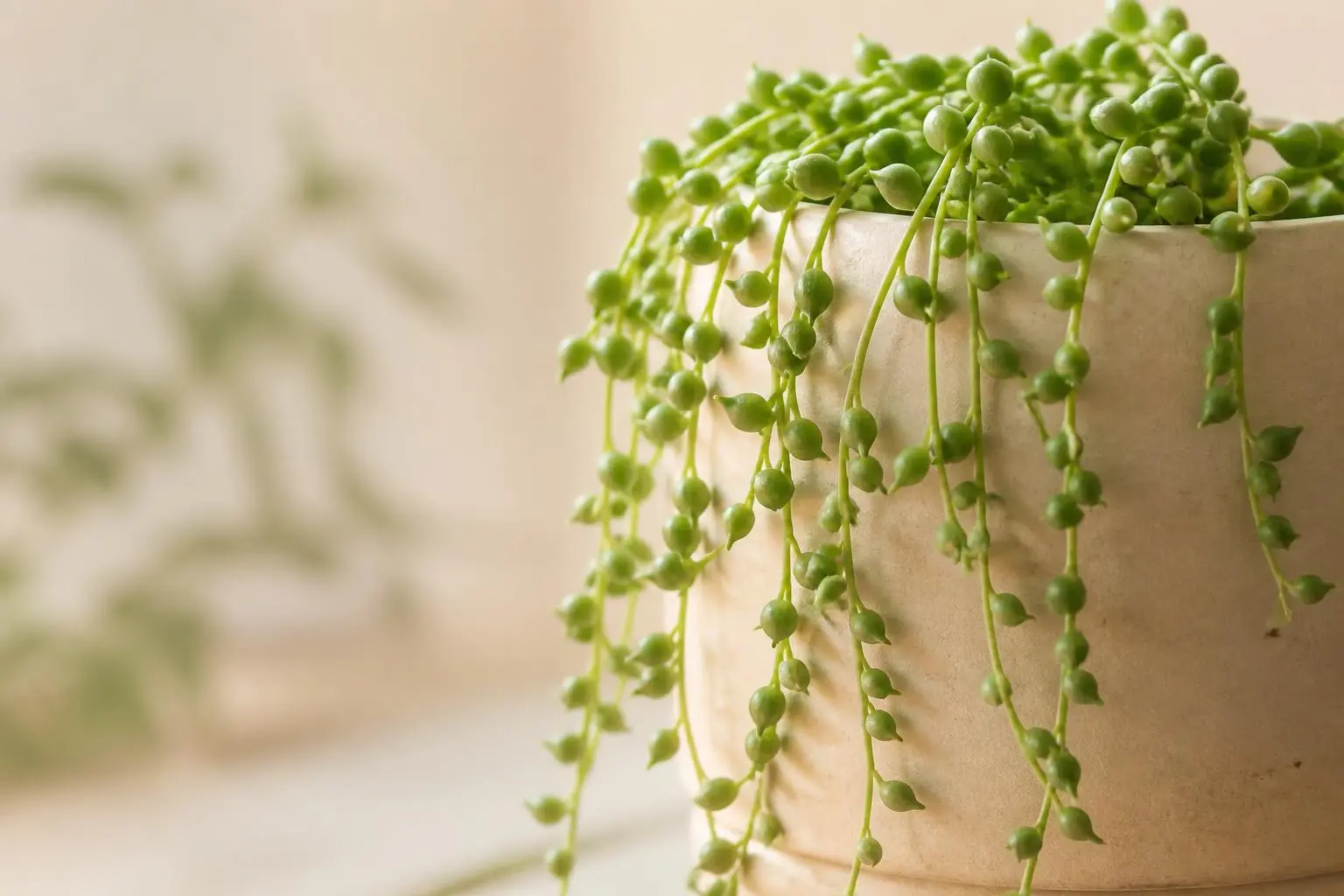
String of Tears (Senecio citriformis)
A distinctive and less commonly seen species that produces teardrop-shaped leaves with a pointed tip and a wider rounded base, creating a unique silhouette that falls somewhere between the round pearls of rowleyanus and the elongated bananas of radicans. The teardrop shape is particularly attractive when backlit, as the translucent leaf window becomes clearly visible and the leaves appear to glow from within. Native to the Eastern Cape of South Africa, Senecio citriformis grows in similar arid, rocky conditions as String of Pearls but is somewhat more adaptable in cultivation. The trailing strands reach two to three feet long, and the plant produces small brush-like white flowers in late summer that differ from the typical daisy-like blooms of other Senecio species. String of Tears is moderately rare in the trade and typically costs fifteen to thirty dollars, reflecting its limited availability compared to the more common rowleyanus and radicans.
Distinguishing feature: Teardrop-shaped leaves with pointed tips and wider rounded bases; translucent leaf windows visible when backlit; brush-like white flowers
Care notes: Similar care requirements to standard String of Pearls but with slightly more tolerance for variation in watering and light conditions, making it a moderate-difficulty alternative. The teardrop-shaped leaves are somewhat larger and hold more moisture than round pearls, providing a small buffer against underwatering — shriveled leaves plump back up within a day or two of watering. Still requires bright indirect light with some direct morning sun for optimal growth, though it tolerates marginally lower light better than rowleyanus without the severe elongation that plagues standard String of Pearls. Water using the soak-and-dry method every fourteen to twenty-one days during the growing season, ensuring the soil dries completely between waterings. Bottom watering is preferred to keep the leaves dry. Use a well-draining succulent mix with extra perlite and avoid humid locations.