
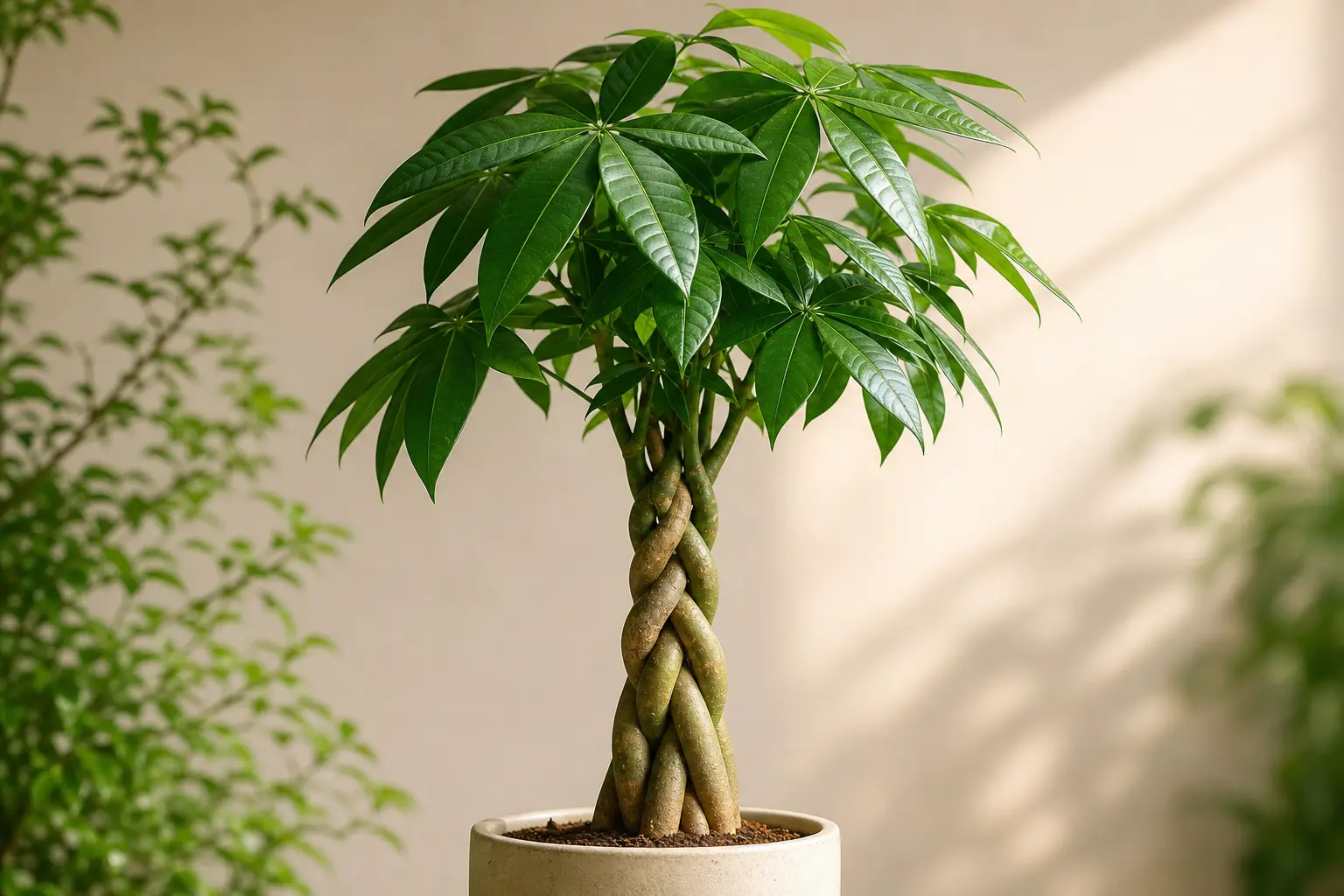
Money Tree
Pachira aquatica
Also known as: Guiana Chestnut, Malabar Chestnut, Saba Nut, Provision Tree
Last updated: Sep 10, 2026
Bright indirect light; tolerates a few hours of gentle direct sun
When top 2–4 inches of soil are dry, usually every 1–2 weeks
50%+; average home humidity is acceptable
60–85°F (16–29°C); keep above 50°F
Well-draining potting mix with perlite or sand
Monthly at half strength in spring and summer
Beginner friendly
Pet safe
Seasonal Care Calendar
| Season | Watering | Fertilizer | Notes |
|---|---|---|---|
| Spring | Every 7–10 days | Monthly, half strength | Best season for repotting, braiding young trunks, and taking cuttings. Watch for a flush of new growth. |
| Summer | Every 5–7 days | Monthly, half strength | Active growth. Can go outdoors in shade; keep the saucer empty and rotate the pot weekly. |
| Fall | Every 10–14 days | Stop by late fall | Growth slows. Check for pests that came in from summer outdoors; reduce feeding gradually. |
| Winter | Every 2–3 weeks | None | Keep above 60°F, away from drafts and heaters. Leaf drop now usually means cold or a sudden move, not thirst. |
Detailed Care Guide
Everything you need to know to keep your Money Tree thriving.
Light Requirements
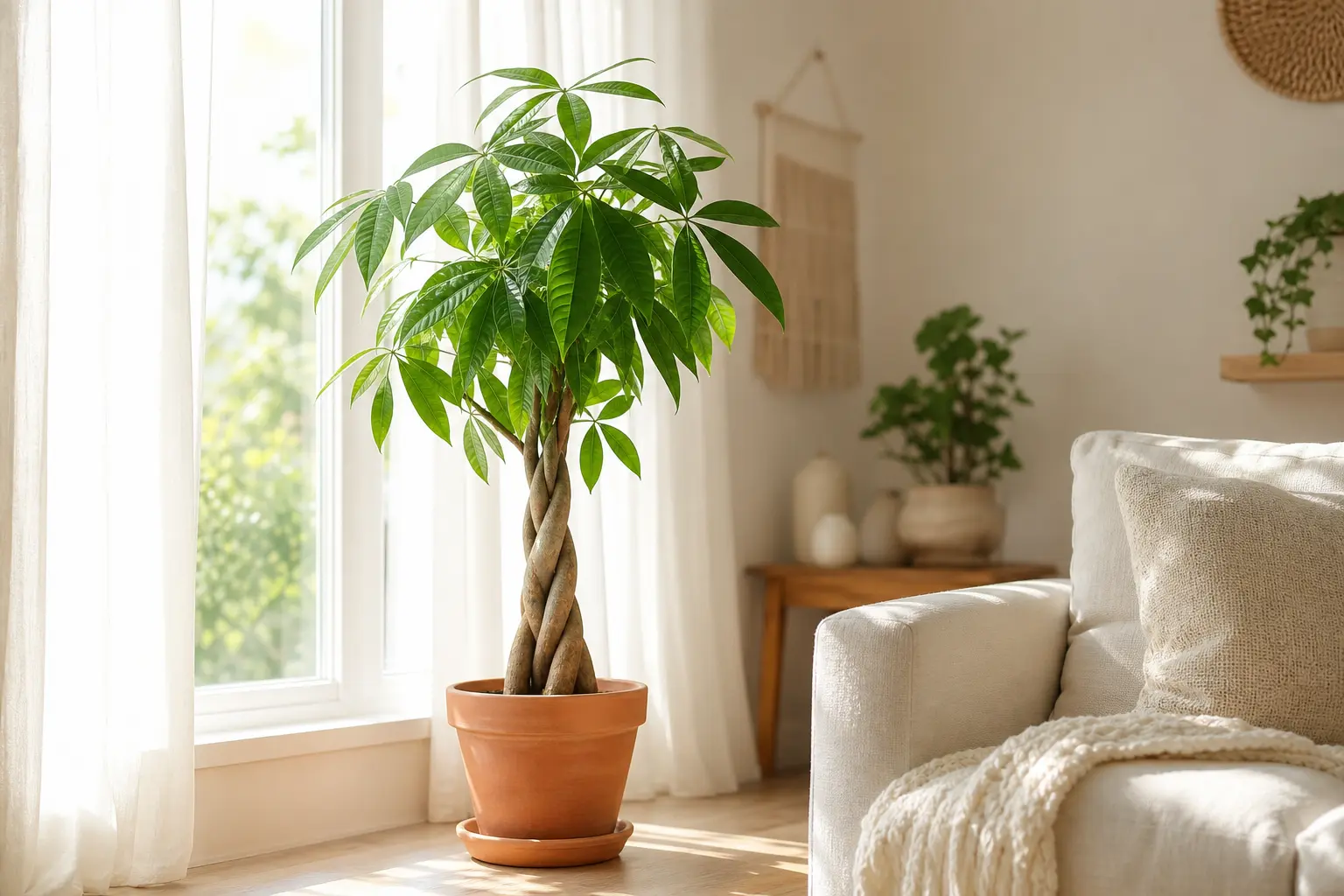
Money trees prefer bright, indirect light - within a few feet of an east or west window, or set back from a south window. Outdoors in their native wetlands they grow in full tropical sun, so mature plants handle a few hours of direct morning light happily; just introduce it gradually, because a plant grown in dim nursery shade will scorch if moved abruptly into harsh afternoon sun.
They also tolerate lower light better than most tree-form houseplants, which is one reason they thrive in offices. Expect a trade-off: in dim corners growth slows, stems stretch and lean toward the nearest light, and the palmate leaves grow smaller and further apart. If your tree is leaning hard or dropping lower leaves, insufficient light is the first suspect.
Rotate the pot a quarter turn every week or two so the canopy fills in evenly instead of growing lopsided. And never keep one in a dark hallway or windowless room - "tolerates low light" is not "needs no light".
Watering
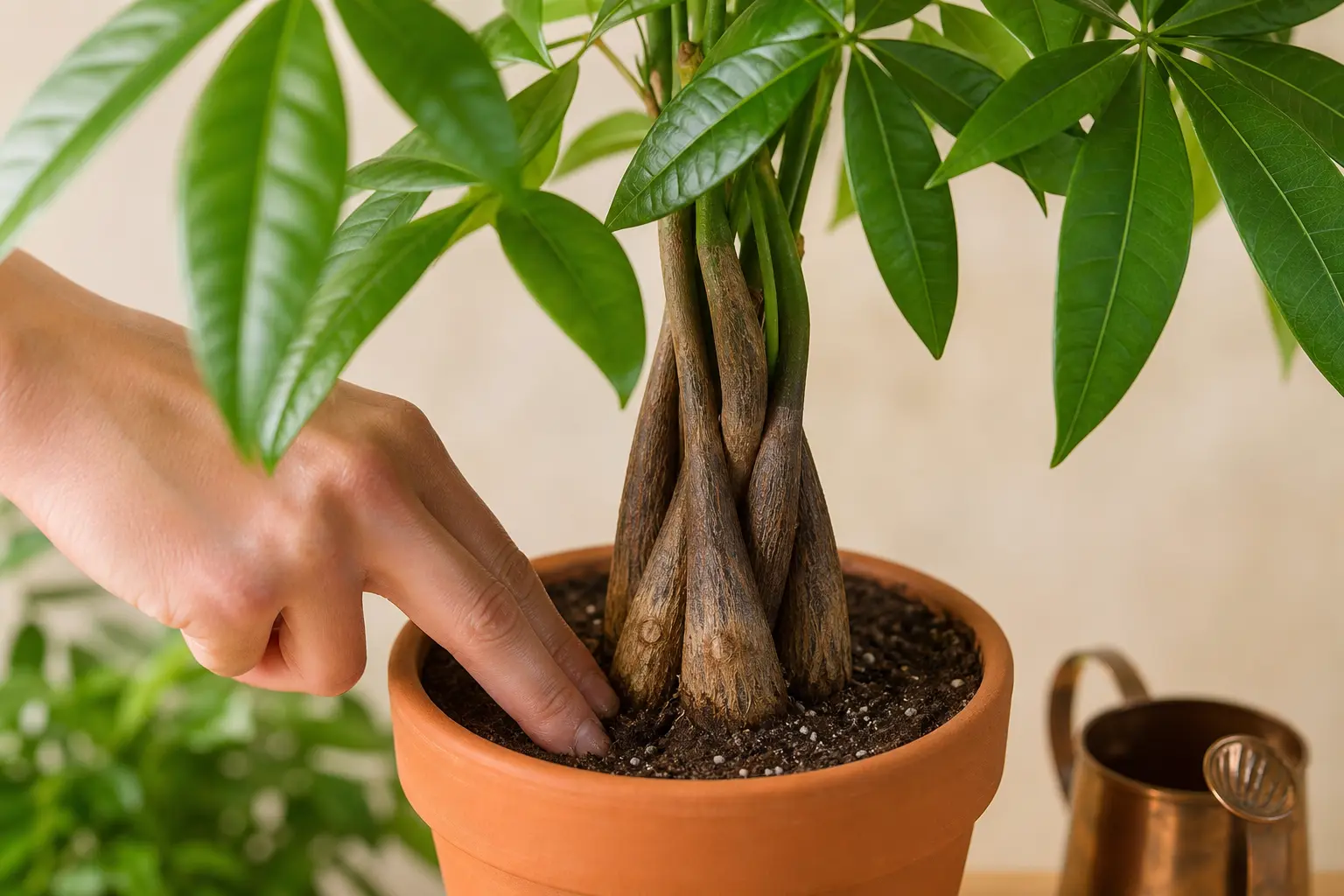
The money tree's thick trunk stores water, making it far more forgiving of a missed watering than of an extra one. Water thoroughly when the top 2–4 inches of soil feel dry - roughly every 1–2 weeks in bright light, and as little as every 3 weeks in winter or dim conditions. Always empty the saucer afterward; a money tree left standing in water will develop soft, rotting trunks.
The classic symptom pattern is easy to read: yellowing leaves that soften and drop usually means too much water; crisp, curling brown leaf edges means too little. If the braided trunk itself feels soft, spongy, or smells off, the roots have been saturated for a while - see the troubleshooting notes in our overwatering guide.
Water with room-temperature water, saturating until it runs freely from the drainage holes, then let it dry down again. A moisture meter or a plain wooden chopstick poked into the pot removes all guesswork.
Humidity
Being tropical wetland natives, money trees appreciate 50%+ humidity but settle comfortably into average home conditions (30–50%). If your winter heating pushes indoor air well below that, you may see brown, crispy leaf edges even when watering is correct.
A small humidifier nearby is the most effective fix. Grouping plants together, or a pebble tray with the pot resting above (never in) the water, adds a few points. Bathrooms with a window make surprisingly good money tree homes - the steamy air offsets one of the plant's few demands.
Skip daily misting: it does little for ambient humidity and water pooling in the leaf crowns and along the braided trunk can encourage fungal spotting.
Temperature
Keep money trees between 60–85°F (16–29°C) - ordinary household range. They have no dormancy indoors and grow slowly year-round, slowing down naturally in the shorter, darker days of winter.
Cold is the danger: below 50°F (10°C) they drop leaves in protest, and actual frost kills them. Keep pots well away from drafty doors in winter, single-pane windows that get cold at night, and air-conditioning vents blasting directly on the canopy in summer.
Sudden swings matter as much as absolutes. A tree that sits next to a radiator in October and a cold draft in November will shed leaves both times - stable placement beats perfect placement.
Soil
Use a well-draining, peat-based potting mix amended with about a third perlite, coarse sand, or orchid bark. The goal is a mix that holds moisture long enough for the roots to drink, then dries down within a week - money trees despise the permanently soggy, compacted soil that plain garden- loam-in-a-pot provides.
Nursery-bought braided trees often come in dense, peaty grower mix that holds water far too long once home. Repotting into fresh, chunkier mix within the first season or two is the single best preventive move against trunk rot. Mix your own from 2 parts all-purpose potting soil to 1 part perlite and 1 part bark, or start from a cactus/succulent blend lightened with coco coir.
Terracotta is an excellent pot choice for the same reason - its walls wick moisture away from the root ball faster than glazed ceramic or plastic.
Fertilizer
Feed a balanced liquid fertilizer (such as 10-10-10) diluted to half strength, once a month from spring through early fall. Money trees are modest feeders - their native wetland nutrition is sparse, and salt buildup burns leaf edges quickly.
Skip fertilizer entirely from late fall through winter; the plant grows little then and unused salts accumulate in the pot. Every couple of months, water deeply with plain water to flush accumulated salts out of the root zone.
Yellowing new leaves paired with visibly pale green overall color can signal hunger; brown crispy leaf margins with a white crust on the soil surface signals over-feeding - flush and pause. If you prefer slow-release granules, top-dress at the start of spring only.
Repotting
Repot every 2–3 years in spring, or sooner if roots circle the surface or emerge from the drainage holes. Choose a pot just 1–2 inches wider than the current one - an oversized pot of damp soil around a modest root ball is the fastest route to root rot in this species.
Slide the tree out and inspect the root ball: healthy money tree roots are firm and tan; anything black, mushy, or smelling of decay gets trimmed away with sterilized scissors. Settle the plant at its original depth in fresh chunky mix, and firm (not compact) the soil around it. For top-heavy braided trees, a heavier ceramic or terracotta pot keeps the canopy from tipping.
Water lightly after repotting, then hold off until the top few inches dry. Recovery takes a few weeks; some leaf droop immediately after the move is normal stress, not a watering problem.
Braiding & Trunk Care
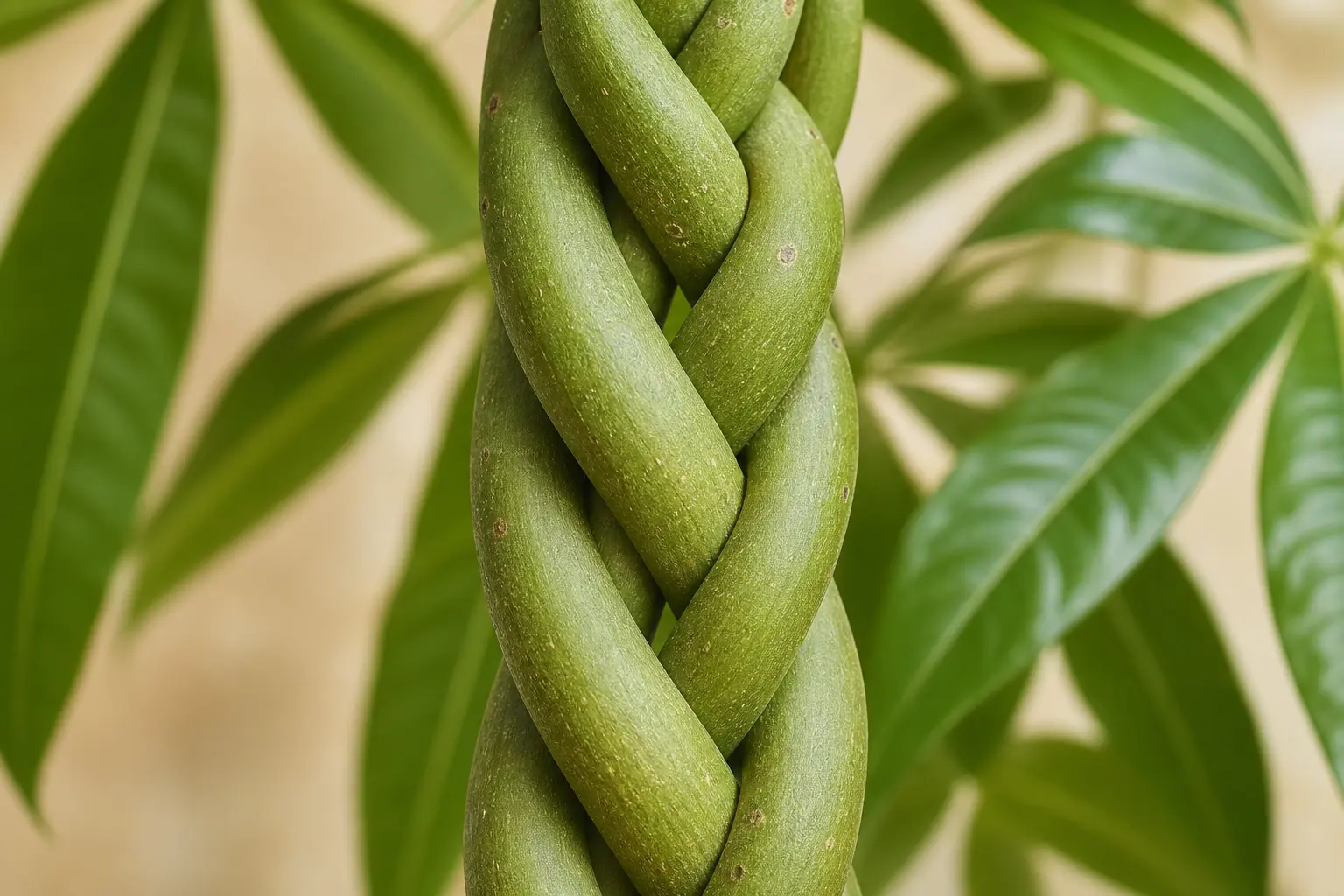
The famous braid is not natural - growers plant 3–5 seedlings side by side and weave their green trunks together while the wood is still flexible, and the trunks fuse over time. It carries real feng shui weight: five braided trunks are said to lock in the Five Elements and channel good fortune.
To braid young plants yourself: plant 3–5 seedlings a few inches apart in spring, let them grow until the trunks are pencil-thick, then cross the stems over one another in a simple over-under weave, working upward as they elongate, leaving the top 4–6 inches of foliage free. Tie the top loosely with soft garden twine and re-braid the new growth every couple of months. Always braid green, bendable wood - attempting it on woody trunks snaps them.
Ongoing care of the braid: keep the trunks dry rather than wet when watering, remove any trunk that softens or rots before it spreads to its neighbors, and trim the leafy suckers that sprout low on the trunks if you want a clean tree form. New leaf growth comes only from the tops - so never top-prune all the branches at once unless you want a very long recovery.
Our Experience
My first money tree died from an over-watered braid before I learned to water around the trunks rather than over them. Directing the spout at the soil edge keeps the braided section dry, and I have not lost a trunk since.
— NYC apartment, bright east window, terracotta pot, year-round
The chopstick test beats every schedule. I leave one in the pot permanently and water only when it comes out clean and dry - in my dim winter office that means every 3 weeks, in the summer window every 8 days. Same plant, wildly different rhythm by season.
— Office with north window in winter, summer outdoors in shade, USDA Zone 7a
When one trunk in my braid went soft, I cut it out at the base with a serrated knife instead of trying to save it. The other four filled the gap within a season - money trees are vigorous enough that losing a trunk is cosmetic, not fatal.
— Home grower, braided 5-trunk nursery plant, 4 years owned
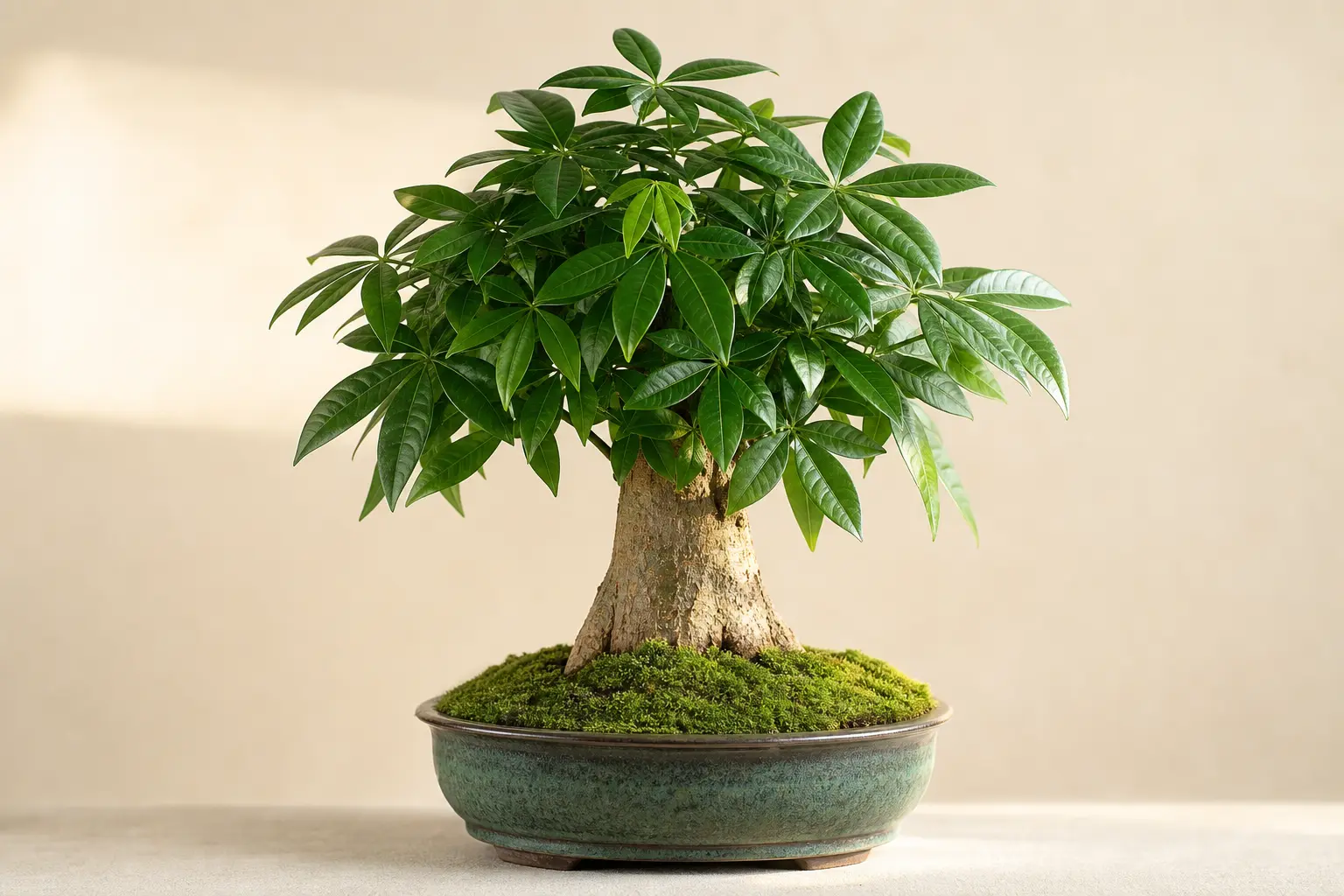 Bonsai
 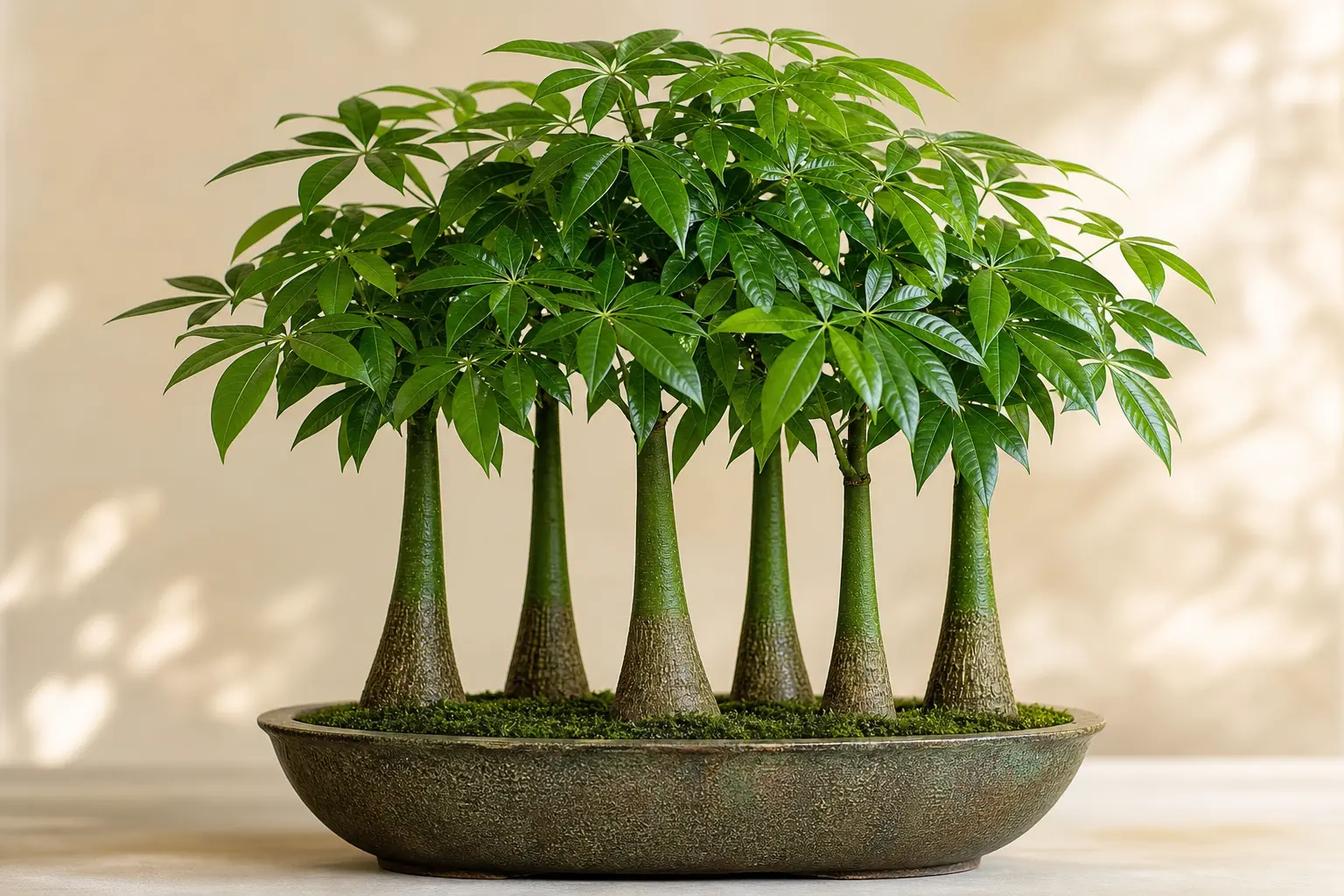 Forest
 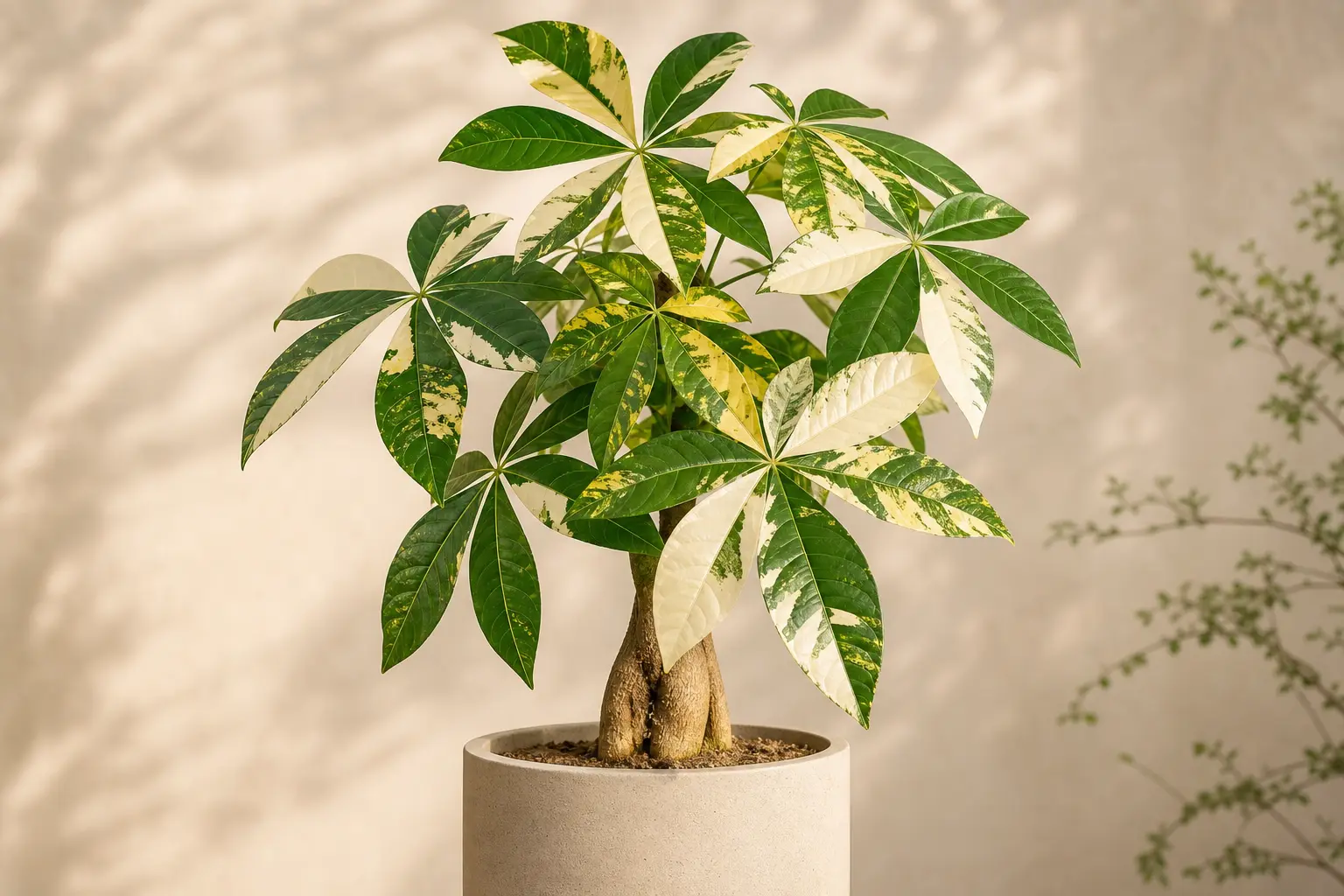 Variegated
 Compare Varieties
Explore different cultivars side-by-side and find the best match for your space.
Browse all varieties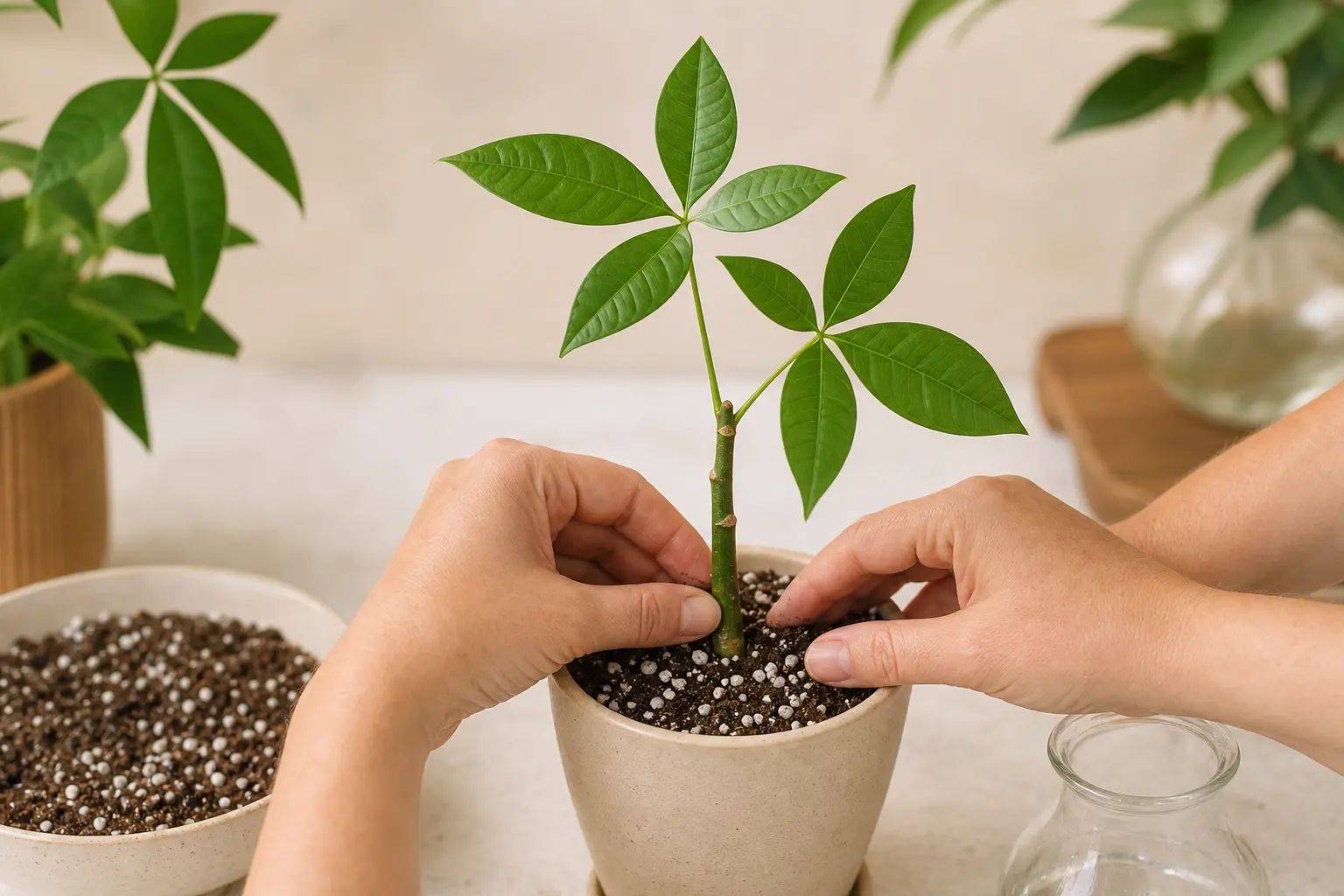
Propagation Guide
Step-by-step instructions for multiplying your plant collection.
Learn how to propagateFrequently Asked Questions
How often should I water my money tree?
Why are my money tree leaves turning yellow?
Are money trees safe for cats and dogs?
How do I propagate a money tree?
Why is my money tree trunk soft or mushy?
Where should I place a money tree for good luck?
How do I braid a money tree trunk?
Do money trees grow fast indoors?
When should I repot my money tree?
Can I put my money tree outside in summer?
Common Problems
How to Fix an Overwatered Plant
Overwatering kills more houseplants than any other cause. The tricky part? The symptoms — yellowing, wilting, drooping — look just like underwatering. Here's how to tell the difference and fix it.
Read diagnosis guideWhy Are My Plant Leaves Turning Yellow?
Yellowing leaves are one of the most common houseplant problems. The good news is that most causes are easy to identify and fix once you know what to look for.
Read diagnosis guideReferences
- [1] ASPCA. Money Tree (Pachira aquatica) - non-toxic to cats and dogs
- [2] Missouri Botanical Garden. Pachira aquatica - Plant Finder
- [3] University of Florida IFAS. Pachira aquatica: Malabar Chestnut
- [4] Wisconsin Horticulture, Division of Extension. Pachira aquatica - Money Tree
Similar Plants
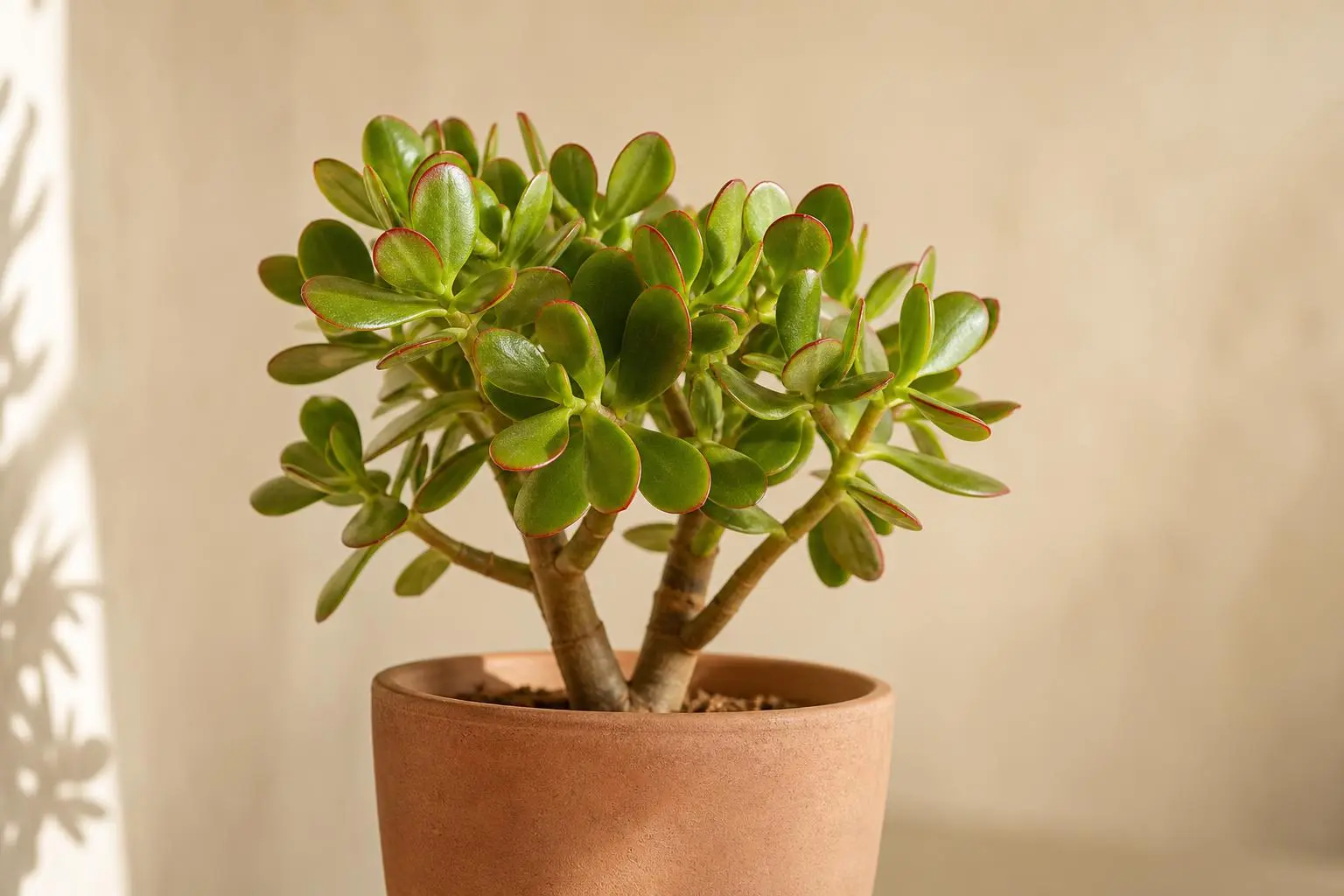
Jade Plant
Crassula ovata
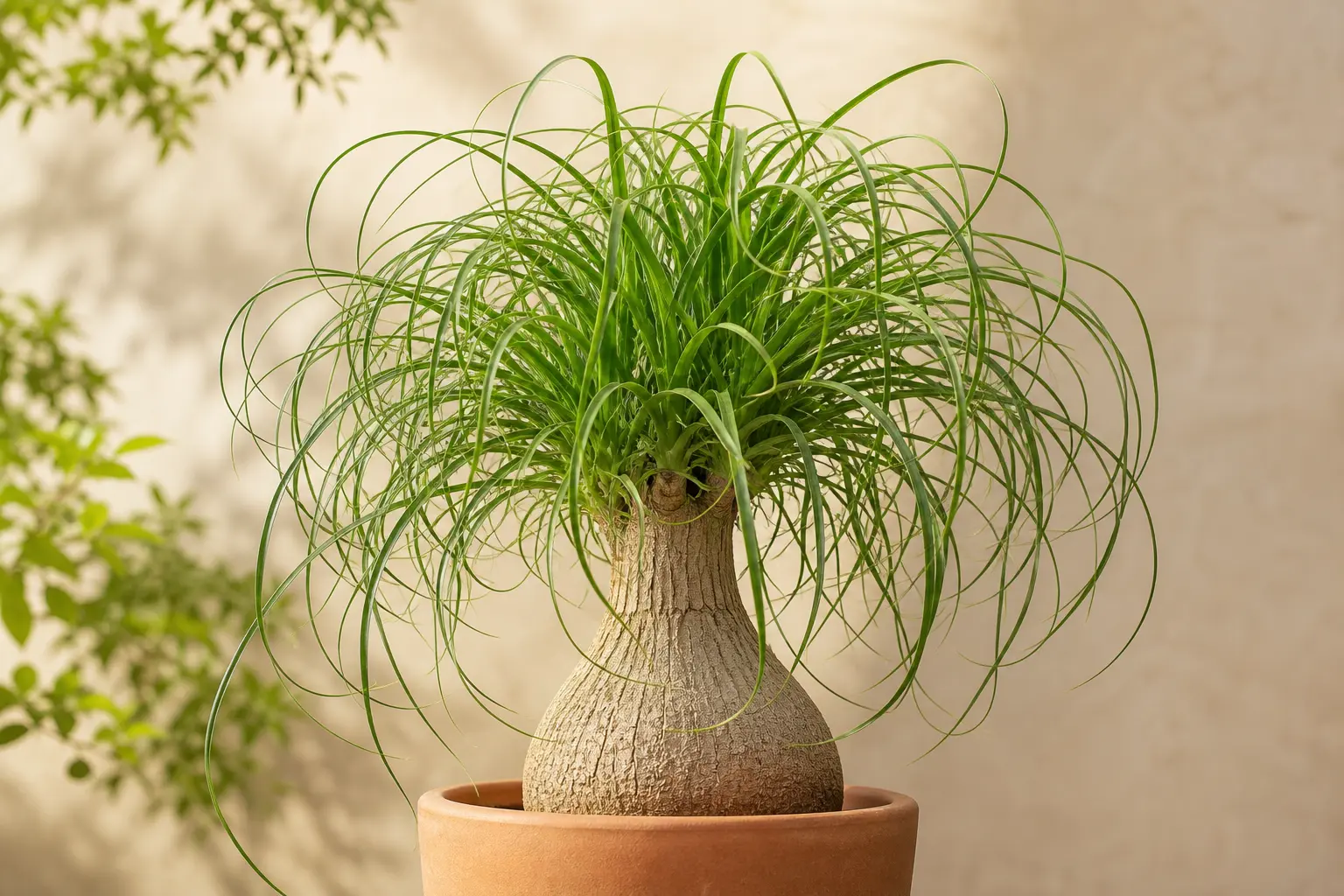
Ponytail Palm
Beaucarnea recurvata
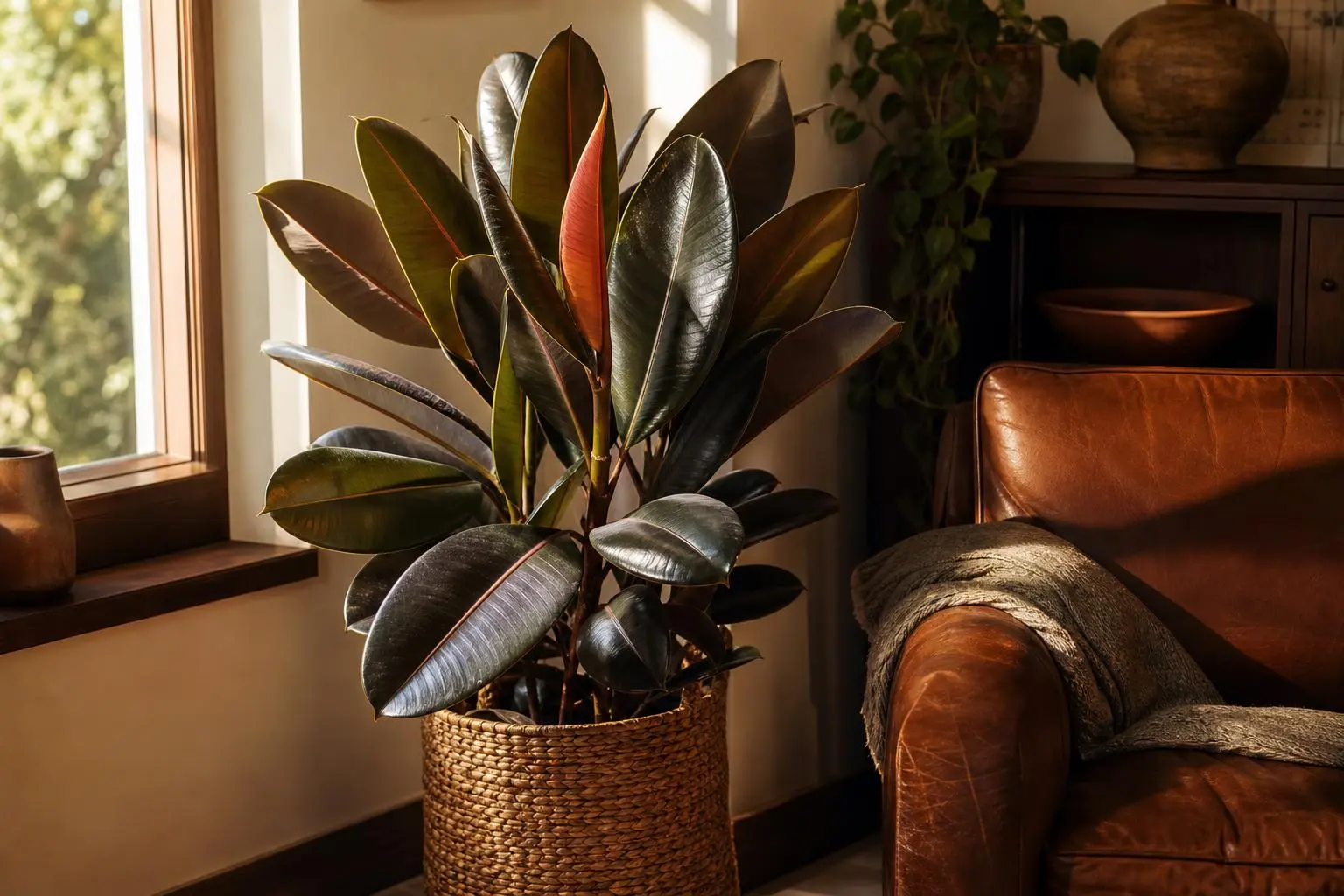
Rubber Plant
Ficus elastica