
Spider Plant Varieties
A comparison of the most popular Spider Plant varieties — learn which one is right for your space and skill level.
| Variety | Key Feature | Care Difficulty | Price Range |
|---|---|---|---|
| Vittatum | Broad creamy-white central stripe on green arching leaves; the most recognized Spider Plant form worldwide; prolific baby production on long stolons | Easy | Varies |
| Variegatum | Green leaf centers with crisp white margins creating a reverse variegation pattern; RHS Award winner; narrower more numerous leaves than Vittatum | Easy | Varies |
| Solid Green (Chlorophytum comosum) | Solid deep green leaves without any white or cream variegation; the original wild species form; noticeably faster growth and more robust constitution than all variegated cultivars | Easy | Varies |
| Bonnie | Curly spiraling leaves with a Vittatum-style central white stripe; compact mounding habit; playful whimsical appearance unique among Spider Plants | Easy | Varies |
Variety Details
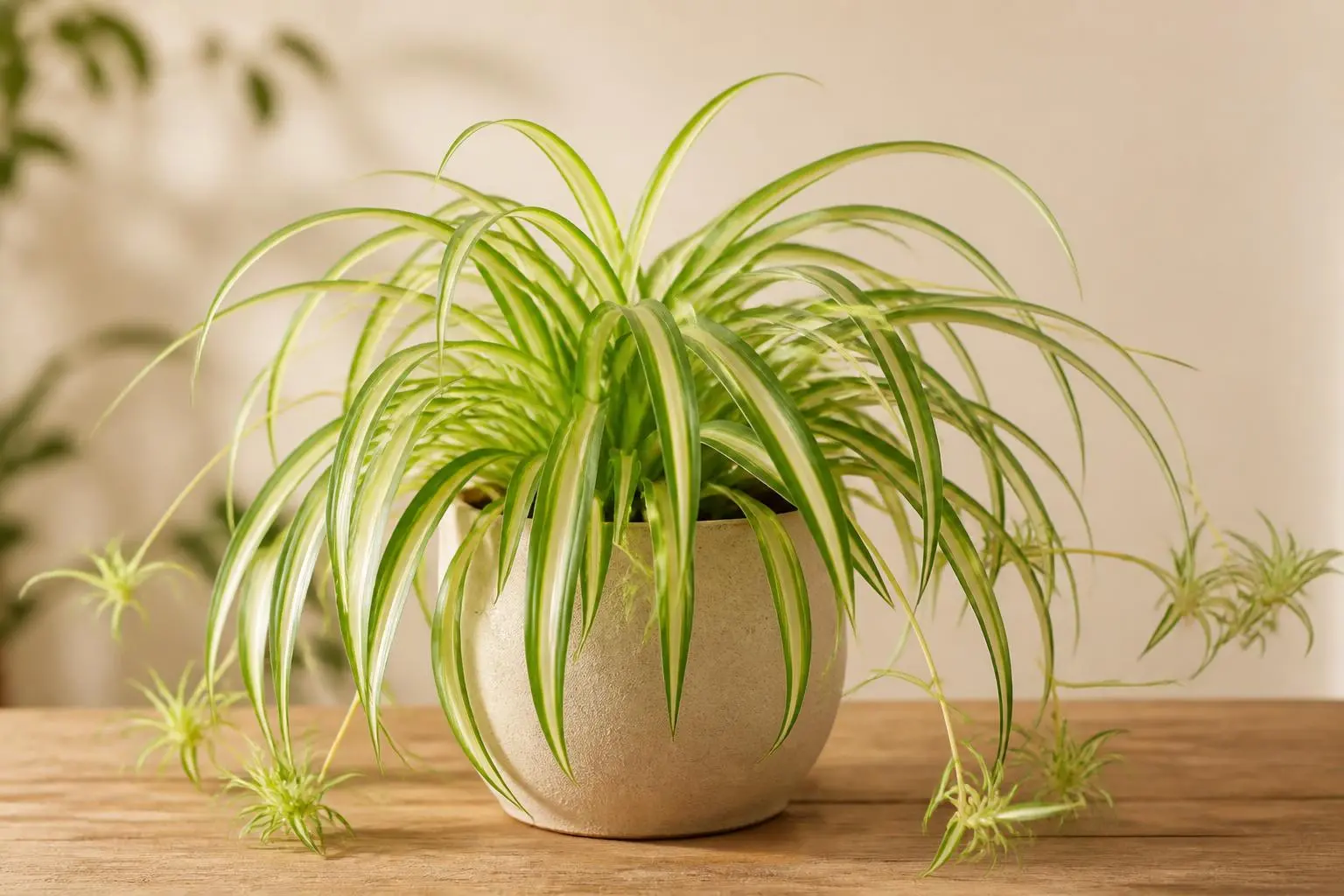
Vittatum
The iconic Spider Plant variety that most people picture when they hear the name, featuring long, arching strap-like leaves with a broad creamy-white stripe running down the center of each green leaf. This central variegation pattern creates a clean, graphic look that has made Vittatum the most commercially popular Spider Plant worldwide since the Victorian era, when it was a staple of parlour plant collections. The plant forms a dense clump of gracefully arching foliage twelve to eighteen inches tall, with mature specimens producing long trailing stolons bearing tiny white flowers followed by baby plantlets. Vittatum is widely available in every garden center and big-box store, typically priced between five and fifteen dollars depending on size. It was one of the houseplants studied in the NASA Clean Air Study, which found it effective at removing formaldehyde and xylene from indoor air.
Distinguishing feature: Broad creamy-white central stripe on green arching leaves; the most recognized Spider Plant form worldwide; prolific baby production on long stolons
Care notes: Standard Spider Plant care applies, with one notable sensitivity — the white areas of the leaves contain no chlorophyll, making Vittatum slightly more prone to brown tip damage from fluoride and chlorine in tap water than solid green varieties. Use filtered, distilled, or rainwater whenever possible, or let tap water sit out overnight before watering. Thrives in medium to bright indirect light; the white stripe may narrow or fade in very low light while the plant otherwise remains healthy. Water when the top inch of soil is dry and fertilize every two weeks at half strength during spring and summer. Produces the most babies when slightly root-bound and receiving consistent bright indirect light. Trim brown tips at an angle with clean scissors for a tidy appearance.
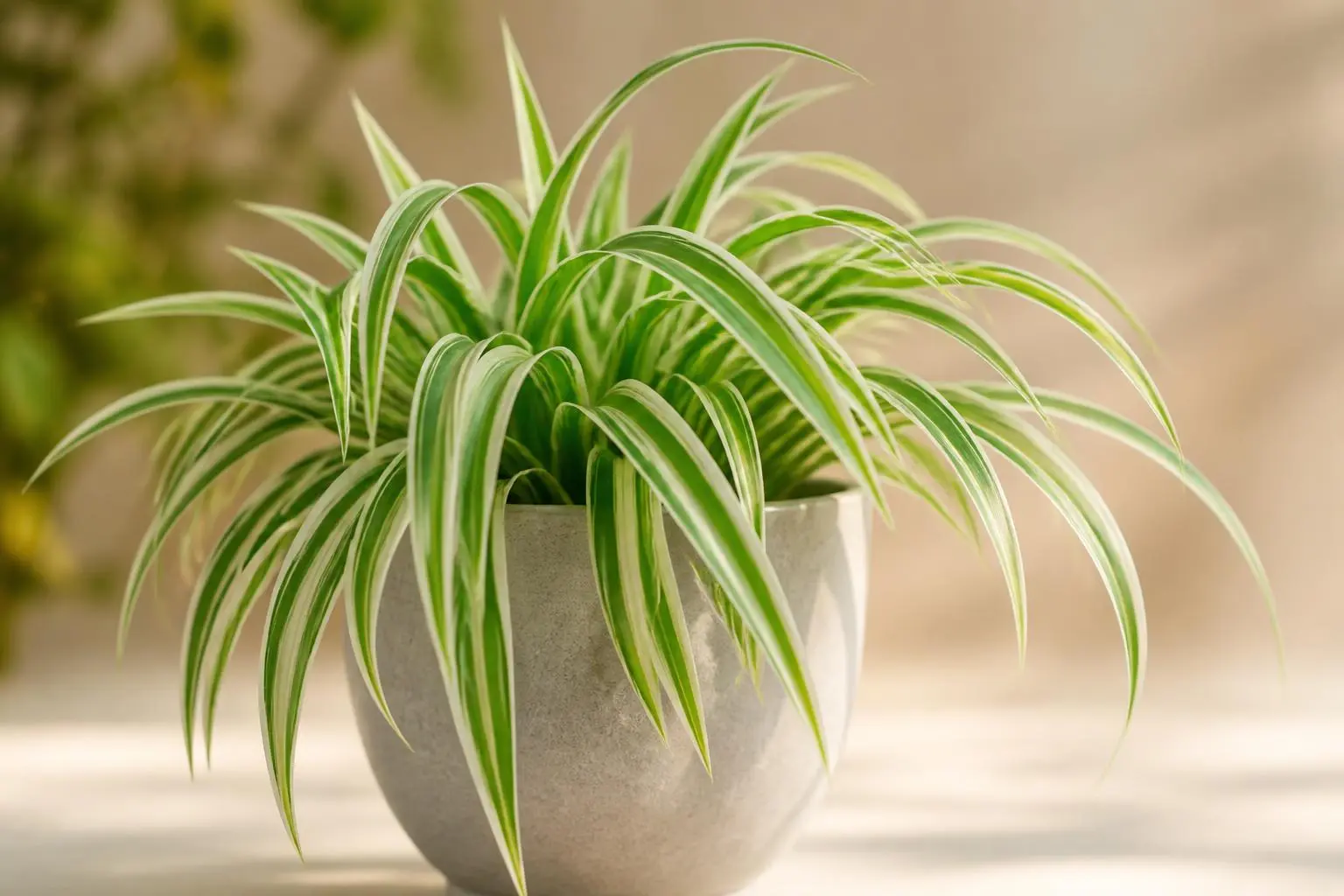
Variegatum
Also called Reverse Variegatum, this variety features the opposite variegation pattern from Vittatum — green leaf centers bordered by crisp white margins that create a brighter, lighter overall impression. The leaves tend to be slightly narrower and more numerous than Vittatum, producing a denser, fuller-looking plant. Each leaf appears to be outlined in white, giving the plant a luminous quality that seems to glow in indirect light. The variegation is genetically stable, though the white margins may narrow in lower light conditions. Reverse Variegatum was recognized with the Royal Horticultural Society Award of Garden Merit for its reliable performance and ornamental value. It produces baby plantlets just as prolifically as Vittatum, and the babies display the same white-edged variegation from the start. This variety is almost as widely available as Vittatum and typically sells in the same price range of five to fifteen dollars.
Distinguishing feature: Green leaf centers with crisp white margins creating a reverse variegation pattern; RHS Award winner; narrower more numerous leaves than Vittatum
Care notes: Requires slightly brighter indirect light than Vittatum to maintain its white leaf margins — in low light the white edges gradually narrow and may disappear entirely, leaving plain green leaves. Position near an east or north-facing window for the best balance of brightness without direct afternoon sun, which scorches the white margins. The white-edged leaves are even more susceptible to fluoride damage and tip browning than Vittatum, making filtered or distilled water essential for pristine foliage. Water when the top inch of soil is dry, using the soak-and-drain method, and empty saucers promptly. Fertilize every two weeks at half strength during the growing season. Produces abundant babies when slightly root-bound and well-fed. Trim any all-green leaves that appear, as they grow more vigorously and can overtake the variegated foliage.
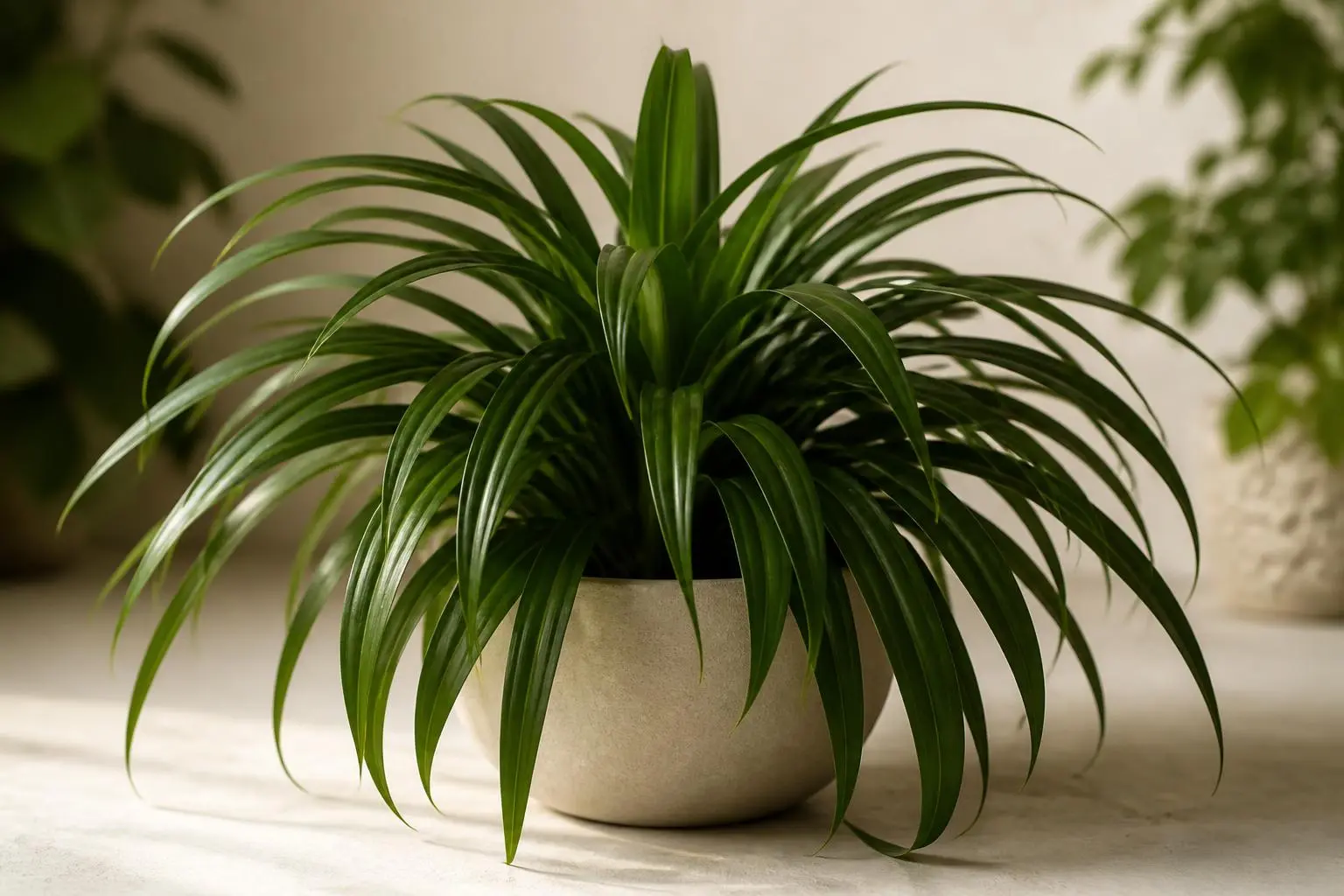
Solid Green (Chlorophytum comosum)
The original non-variegated species form of Spider Plant, featuring solid deep green leaves without any white or cream markings. This is the wild-type plant from southern and tropical Africa that all variegated cultivars originated from, and it retains the robust constitution that comes from having maximum chlorophyll in every leaf. Solid Green Spider Plants grow noticeably faster and larger than any variegated variety, producing fuller clumps of foliage and more prolific baby plantlets over the growing season. The leaves are slightly wider and thicker than variegated forms, with a rich emerald color that looks particularly lush and healthy. Despite being the parent species, Solid Green is actually harder to find in garden centers than variegated varieties, which are considered more decorative. When available, it typically costs the same as other Spider Plants, around five to ten dollars, though specialty growers may charge a premium for the species form.
Distinguishing feature: Solid deep green leaves without any white or cream variegation; the original wild species form; noticeably faster growth and more robust constitution than all variegated cultivars
Care notes: The most tolerant and lowest-maintenance Spider Plant variety, capable of thriving in lower light conditions where variegated forms lose their coloring and slow down significantly. With full chlorophyll in every leaf, it photosynthesizes more efficiently and grows faster even in challenging conditions. Less prone to brown tip damage because the leaves are entirely green and lack the weak white tissue that is most sensitive to fluoride — however, filtered water is still recommended. Tolerates irregular watering better than variegated forms and recovers more quickly from neglect. Produces the most baby plantlets of all Spider Plant varieties, especially when slightly root-bound and receiving regular feeding during spring and summer. Water when the top inch of soil is dry and fertilize biweekly during the growing season.
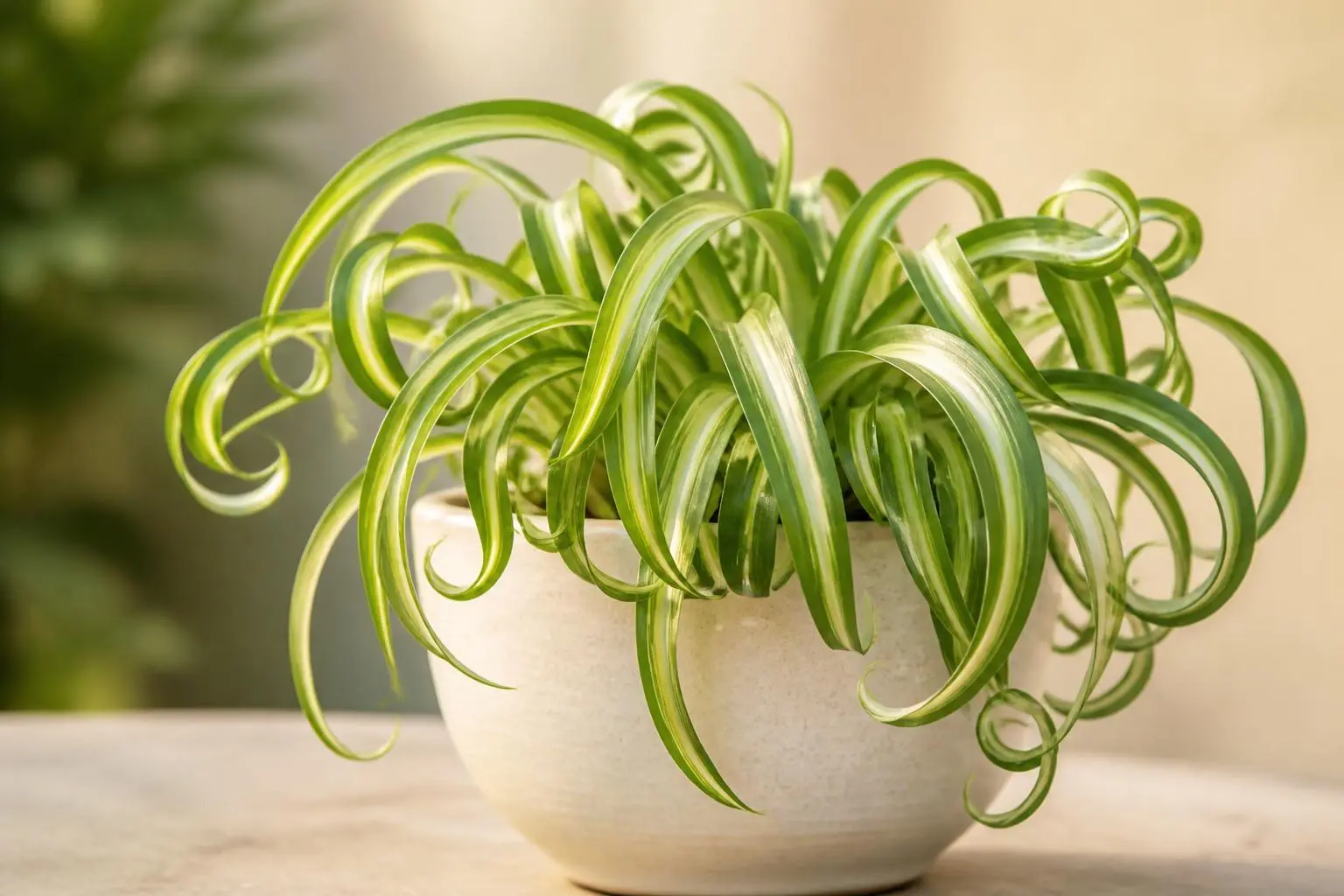
Bonnie
A relatively recent Spider Plant cultivar that has quickly gained popularity for its uniquely curly, spiraling leaves that give it a playful, whimsical appearance quite unlike any other variety. Also marketed as Curly Spider Plant, Bonnie features the same Vittatum-style central white stripe on green leaves, but instead of arching smoothly, each leaf twists and curls in loose spirals that become more pronounced with good light and proper care. The overall plant is more compact than standard Spider Plant varieties, typically reaching only eight to twelve inches tall with a mounding rather than arching habit. Bonnie was developed as a sport mutation and has been available commercially since the early 2000s, becoming increasingly popular for its novelty factor and suitability for smaller spaces. It produces the same white flowers and baby plantlets as other varieties, though the curly babies are particularly charming. Prices are slightly higher than standard varieties, typically ten to twenty dollars, reflecting its relative novelty and collector appeal.
Distinguishing feature: Curly spiraling leaves with a Vittatum-style central white stripe; compact mounding habit; playful whimsical appearance unique among Spider Plants
Care notes: Follows the same care requirements as standard Spider Plant varieties, with a few considerations specific to its curly form. The spiraling leaves are slightly more prone to collecting dust and water in the curls, so avoid misting and instead rinse the plant gently under lukewarm water every few weeks to keep the foliage clean. Needs bright indirect light for the curls to develop properly — in low light the leaves grow straighter and the distinctive spiraling diminishes, making Bonnie look like an ordinary Vittatum. The compact growth habit means Bonnie needs less frequent repotting than larger varieties. Use filtered water to prevent brown tips on the white-striped areas, and water when the top inch of soil is dry. Fertilize biweekly during spring and summer at half strength. Produces curly baby plantlets that make excellent gifts or trading material with fellow plant enthusiasts.