
ZZ Plant Varieties
A comparison of the most popular ZZ Plant varieties — learn which one is right for your space and skill level.
| Variety | Key Feature | Care Difficulty | Price Range |
|---|---|---|---|
| ZZ Plant Raven | Dark, nearly black leaves that provide dramatic contrast in any plant collection | Easy | Varies |
| ZZ Plant Zenzi | Compact, bushy habit with shorter, tightly spaced leaves; rarely exceeds 18 inches tall | Easy | Varies |
| ZZ Plant Variegated | White and green variegated leaves with unpredictable patterning; no two leaves are exactly alike | Easy | Varies |
Variety Details
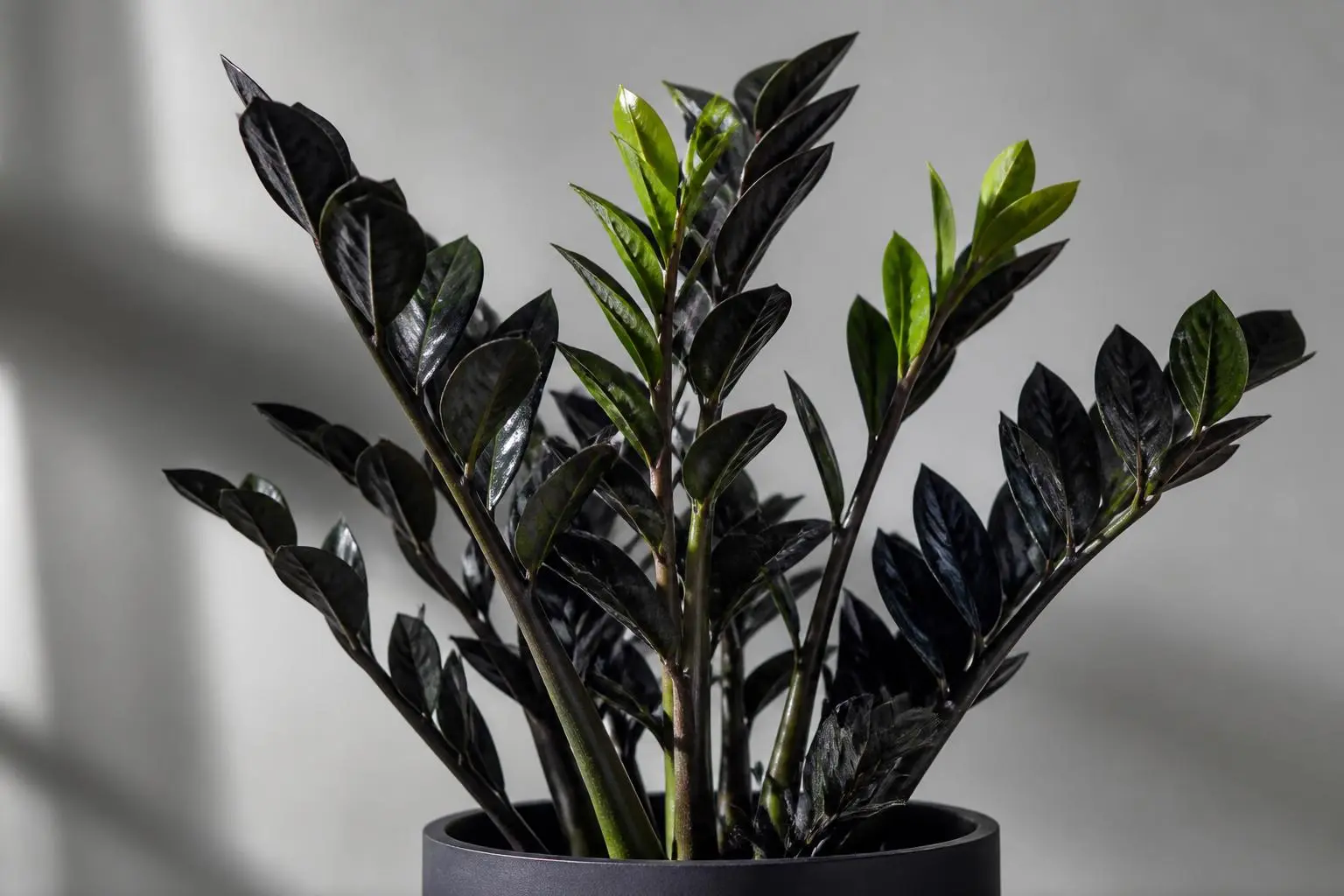
ZZ Plant Raven
A striking cultivar with nearly black, glossy leaves that emerge bright green and darken to a deep purple-black as they mature. Same tough-as-nails constitution as the standard ZZ.
Distinguishing feature: Dark, nearly black leaves that provide dramatic contrast in any plant collection
Care notes: Identical care to the standard ZZ. The dark leaves actually handle lower light slightly better since they absorb more light wavelengths. May be slightly slower growing.
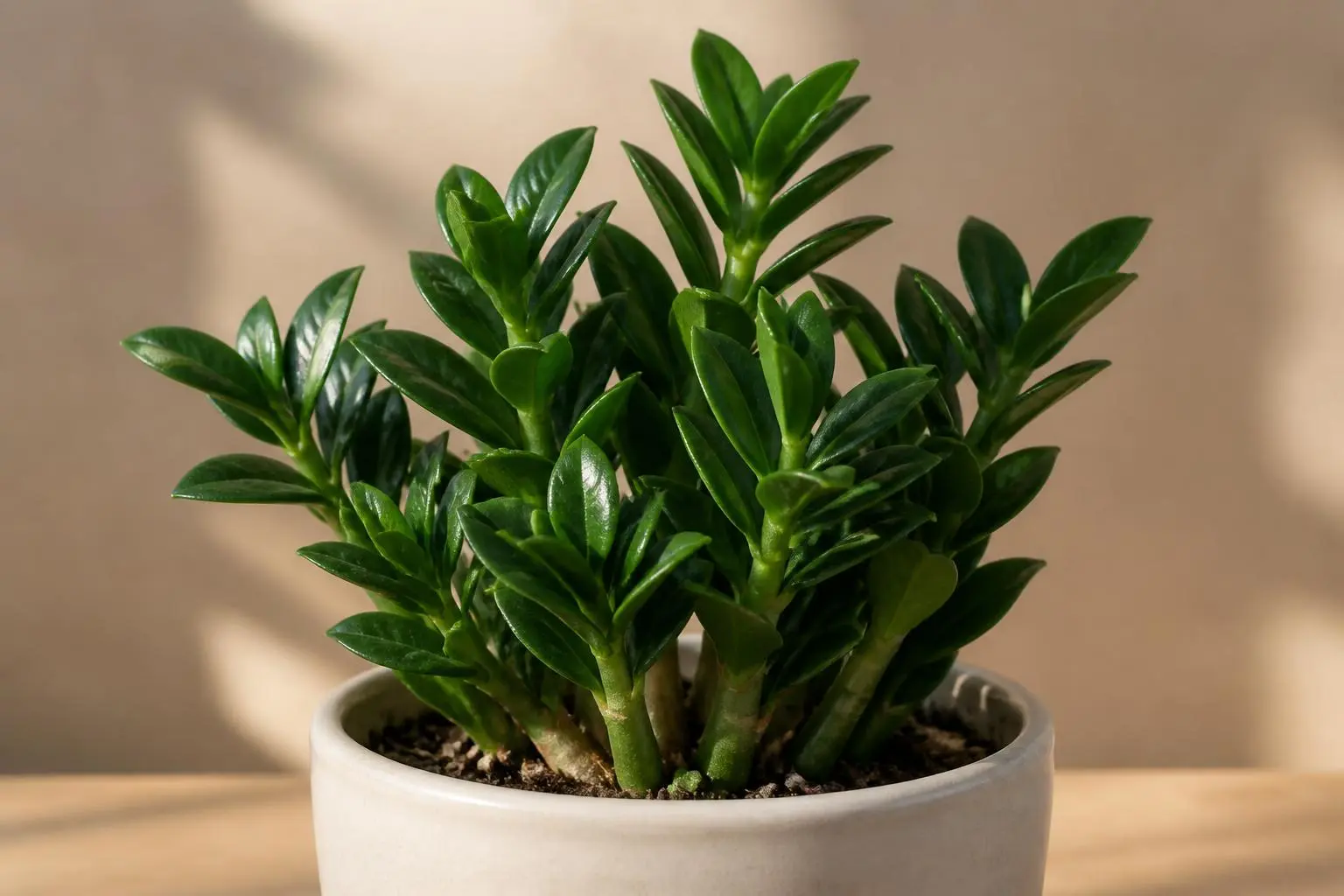
ZZ Plant Zenzi
A dwarf variety that stays compact and bushy, typically reaching only 12–18 inches tall. The leaves are closer together and shorter, giving it a dense, full appearance perfect for desks and tabletops.
Distinguishing feature: Compact, bushy habit with shorter, tightly spaced leaves; rarely exceeds 18 inches tall
Care notes: Same easy care as standard ZZ but needs even less water due to smaller size. Ideal for small spaces. May need slightly more frequent repotting relative to its growth rate since the pot will be smaller.
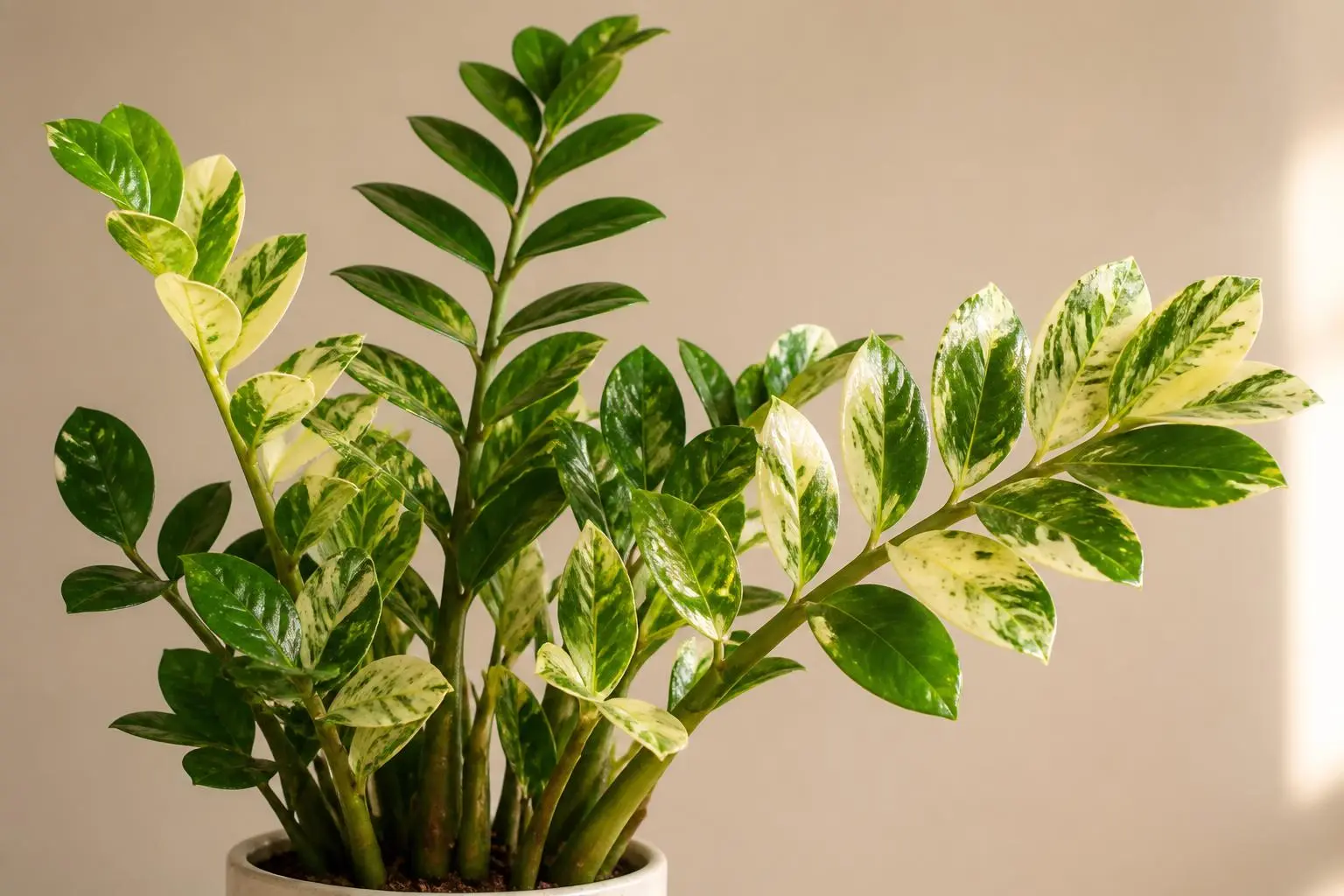
ZZ Plant Variegated
A visually stunning form with white and green variegated leaves. Each leaf has a unique pattern of cream-white streaks and patches against the typical dark green background. Slower growing than the solid green form.
Distinguishing feature: White and green variegated leaves with unpredictable patterning; no two leaves are exactly alike
Care notes: Needs more bright indirect light than the standard form — the white portions cannot photosynthesize, so the plant needs more light to compensate. Slower growing and more sensitive to overwatering. White areas may brown if exposed to direct sun. More expensive and harder to find.