
How to Propagate Dracaena
Dracaena is one of the easiest houseplants to propagate. Here are three reliable methods — choose the one that fits your comfort level and available supplies.
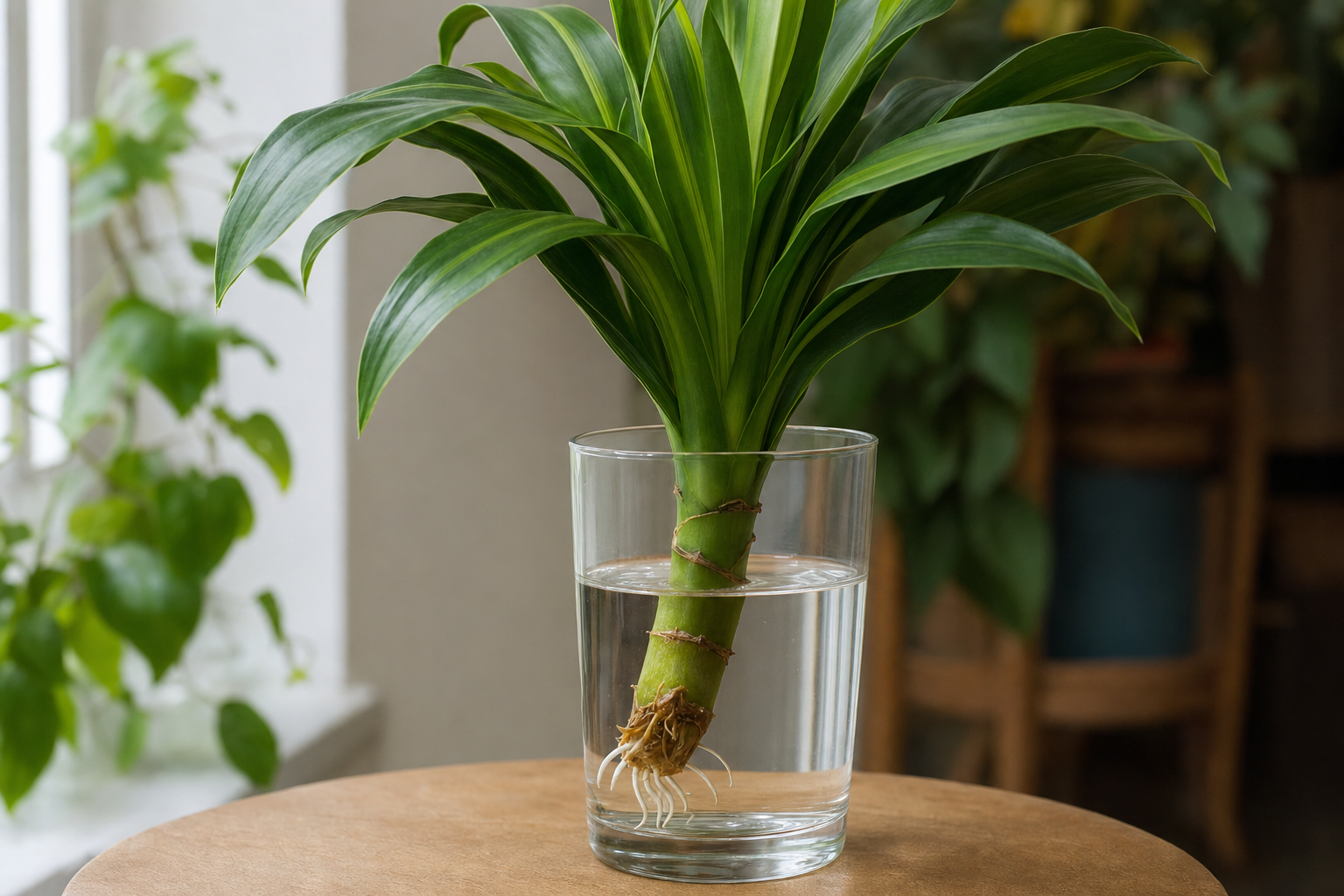
Stem tip cutting (easiest and most common)
You will need clean sharp pruning shears or a knife, a glass jar for water propagation or a small pot with moist potting soil, and optionally rooting hormone.
- 1 Identify where you want to cut — for height control, cut the stem at the desired height, leaving at least 6–8 inches of stem and some leaves on the parent plant.
- 2 Make a clean, horizontal cut through the stem using sharp, sterilized tools. A clean cut heals faster and reduces the risk of infection.
- 3 Remove the bottom leaves from the cutting, leaving 2–3 leaves at the top.
- 4 For water propagation, place the cutting in a jar of room-temperature water with the bare stem submerged. Change the water every 5–7 days. For soil propagation, dip the cut end in rooting hormone (optional but helpful for Dracaena), then plant in moist potting soil, burying the bare stem about 2 inches deep.
- 5 Keep in bright indirect light at warm temperatures (65–80°F / 18–27°C).
- 6 In water, roots typically appear in 3–4 weeks. In soil, roots develop in 4–6 weeks.
- 7 Once water roots are 2–3 inches long, transplant into potting soil and keep consistently moist for the first 2 weeks.
- 8 The parent plant will sprout 1–3 new growth points from the node just below the cut within 2–4 weeks, creating a branched, bushier shape.
Expected timeline: roots in 3–4 weeks (water) or 4–6 weeks (soil), new growth on cutting in 6–8 weeks, established plant in 10–12 weeks. Success rate: approximately 85–95%.
Success rate: approximately 85–95%.
Stem segment cutting (for bare trunks)
If your Dracaena has a long bare trunk, you can cut it into multiple segments to produce several new plants. You will need a clean sharp knife, small pots with drainage holes, moist potting soil, and rooting hormone (recommended).
- 1 Cut the bare trunk into 3–4 inch segments, making clean horizontal cuts.
- 2 Critically important — note which end of each segment was pointing up. Planting a segment upside down will fail because shoots only emerge from the top node. Mark the top with a small notch or marker if needed.
- 3 Let the cut ends dry and callus for 2–4 hours — Dracaena stems are succulent and can rot if planted while the cut is fresh.
- 4 Dip the bottom end of each segment in rooting hormone.
- 5 Plant segments vertically in moist potting soil, burying the bottom half. The top node should be just above the soil line.
- 6 Water lightly and place in bright indirect light at warm temperatures (70–80°F).
- 7 Keep the soil barely moist — too much water will cause the segment to rot before it can root.
- 8 New growth emerges from the top node in 4–8 weeks. You may also see roots growing from the bottom of the segment.
Expected timeline: new shoots in 4–8 weeks, established plant in 12–16 weeks. Success rate: approximately 60–75%.
Success rate: approximately 60–75%.
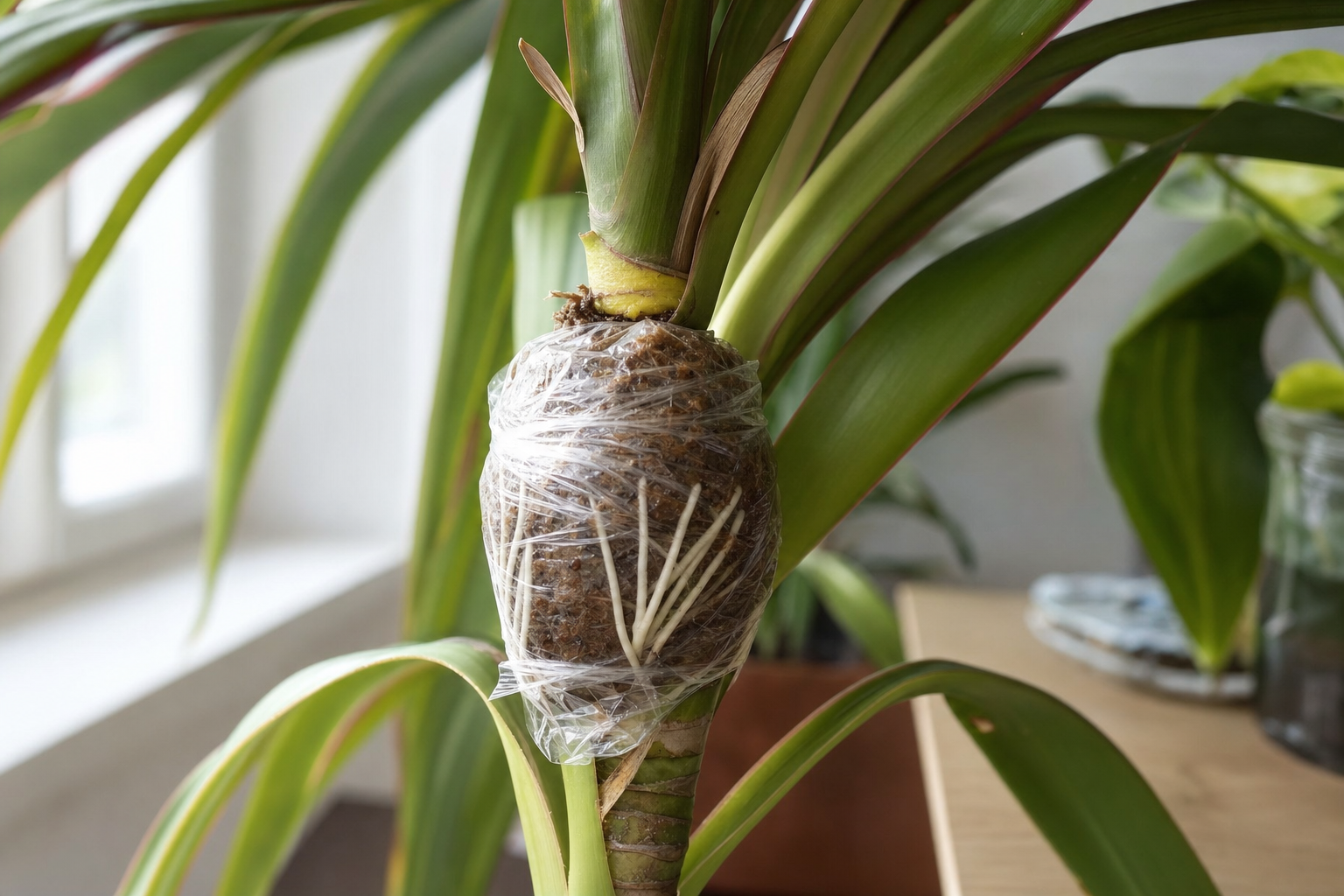
Air layering (for preserving the parent's shape)
This method lets you root a stem section while it is still attached to the parent plant, so you don't lose the top growth if rooting fails.
- 1 Select a healthy section of stem where you want new roots to form.
- 2 Make an upward diagonal cut about one-third to halfway through the stem, cutting at an angle so the cut stays open.
- 3 Insert a toothpick or small pebble into the cut to prevent it from closing.
- 4 Apply a small amount of rooting hormone to the cut surface (optional but helpful).
- 5 Wrap the cut area with a generous handful of moist sphagnum moss, covering the cut completely.
- 6 Cover the moss with plastic wrap, securing both ends tightly with twist ties, tape, or rubber bands. The moss should stay consistently moist but not dripping wet.
- 7 Check the moss every 5–7 days, misting with water if it feels dry.
- 8 Roots will develop inside the moss in 6–8 weeks — you may see them through the plastic.
- 9 Once a good root network has formed, cut the stem below the rooted section and pot it up in fresh soil.
- 10 The parent plant continues growing from the portion below the cut.
Expected timeline: roots in 6–8 weeks, established plant in 12–14 weeks. Success rate: approximately 80–90%.
Success rate: approximately 80–90%.
Troubleshooting Common Issues
Cutting rotting instead of rooting
The most common cause of failure, especially with stem segments. Dracaena stems are moist and succulent, making them prone to rot. Always let cut ends callus for 2–4 hours before planting, use well-draining soil, and water sparingly until roots establish. For water propagation, change the water every 5–7 days and remove any stem pieces that show browning.
Parent plant not sprouting after topping
Dracaena can take 2–6 weeks to produce new shoots from a cut stem. Ensure the parent plant is receiving adequate light and water. Sometimes the plant needs a growth cue — increasing light and beginning monthly fertilizing (if in spring/summer) can stimulate bud break. If no shoots appear after 8 weeks, make a fresh cut 1 inch below the original cut — sometimes the cut surface has dried and sealed, preventing new growth.
Segment planted upside down
Unfortunately, an upside-down segment will not root. If you are unsure which end is up, look for the slight taper — stems are slightly wider at the base. The leaf scar nodes also angle slightly upward. Discard any segments that show no growth after 10 weeks and try again, carefully marking the top.
Yellowing leaves on cutting
A few lower leaves yellowing and dropping is normal as the cutting redirects energy to root development. Remove yellow leaves. If all leaves are yellowing, the cutting may be in too much direct sun or the water/soil is too warm. Move to bright indirect light and ensure moderate temperatures.
Propagation Tips
- ✓ Always use clean, sterilized tools to prevent infection
- ✓ Cuttings need bright indirect light — never direct sun
- ✓ Change propagation water every 5–7 days to prevent bacteria
- ✓ Be patient — rooting takes 2–6 weeks depending on the method
- ✓ Spring and summer are the best seasons for propagation