
How to Propagate Philodendron
Philodendron is one of the easiest houseplants to propagate. Here are three reliable methods — choose the one that fits your comfort level and available supplies.
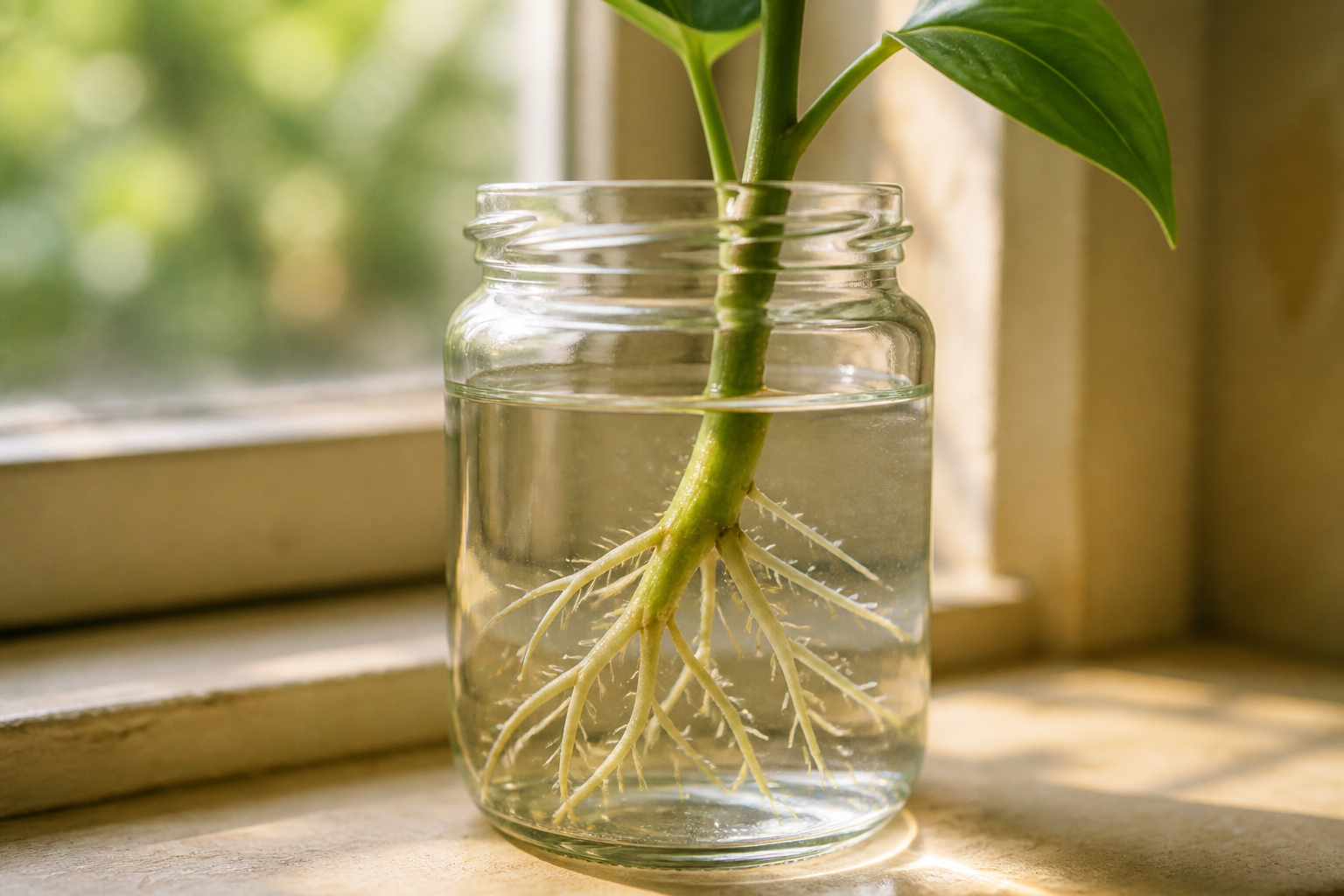
Water propagation (easiest and most popular)
You will need clean scissors or a sharp knife, a glass jar or vase, and room-temperature water.
- 1 Identify a healthy vine with several nodes — the small bumps where leaves and aerial roots meet the stem. Philodendrons often have visible aerial roots at the nodes, which gives cuttings a head start on rooting.
- 2 Cut a stem section with at least one node and 2–3 leaves, making the cut about 1/4 inch below a node using clean tools.
- 3 Remove the lowest leaf if it would sit below the water line — submerged leaves will rot and foul the water.
- 4 Place the cutting in a jar of room-temperature water, ensuring the node is submerged but no leaves touch the water.
- 5 Position the jar in bright indirect light.
- 6 Change the water every 5–7 days to prevent bacterial growth, rinsing the jar each time.
- 7 Watch for white, thread-like roots emerging from the submerged node — they typically appear in just 7–14 days, making philodendrons one of the fastest-rooting houseplants.
- 8 Once roots are 1–2 inches long (typically 3–4 weeks total), transplant into well-draining potting mix.
- 9 Water the newly potted cutting thoroughly and keep the soil consistently moist for the first 2 weeks as the plant transitions from water roots to soil roots.
- 10 After 2 weeks, resume normal watering when the top inch of soil is dry.
Expected timeline: roots appear in 7–14 days, ready to transplant by week 3–4, new vine growth by week 5–6. Success rate: approximately 95–100%.
Success rate: approximately 95–100%.
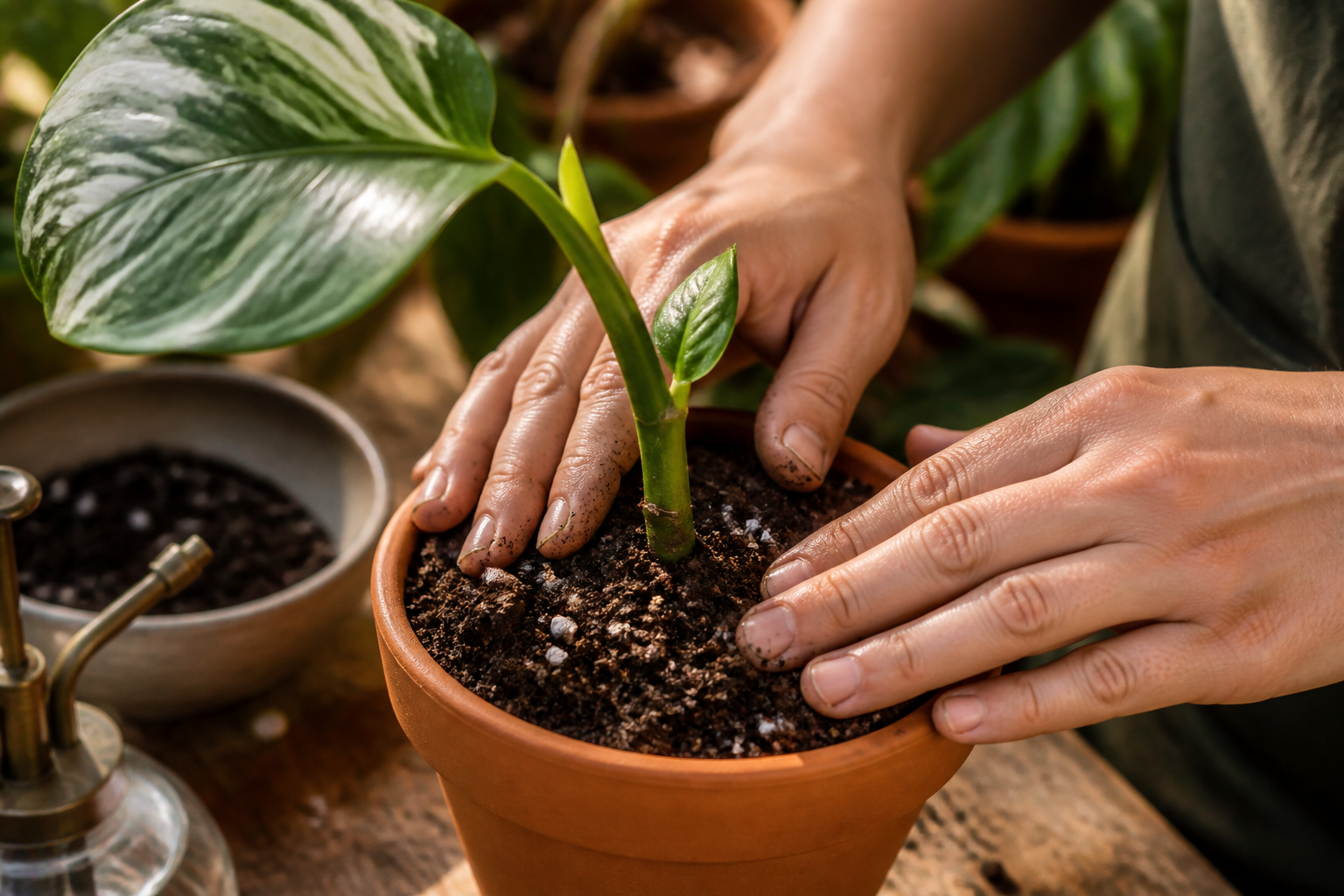
Soil propagation
This method eliminates the water-to-soil transition and produces sturdier root systems from the start. You will need clean scissors, a small pot with drainage holes, pre-moistened potting mix, rooting hormone powder (optional), and a clear plastic bag or propagation dome.
- 1 Take a cutting as described above, with at least one node and 2–3 leaves.
- 2 Dip the cut end in rooting hormone, tapping off excess — this is optional for philodendrons but speeds up root formation by about a week.
- 3 Make a small hole in the moist potting mix with a pencil or chopstick.
- 4 Insert the cutting so the node is buried about 1 inch deep, and gently firm the soil around the stem.
- 5 Water lightly to settle the soil.
- 6 Cover the pot with a clear plastic bag or propagation dome to maintain high humidity.
- 7 Place in bright indirect light and keep the soil consistently damp (not soggy) for the first 2–3 weeks while roots develop.
- 8 Remove the humidity cover once new growth appears in 3–4 weeks, gradually acclimating the plant to ambient humidity over 3–4 days.
- 9 Resume normal care — water when the top inch of soil is dry.
Expected timeline: roots form in 2–3 weeks, new growth in 3–4 weeks, established plant in 6–8 weeks. Success rate: approximately 85–95%.
Success rate: approximately 85–95%.
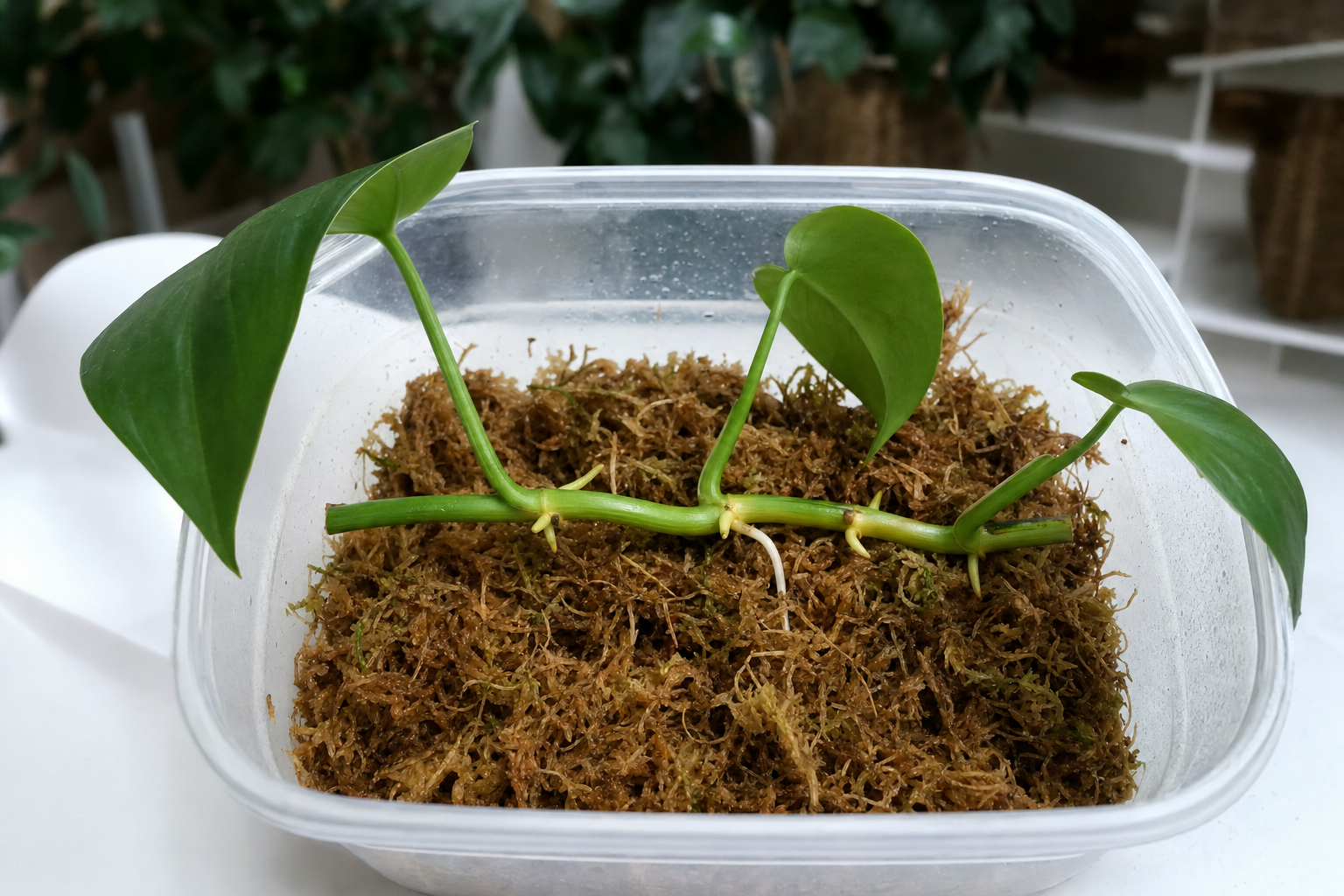
Self-layering (for a fuller parent plant)
You can root stems while they are still attached to the parent plant to create a bushier appearance.
- 1 Identify a long vine that can reach the soil surface.
- 2 Find a node along the vine and remove the leaf at that point.
- 3 Pin the node down into the soil using a bobby pin or U-shaped wire, burying it about 1/2 inch deep.
- 4 Keep the soil consistently moist at the pinned point.
- 5 After 2–3 weeks, give the vine a gentle tug — if you feel resistance, roots have formed.
- 6 Either snip the vine to create an independent stem, or leave it attached for a naturally fuller plant.
Expected timeline: roots form in 2–3 weeks. Success rate: approximately 95–100%.
Success rate: approximately 95–100%.
How many cuttings for a full plant
For a lush, trailing hanging basket, use 5–6 cuttings in one pot rather than a single cutting. Space them evenly around the pot, each with at least one node buried. Multiple cuttings create a dramatically fuller appearance in a fraction of the time.
Troubleshooting Common Issues
Cuttings rotting in water
If the stem turns brown or mushy, bacterial rot has set in. Remove the affected cutting, recut above the rot line with clean scissors, and restart in a clean jar with fresh water. Prevent rot by ensuring no leaves are submerged and changing water every 5–7 days.
No roots after 2 weeks
Philodendrons normally root in 7–14 days. A delay usually indicates insufficient light or cool temperatures. Move the cutting to a brighter spot with indirect light. Philodendrons root fastest at 70–80°F. Also verify that a node is submerged — roots emerge from the node, not the cut end.
Wilting after transplant from water to soil
Minimize shock by transplanting when roots are 1–2 inches long. Keep soil consistently moist for the first 2 weeks and increase humidity if leaves droop. Most cuttings recover within 7–10 days as new soil-adapted roots develop.
New plant producing small leaves
Newly propagated philodendrons need time to build a root system. Ensure bright indirect light and consistent moisture. After 4–6 weeks, begin monthly fertilizing. Small leaves on new growth are normal and will increase in size as the root system matures.
Propagation Tips
- ✓ Always use clean, sterilized tools to prevent infection
- ✓ Cuttings need bright indirect light — never direct sun
- ✓ Change propagation water every 5–7 days to prevent bacteria
- ✓ Be patient — rooting takes 2–6 weeks depending on the method
- ✓ Spring and summer are the best seasons for propagation