
Jade Plant Varieties
A comparison of the most popular Jade Plant varieties — learn which one is right for your space and skill level.
| Variety | Key Feature | Care Difficulty | Price Range |
|---|---|---|---|
| Crassula ovata (Standard) | Glossy dark green oval leaves with red-tinted edges in bright light; develops a thick woody trunk with age forming a natural miniature tree shape | Easy | Varies |
| Gollum (Hobbit) | Tubular trumpet-shaped leaves with concave suction-cup tips giving a finger-like appearance; reddish tips in bright light; develops a sculptural contorted trunk with age | Easy | Varies |
| Variegata (Tricolor) | Creamy white and pale yellow variegation on green leaves with pink-blushed new growth; each leaf has a unique pattern; significantly slower growing and more compact than standard | Easy | Varies |
| Hummel's Sunset | Golden-yellow and fiery red leaf margins that intensify dramatically with sun exposure; RHS Award winner with a sunset gradient from green through yellow to red | Easy | Varies |
Variety Details
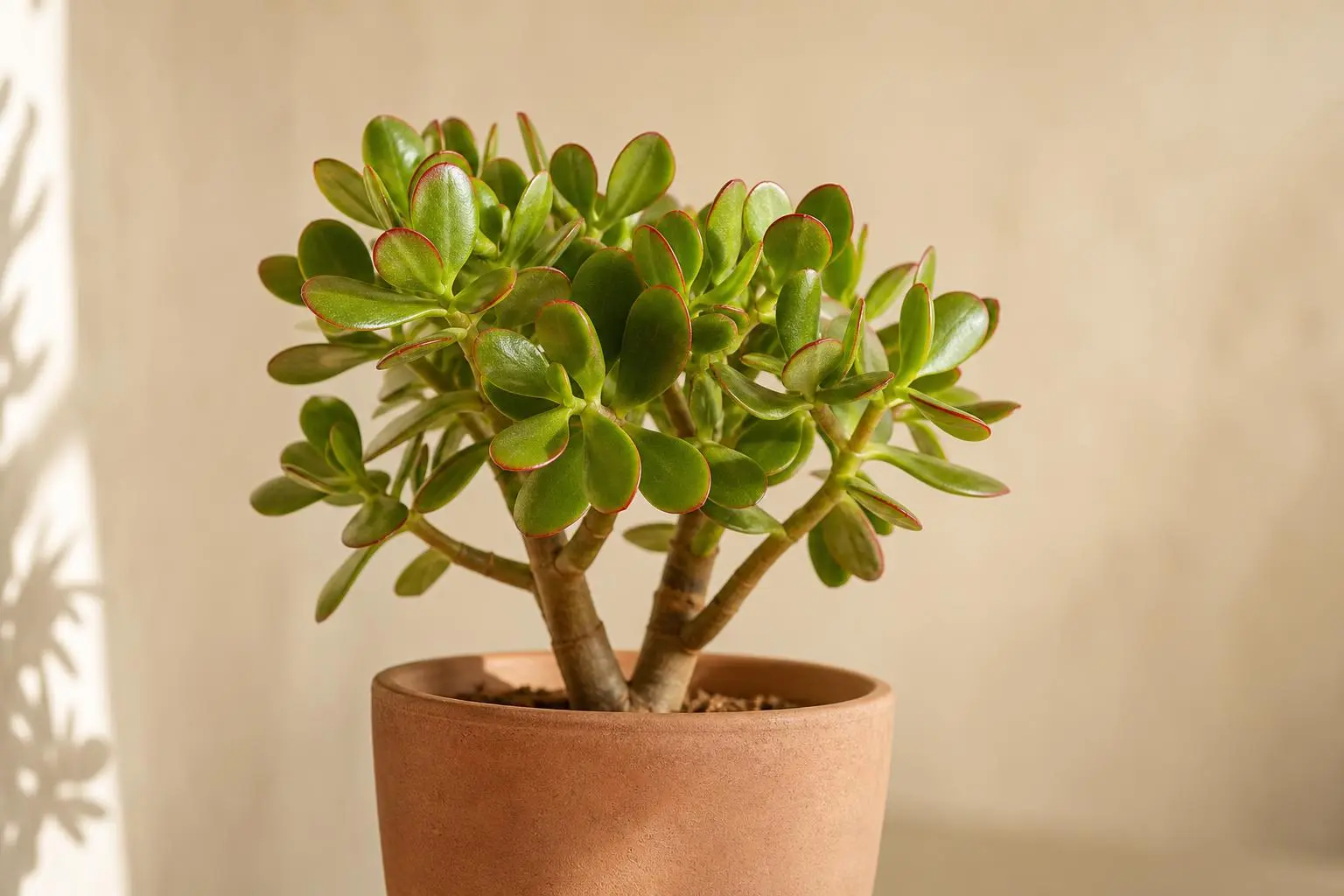
Crassula ovata (Standard)
The iconic Jade Plant that has graced windowsills for generations, featuring thick, fleshy, oval-shaped leaves with a glossy dark green finish and a subtle red tinge along the edges when exposed to bright light. Over time, this variety develops a thick, woody trunk and branches naturally, taking on the appearance of a miniature tree — which is why it is often used as a natural bonsai specimen without any training or wiring. Native to the Eastern Cape and KwaZulu-Natal provinces of South Africa, where it grows on rocky hillsides and cliffs, the standard Jade Plant can live for decades indoors with proper care, becoming a cherished heirloom plant passed between generations. It typically reaches two to three feet tall indoors, producing clusters of small star-shaped white or pink flowers in late winter on mature specimens kept in cool, dry conditions through the dormant season. This is the most widely available Jade Plant variety, found in virtually every garden center for five to fifteen dollars.
Distinguishing feature: Glossy dark green oval leaves with red-tinted edges in bright light; develops a thick woody trunk with age forming a natural miniature tree shape
Care notes: The most forgiving Jade Plant variety and the best choice for beginners or anyone prone to overwatering their houseplants. Follow the soak-and-dry method: water thoroughly only when the soil is completely dry and the leaves feel slightly soft and flexible, then allow all excess to drain away from the drainage holes. Thrives in bright indirect light with a few hours of direct morning or late afternoon sun, which keeps growth compact and enhances the red edge coloring that makes this variety so attractive. In low light, the stems stretch and leaves space out, ruining the tree-like form that is the plant main ornamental appeal. Fertilize every two months in spring and summer with diluted balanced fertilizer. Repot only every two to three years into a pot just one to two inches wider, using terracotta for best moisture control.
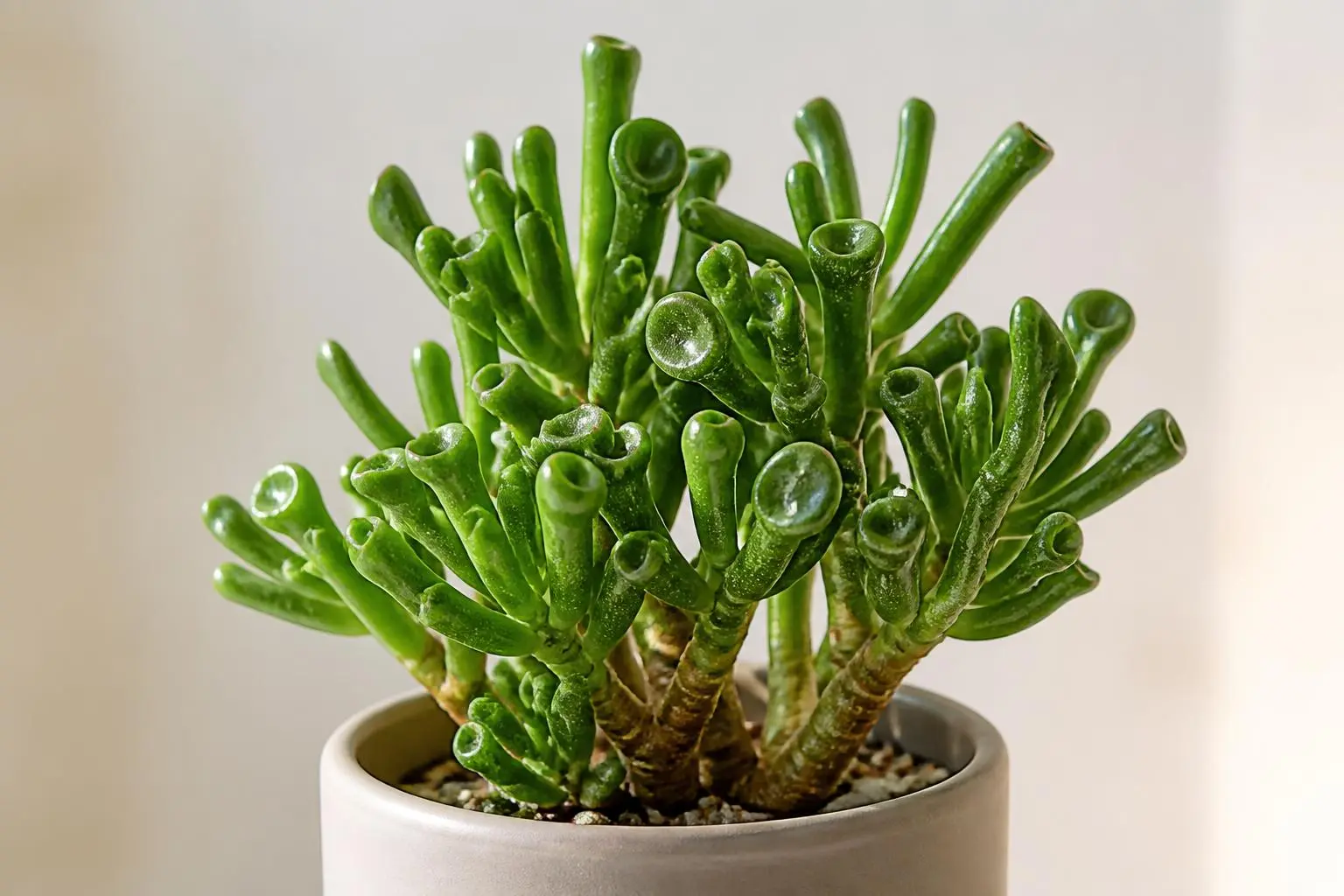
Gollum (Hobbit)
A quirky and conversation-starting Jade Plant cultivar with tubular, trumpet-shaped leaves that are concave on the upper surface, giving each leaf a suction-cup-like dimple at the tip. The unusual finger-like foliage has earned it the common names Finger Jade and ET Fingers, and it is one of the most recognizable succulents in cultivation worldwide. Gollum and Hobbit are often used interchangeably in the nursery trade, though collectors distinguish them by subtle leaf shape differences — Gollum leaves are more tubular with a wider opening at the tip, while Hobbit leaves are slightly flatter and more spoon-shaped. The leaves are bright green with reddish tips that intensify with sun exposure, creating an attractive color contrast that becomes more pronounced over time. This variety grows more slowly than the standard Jade Plant, typically reaching one to two feet tall indoors over several years, and develops a contorted, sculptural trunk with age that adds to its character and makes each specimen uniquely shaped.
Distinguishing feature: Tubular trumpet-shaped leaves with concave suction-cup tips giving a finger-like appearance; reddish tips in bright light; develops a sculptural contorted trunk with age
Care notes: Follows the same basic care as the standard Jade Plant but grows noticeably slower, so it requires even less frequent watering and repotting than the already low-maintenance standard form. Needs equally bright light to maintain its compact, sculptural form — in low light the tubular leaves elongate and lose their distinctive trumpet shape, making the plant look thin and unremarkable. The tubular leaves actually store slightly more water proportionally than flat leaves, making Gollum even more drought-tolerant than the standard variety and able to go longer between waterings without distress. Water only when the soil is completely dry and the leaves begin to feel slightly soft. Fertilize sparingly, every two to three months during the growing season, as this slow grower uses nutrients at a reduced rate. Prune sparingly to maintain shape, cutting just above a leaf pair to encourage branching.
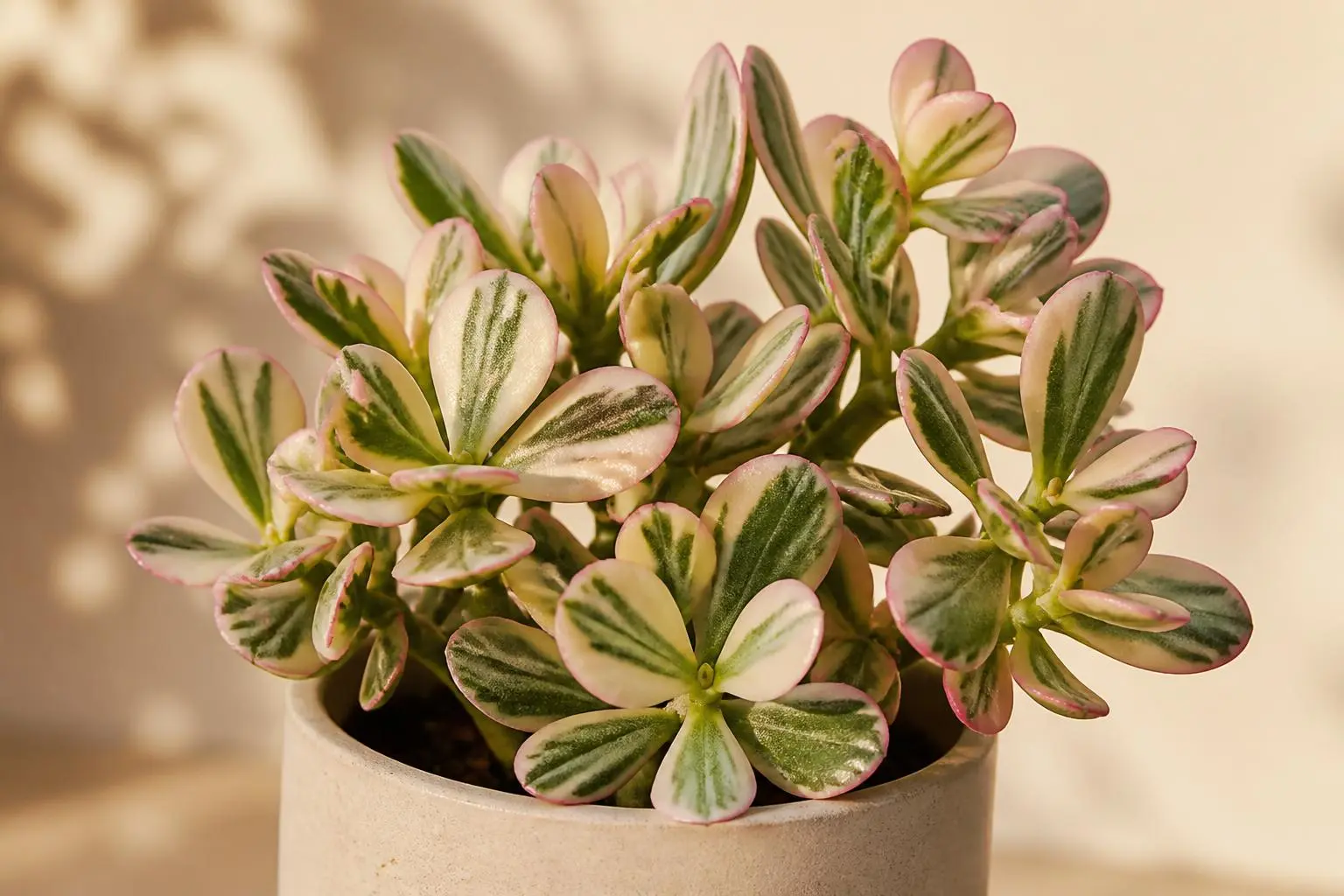
Variegata (Tricolor)
A stunning and highly prized variegated Jade Plant cultivar featuring leaves splashed with irregular patches of creamy white and pale yellow against the standard green base, often with delicate pink blush on new growth and along the leaf margins. The variegation pattern varies significantly from leaf to leaf — some leaves are predominantly white with green streaks, while others are mostly green with white margins — making each plant unique and no two specimens exactly alike. The white and yellow portions lack chlorophyll, which means this variety grows significantly more slowly than the standard green form and remains more compact, typically reaching only twelve to eighteen inches tall indoors over many years. Originally appearing as a natural sport mutation, Variegata has become one of the most sought-after Jade Plant cultivars among collectors, commanding premium prices that can be two to three times higher than the standard form at specialty nurseries. The variegation is genetically unstable, so occasional all-green branches may appear and should be pruned off to maintain the multi-colored appearance.
Distinguishing feature: Creamy white and pale yellow variegation on green leaves with pink-blushed new growth; each leaf has a unique pattern; significantly slower growing and more compact than standard
Care notes: Requires brighter indirect light than the standard green Jade Plant to maintain its variegation — in insufficient light, the plant produces more chlorophyll and the white and yellow areas gradually revert to green, diminishing its ornamental appeal and leaving you with a costly plain green plant. Position in the brightest indirect light available with some gentle direct morning sun. More sensitive to overwatering because the white portions of the leaves are structurally weaker and more prone to rot — allow the soil to dry completely and wait until leaves feel slightly soft before watering, erring on the side of underwatering. Less cold-tolerant than the standard form and should be kept above fifty degrees Fahrenheit at all times. Fertilize very sparingly at quarter strength during spring and summer only, as excess nutrients can cause the variegation to revert to green.
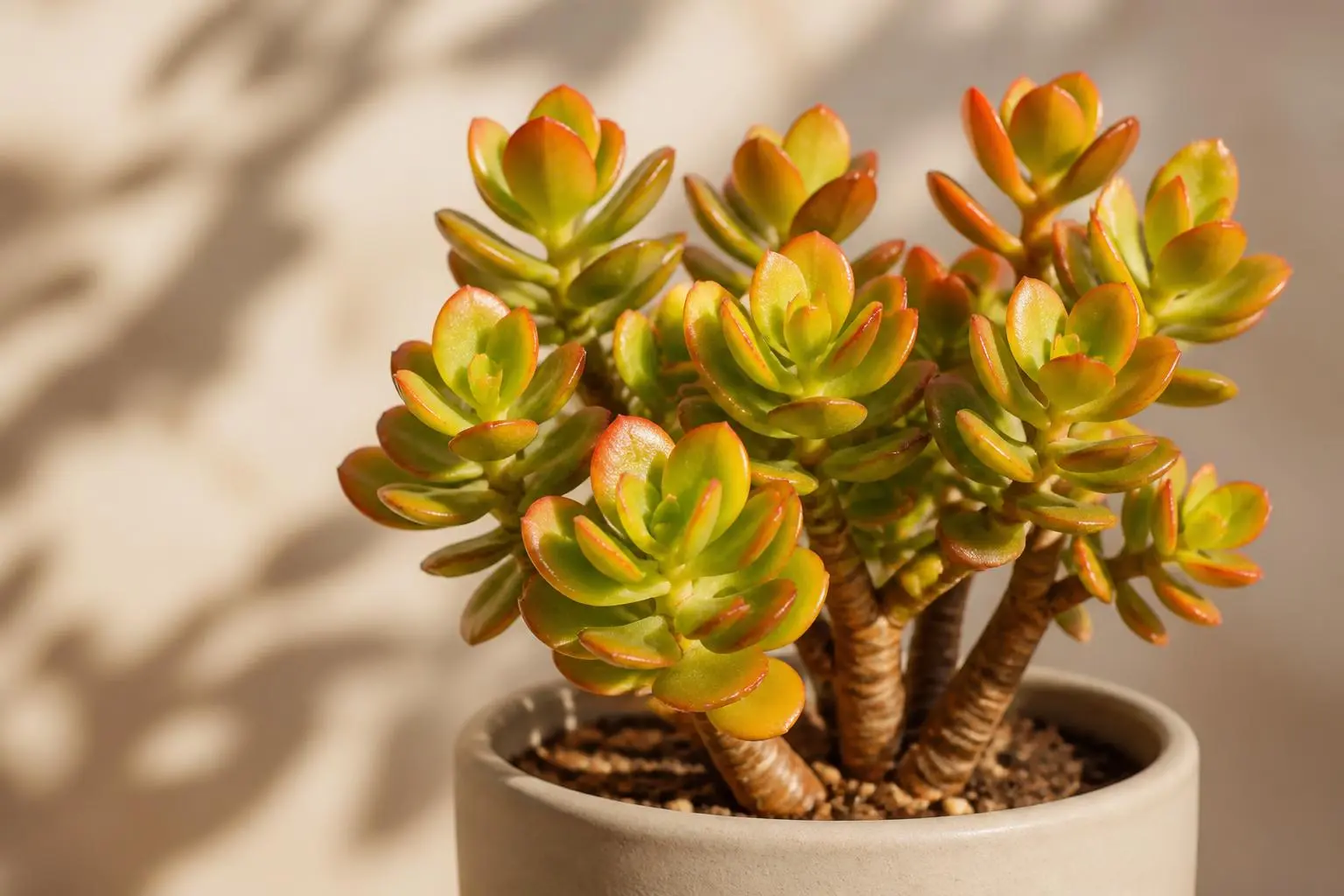
Hummel's Sunset
An award-winning Jade Plant cultivar that is arguably the most colorful variety in cultivation, distinguished by its striking golden-yellow and fiery red leaf margins that intensify dramatically with sun exposure to create a spectacular sunset gradient. The leaves start as bright green with faint yellow edges, then develop their signature sunset coloring — golden yellow margins transitioning to deep orange-red tips — when grown in bright light with some direct sun. The color transformation can be quite dramatic, with well-grown specimens displaying a full spectrum from green through yellow and orange to red on a single plant, making it the most visually dynamic Jade Plant available. Hummel's Sunset won the prestigious Royal Horticultural Society Award of Garden Merit, confirming its exceptional ornamental value and reliability as a garden plant. Named after the legendary succulent grower Ed Hummel of Panorama City, California, this cultivar grows at a moderate pace and reaches two feet tall indoors, developing a sturdy woody trunk similar to the standard form. It produces clusters of pinkish-white flowers in late winter on mature specimens kept cool through the dormant season.
Distinguishing feature: Golden-yellow and fiery red leaf margins that intensify dramatically with sun exposure; RHS Award winner with a sunset gradient from green through yellow to red
Care notes: Requires consistently bright light to develop and maintain its signature sunset coloring — without adequate light, the golden and red margins fade to plain green, stripping away the cultivar most distinctive and valuable feature. A south or west-facing window providing several hours of direct sun is ideal, but acclimate gradually over one to two weeks to prevent leaf scorch on specimens previously kept in lower light conditions. Otherwise follows the same drought-tolerant care as the standard Jade Plant — water only when the soil is completely dry using the soak-and-dry method, and ensure excellent drainage in a terracotta pot. Color development is also enhanced by slightly cooler fall temperatures around fifty to fifty-five degrees Fahrenheit during the dormant period, which triggers the most vivid red and gold pigmentation. Fertilize every two months in spring and summer with diluted balanced succulent fertilizer.