
How to Propagate English Ivy
English Ivy is one of the easiest houseplants to propagate. Here are three reliable methods — choose the one that fits your comfort level and available supplies.
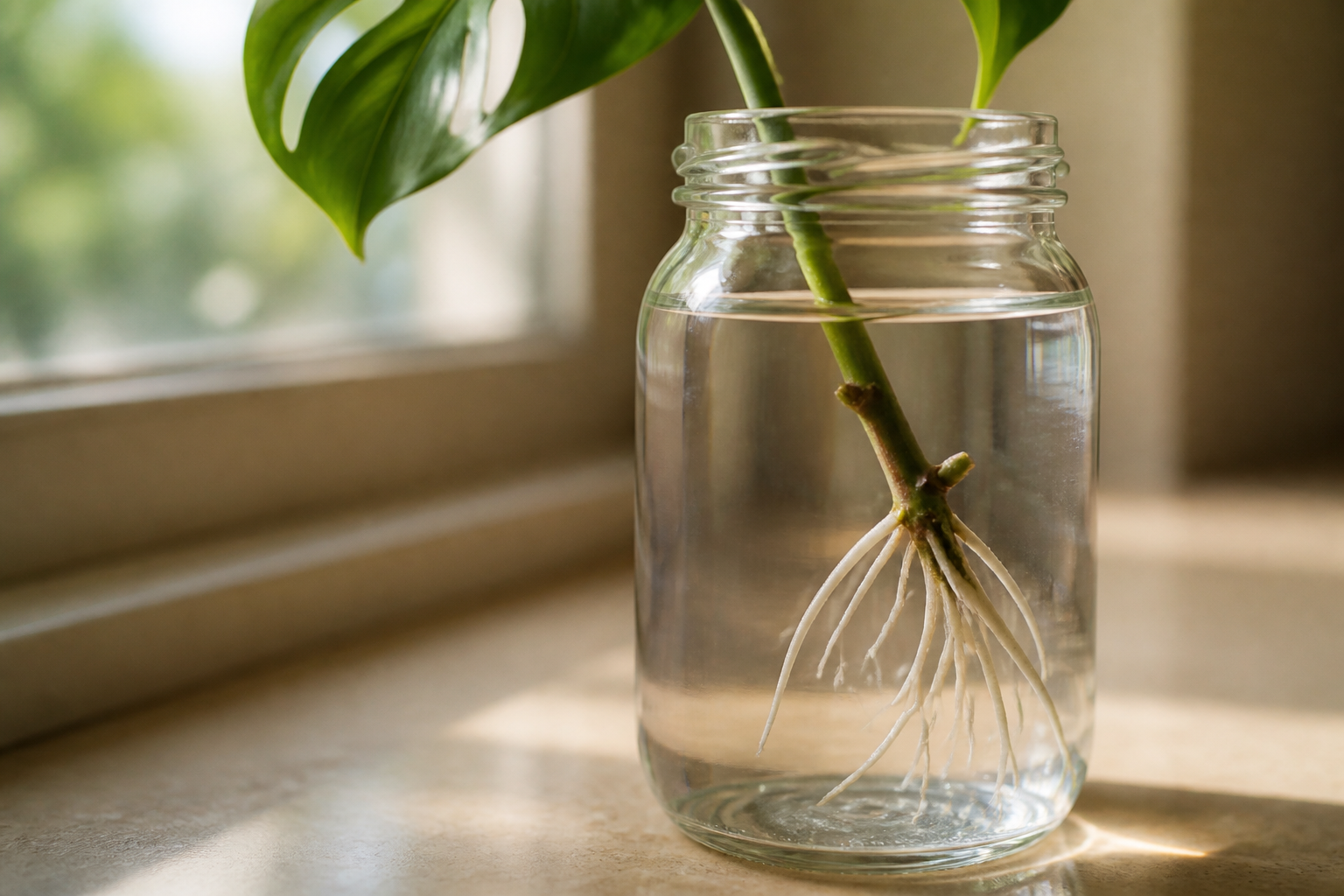
Water propagation (easiest and most popular)
You will need clean scissors or a sharp knife, a glass jar or vase, and room-temperature water.
- 1 Identify a healthy vine with several nodes — the points where leaves and aerial roots attach to the stem.
- 2 Cut a 4–6 inch stem section about 1/4 inch below a node, using clean tools.
- 3 Remove the lower leaves, leaving 2–4 at the top. Any leaves left below the water line will rot and foul the water.
- 4 Place the cutting in a jar of room-temperature water, ensuring at least one node is submerged but no leaves touch the water.
- 5 Position the jar in bright indirect light — an east-facing windowsill is ideal.
- 6 Change the water every 5–7 days, rinsing the jar each time.
- 7 Watch for white, thread-like roots emerging from the submerged nodes, typically beginning in 7–14 days. English Ivy roots very quickly compared to most houseplants.
- 8 Once roots are 1–2 inches long (usually 2–3 weeks total), transplant into well-draining potting soil.
- 9 Water the newly potted cutting thoroughly and keep the soil consistently moist for the first 2 weeks.
- 10 After 2 weeks, allow the top inch of soil to dry between waterings.
Expected timeline: roots appear in 7–14 days, ready to transplant by week 2–3, new vine growth by week 4–5. Success rate: approximately 90–100%.
Success rate: approximately 90–100%.
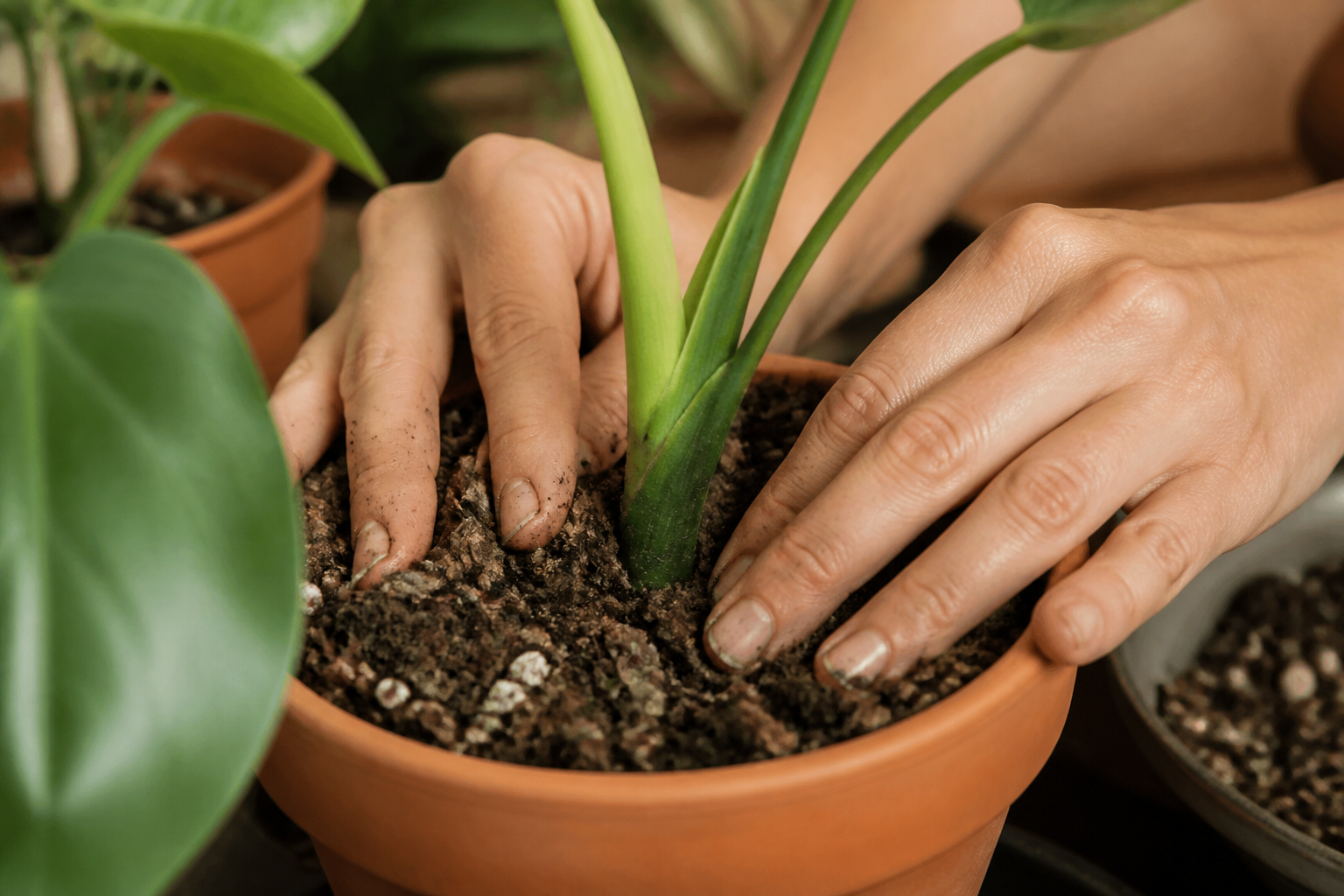
Soil propagation
This method eliminates the water-to-soil transition and produces sturdier root systems from the start. You will need clean scissors, a small pot with drainage holes, pre-moistened potting soil, rooting hormone powder (optional), and a clear plastic bag.
- 1 Take a cutting as described above, with at least one node and 2–4 leaves.
- 2 Dip the cut end in rooting hormone, tapping off excess — this is optional for English Ivy but can speed root formation.
- 3 Make a small hole in the moist potting mix with a pencil.
- 4 Insert the cutting so the node is buried about 1 inch deep, and gently firm the soil around the stem.
- 5 Water lightly to settle the soil.
- 6 Cover the pot with a clear plastic bag to maintain humidity.
- 7 Place in bright indirect light and keep the soil consistently damp for the first 2–3 weeks.
- 8 Remove the bag once new growth appears in 3–4 weeks, gradually acclimating the plant to ambient humidity over 3–4 days.
- 9 Resume normal care.
Expected timeline: roots form in 2–3 weeks, new growth in 3–4 weeks, established plant in 6–8 weeks. Success rate: approximately 80–90%.
Success rate: approximately 80–90%.
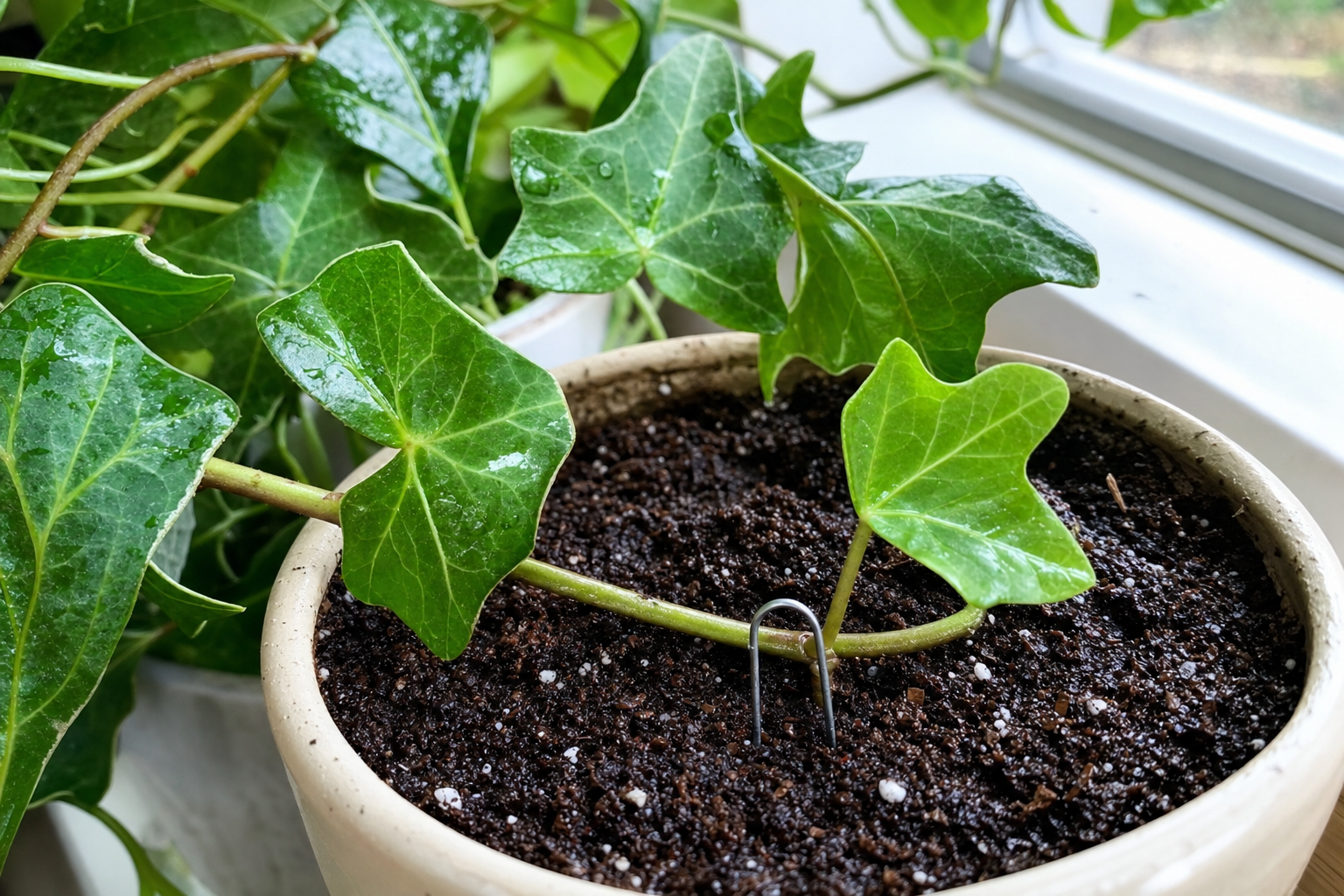
Layering (highest success rate)
This method roots stems while they are still attached to the parent plant, providing the highest success rate because the cutting continues to receive water and nutrients from the parent until it develops its own roots.
- 1 Identify a long, flexible vine that can reach the soil surface.
- 2 Find a node along the vine where roots can form.
- 3 Pin the node down into moist soil using a bent paperclip or U-shaped wire, burying it about 1/2 inch deep. You can do this in the same pot as the parent plant, or place a small pot of soil next to the parent and pin the vine into that.
- 4 Keep the soil consistently moist at the pinned point.
- 5 After 2–3 weeks, give the vine a gentle tug — if you feel resistance, roots have formed.
- 6 Cut the vine between the parent plant and the newly rooted section.
- 7 Treat the new plant as independent, or leave it connected for a naturally fuller appearance.
Expected timeline: roots form in 2–3 weeks, independent plant in 4–5 weeks. Success rate: approximately 95–100%.
Success rate: approximately 95–100%.
Troubleshooting Common Issues
Cuttings rotting in water
If the stem turns brown or mushy, bacterial rot has set in. Remove the cutting, recut above the rot, and restart in a clean jar with fresh water. Prevent rot by ensuring no leaves are submerged and changing water every 5–7 days. English Ivy is susceptible to bacterial soft rot in warm, stagnant water.
No roots after 2 weeks
English Ivy normally roots in 7–14 days. A delay usually indicates insufficient light or cool temperatures. Move the cutting to a brighter spot with indirect light. Ivy roots fastest at 65–75°F. Also check that a node is submerged — roots emerge from nodes, not from the cut end.
Wilting after transplant from water to soil
This is caused by the transition from water roots to soil roots. To minimize shock, transplant when roots are 1–2 inches long. Keep soil consistently moist for the first 2 weeks and increase humidity if leaves droop. Most cuttings recover within 7–10 days.
New ivy growing slowly or with small leaves
Newly propagated English Ivy needs time to establish. Ensure bright indirect light and consistent moisture. After 4–6 weeks, begin monthly fertilizing with diluted balanced fertilizer during the growing season.
Propagation Tips
- ✓ Always use clean, sterilized tools to prevent infection
- ✓ Cuttings need bright indirect light — never direct sun
- ✓ Change propagation water every 5–7 days to prevent bacteria
- ✓ Be patient — rooting takes 2–6 weeks depending on the method
- ✓ Spring and summer are the best seasons for propagation