
Dumb Cane Varieties
A comparison of the most popular Dumb Cane varieties — learn which one is right for your space and skill level.
| Variety | Key Feature | Care Difficulty | Price Range |
|---|---|---|---|
| Dieffenbachia Camille | Broad creamy-white to pale yellow leaf centers occupying most of the surface with dark green margins; compact bushy multi-stem growth habit reaching 2–3 feet tall | Easy | Varies |
| Dieffenbachia Tropic Snow | Green leaves heavily speckled and splashed with irregular creamy-white spots; larger upright cane-like growth reaching 3–5 feet tall with a snow-dusted tropical appearance | Easy | Varies |
| Dieffenbachia Seguine | Solid dark green leaves with only occasional lighter mottling; the most vigorous and largest-growing Dieffenbachia species reaching 4–6 feet indoors with thick durable foliage | Easy | Varies |
| Dieffenbachia Compacta | Smaller 4–6 inch leaves densely packed on short stout stems; dwarf bushy habit reaching only 12–18 inches tall that rarely develops bare trunks over time | Easy | Varies |
Variety Details
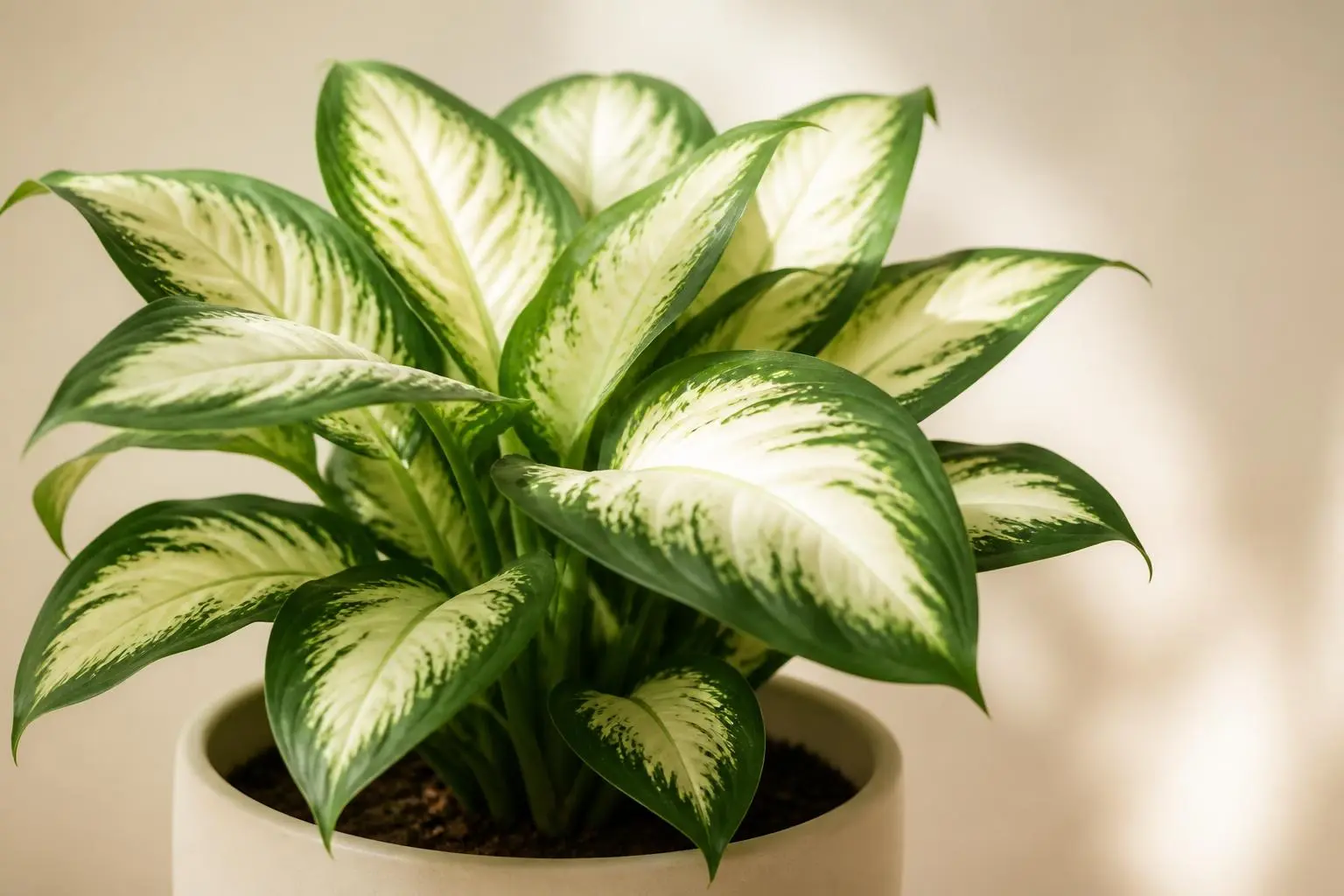
Dieffenbachia Camille
The most popular and widely grown Dieffenbachia variety worldwide, Camille features broad, elliptical leaves with creamy-white to pale yellow centers that fill most of the leaf surface, bordered by a thin to medium dark green margin along the edges. The high proportion of white in each leaf creates a bright, cheerful display that can lighten a dark corner more effectively than almost any other houseplant, and the contrast between the creamy center and the dark green border gives each leaf a crisp, graphic quality. Camille grows in a compact, bushy habit, usually reaching 2 to 3 feet tall indoors, and tends to produce multiple stems from the base rather than forming a single tall cane. This bushier growth habit makes it a better choice for tabletops and plant stands than taller, leggier Dieffenbachia varieties. Widely available for $15 to $35 in a 6-inch pot, it is one of the most affordable Dieffenbachia options.
Distinguishing feature: Broad creamy-white to pale yellow leaf centers occupying most of the surface with dark green margins; compact bushy multi-stem growth habit reaching 2–3 feet tall
Care notes: Needs slightly brighter indirect light than solid green Dieffenbachia varieties to maintain the white leaf centers — in low light, the creamy areas gradually shrink and the green margins expand as the plant produces more chlorophyll. Place near an east- or north-facing window for the best balance of brightness and protection from direct sun, which scorches the white portions causing brown, crispy patches. Water when the top 2 inches of soil feel dry, and be particularly careful about overwatering — the thick, fleshy stems are prone to basal rot if the soil stays soggy. Feed monthly with half-strength balanced liquid fertilizer during spring and summer, and stop entirely in fall and winter. Wipe the large leaves with a damp cloth every 2 to 3 weeks to remove dust, always supporting the leaf from below. Always wear gloves when pruning, as the sap contains calcium oxalate crystals that irritate skin and can cause temporary loss of speech if ingested.
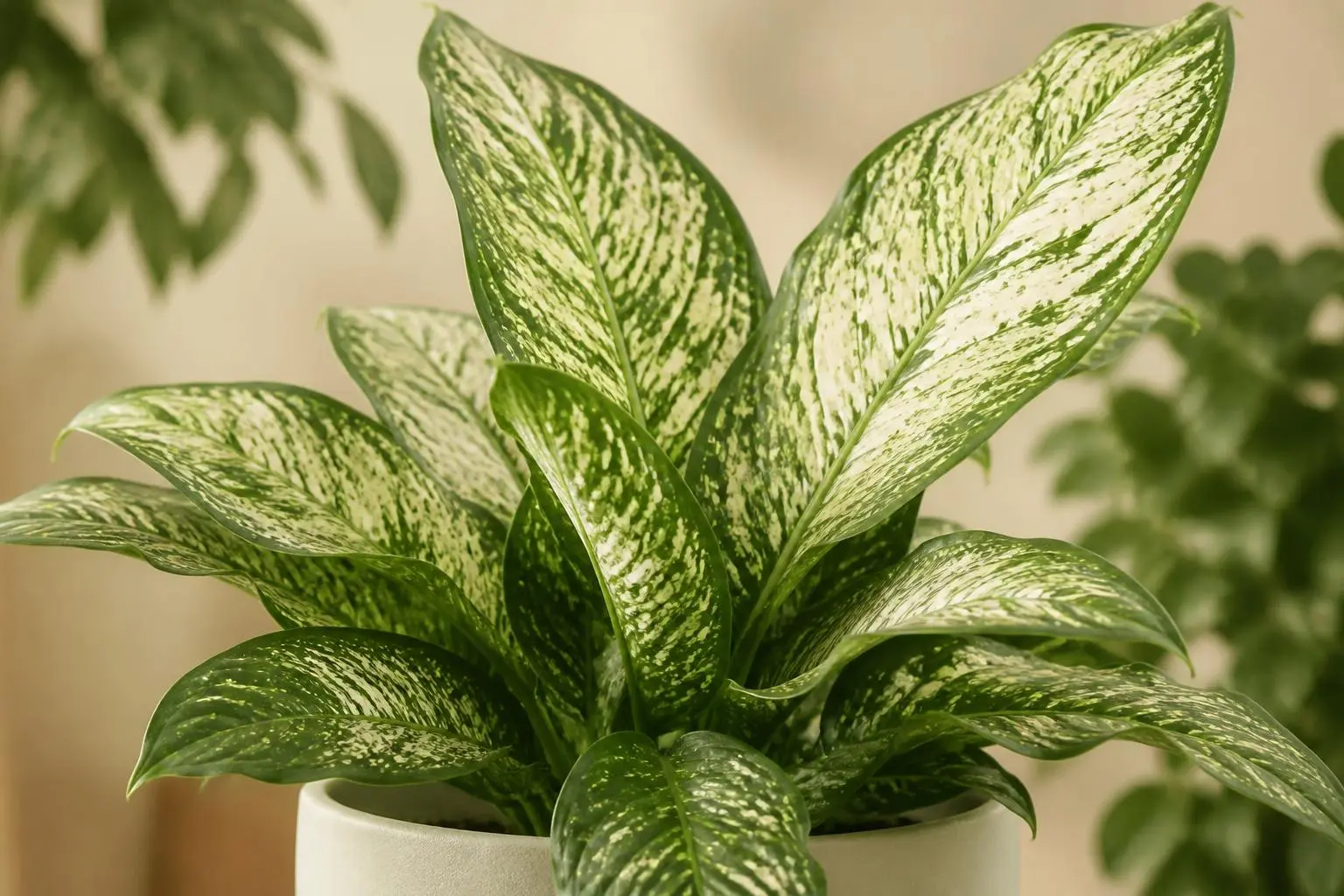
Dieffenbachia Tropic Snow
A larger and more dramatically patterned variety, Tropic Snow produces broad green leaves heavily speckled, spotted, and splashed with creamy-white markings distributed across the entire leaf surface, creating a vivid snow-dusted effect that justifies its evocative cultivar name. Unlike Camille, where the white occupies a defined central zone, Tropic Snow displays an irregular, freckled pattern in which no two leaves look exactly the same — some have small cream speckles, while others feature bold white splotches covering half or more of the leaf. This variety grows significantly larger than Camille, reaching 3 to 5 feet tall indoors, and develops an upright, cane-like habit with a single dominant stem that elongates over time as lower leaves are shed. The larger size and bolder patterning make Tropic Snow an excellent floor plant for a bright living room or office. Available for $20 to $45 in an 8-inch pot, it offers strong visual impact.
Distinguishing feature: Green leaves heavily speckled and splashed with irregular creamy-white spots; larger upright cane-like growth reaching 3–5 feet tall with a snow-dusted tropical appearance
Care notes: Follows the same fundamental care routine as other Dieffenbachia varieties but grows significantly larger and faster than compact types like Camille, which means it requires more frequent watering and slightly larger pots as it matures. Water when the top 2 inches of soil are dry — a large Tropic Snow in an 8-inch pot may need watering every 5 to 7 days during peak growing season. The speckled white portions contain less chlorophyll than the green areas, so bright indirect light is important to maintain the variegation, though Tropic Snow is somewhat more tolerant of medium light than Camille because its green areas are more extensive. As the plant grows taller and develops a bare lower trunk, you can cut the top off and root it in water to start a new plant — the parent stem will sprout new growth from below the cut. Wear gloves when handling cuttings, and keep the plant away from pets and children due to toxic calcium oxalate crystals.
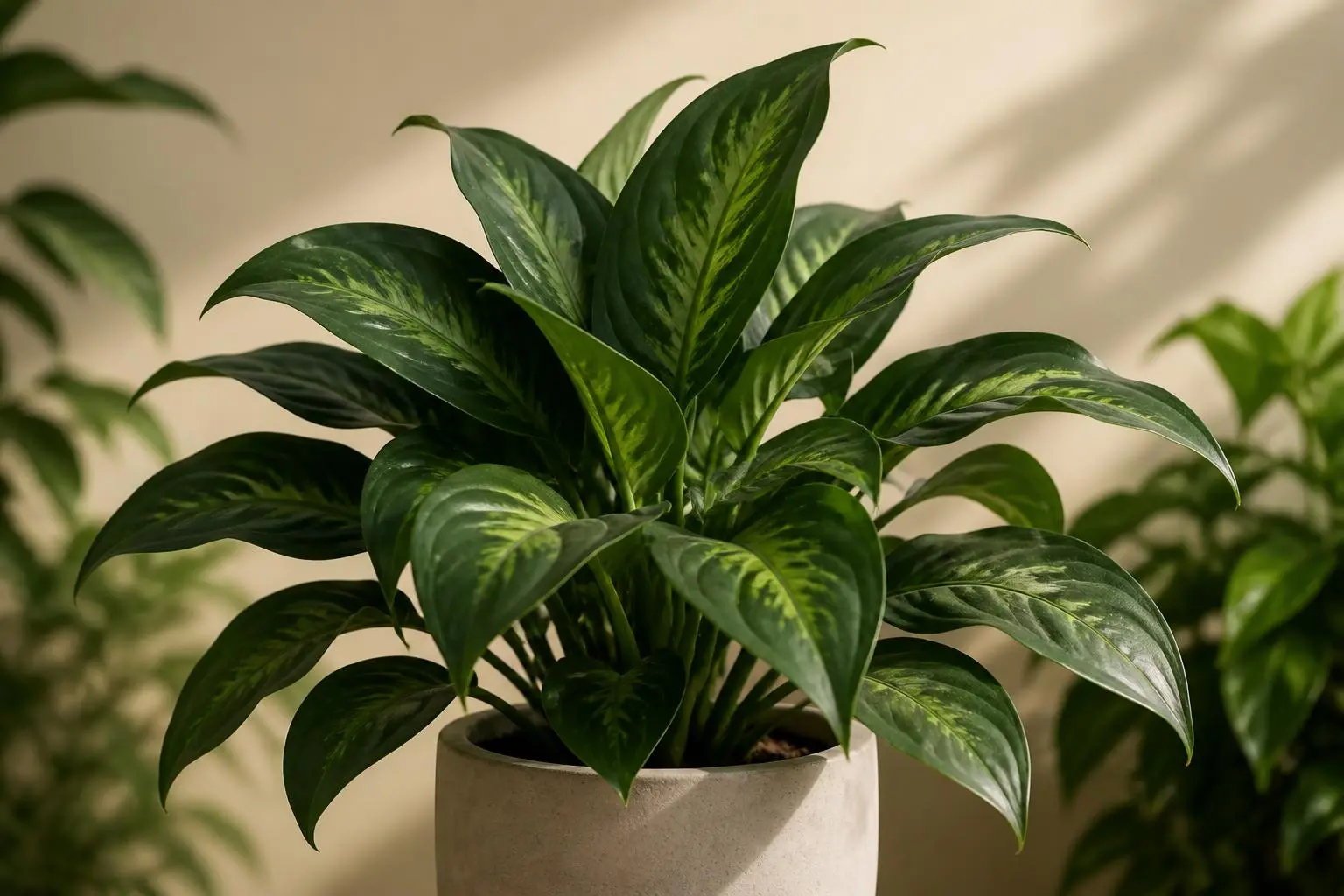
Dieffenbachia Seguine
The original wild species from which all cultivated Dieffenbachia varieties descend, Seguine produces solid dark green leaves with only occasional lighter green or faintly mottled markings, offering a more subdued and naturalistic aesthetic than the heavily variegated cultivars that dominate the market. Native to the tropical Americas from Mexico through Central America and the Caribbean to northern South America, where it grows as an understory plant in humid forests, Seguine is the most vigorous and robust form of Dieffenbachia — it grows faster, reaches larger dimensions, and tolerates a wider range of conditions than any of its variegated descendants. Indoors, mature specimens can reach 4 to 6 feet tall with thick, cane-like stems and large leaves up to 12 inches long. The solid green foliage is thicker and more leathery than variegated forms, making it more resistant to damage and stress. Prices range from $12 to $25.
Distinguishing feature: Solid dark green leaves with only occasional lighter mottling; the most vigorous and largest-growing Dieffenbachia species reaching 4–6 feet indoors with thick durable foliage
Care notes: The most shade-tolerant and fastest-growing of all Dieffenbachia varieties, making it the ideal choice for dimmer rooms and low-light offices where variegated forms would lose their patterning and grow poorly. Because its solid green leaves contain full chlorophyll throughout, Seguine efficiently captures whatever light is available and maintains healthy growth even in locations that receive only ambient room lighting or distant window light. This efficiency also means it requires less frequent feeding — fertilize every 6 to 8 weeks rather than monthly during the growing season. Water when the top 2 inches of soil are dry, and be especially vigilant about not overwatering, as the faster growth rate produces more organic matter in the pot that can retain excess moisture. Seguine is more cold-tolerant than variegated varieties but should still be kept above 60 degrees Fahrenheit. Its rapid growth means it may need repotting every year rather than every 2 years.
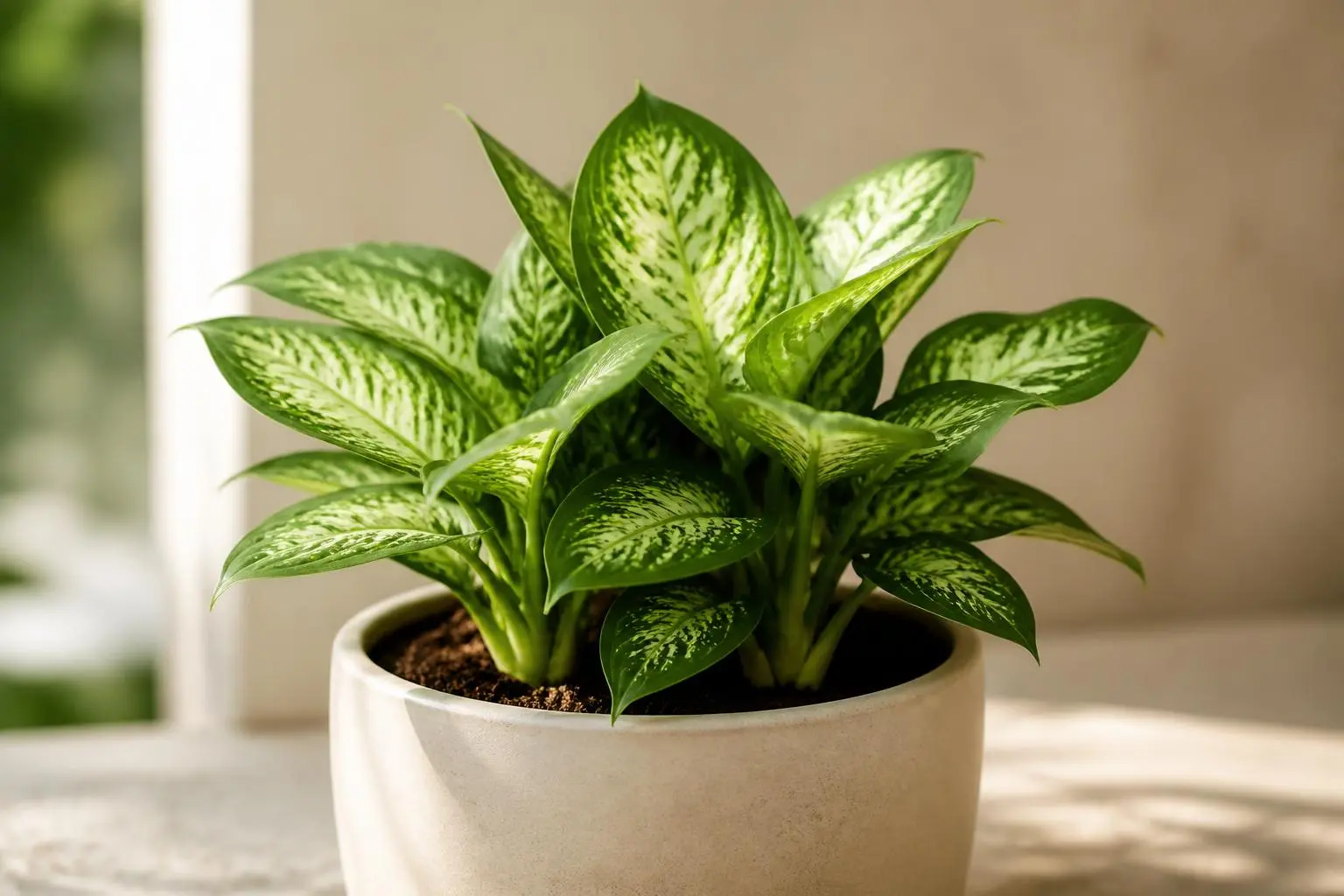
Dieffenbachia Compacta
A dwarf variety specifically bred for small-space indoor gardening, Compacta produces smaller, more densely packed leaves on shorter, stouter stems that keep the plant bushy and full without the leggy, bare-trunk growth habit that develops on taller Dieffenbachia varieties over time. Each leaf is proportionally smaller than those of full-size varieties — typically 4 to 6 inches long compared to 8 to 12 inches — but they emerge in tight, overlapping clusters that create a remarkably full, lush appearance from top to bottom. The leaf coloration is similar to Camille, with creamy-white centers and green margins, though the white areas tend to be slightly smaller and the overall effect is more compact and tidy. Compacta typically reaches only 12 to 18 inches tall and maintains its bushy form for many years, making it one of the best Dieffenbachia choices for desktops, windowsills, and small spaces. Available for $12 to $25 in a 4 to 6-inch pot.
Distinguishing feature: Smaller 4–6 inch leaves densely packed on short stout stems; dwarf bushy habit reaching only 12–18 inches tall that rarely develops bare trunks over time
Care notes: Shares the same care requirements as full-size Dieffenbachia varieties but its compact form and smaller root system mean it dries out somewhat faster than larger plants, so check the soil every 3 to 4 days during the growing season rather than weekly. Water when the top 1 to 2 inches of soil feel dry, and always empty the drainage saucer after 15 minutes — the small pot size makes overwatering particularly dangerous because there is less soil volume to buffer excess moisture. Provide medium to bright indirect light to maintain the cream variegation in the leaf centers, though Compacta is slightly more shade-tolerant than Camille because its white areas are proportionally smaller. Feed monthly with half-strength balanced liquid fertilizer during spring and summer, and stop entirely in fall and winter. The dense, bushy growth habit means less light reaches interior leaves, so gently rotate the plant a quarter turn each week to promote even growth on all sides.