
How to Propagate Chinese Evergreen
Chinese Evergreen is one of the easiest houseplants to propagate. Here are three reliable methods — choose the one that fits your comfort level and available supplies.
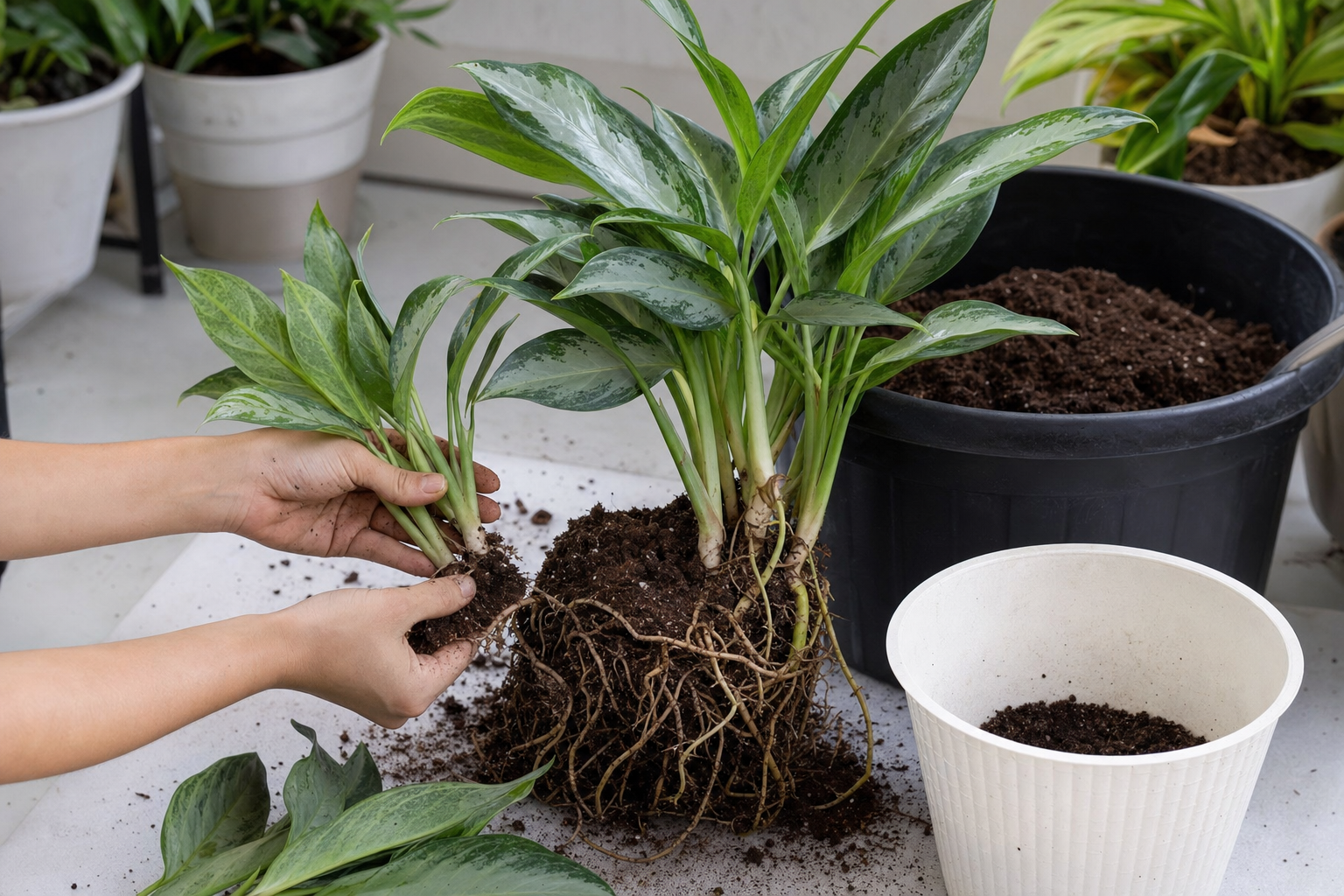
Division (easiest and fastest)
You will need a clean sharp knife, pots with drainage holes, and fresh potting mix.
- 1 The best time to divide is during spring repotting when the plant is entering active growth.
- 2 Water the plant thoroughly the day before to make the root ball more pliable.
- 3 Remove the plant from its pot and gently shake off excess soil to expose the root structure.
- 4 Identify natural division points where clusters of stems have their own root systems.
- 5 Using your hands, carefully pull the root ball apart into 2–3 sections, each with several stems and a healthy root mass. For tightly matted roots, use a clean sharp knife to cut through.
- 6 Dust cut surfaces with cinnamon powder to prevent fungal infection.
- 7 Plant each division in its own pot with fresh well-draining soil at the same depth as before.
- 8 Water thoroughly and place in a warm, shaded spot for a week to recover.
- 9 Resume normal care after 7–10 days.
Expected timeline: new growth in 2–4 weeks, fully established in 6–8 weeks. Success rate: approximately 85–95%.
Success rate: approximately 85–95%.
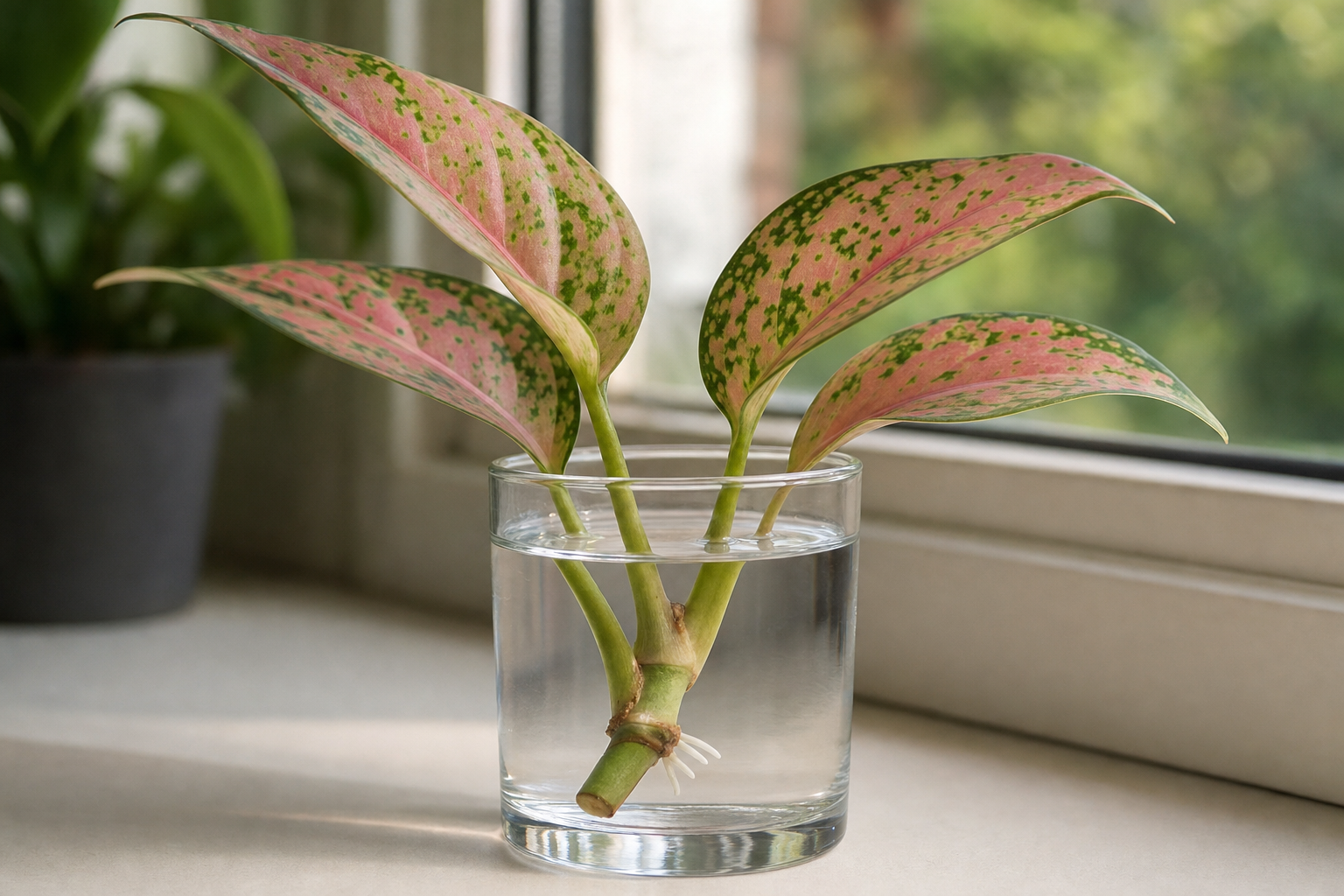
Stem tip cutting (most popular)
You will need clean scissors or a sharp knife, a glass jar for water propagation or a small pot with moist soil, and optionally rooting hormone.
- 1 Cut the top 4–6 inches of a growing stem, making the cut just below a node (the ring where a leaf was attached). Include several leaves on the cutting.
- 2 Remove the bottom 1–2 leaves to expose the node.
- 3 For water propagation, place the cutting in a jar of room-temperature water with the node submerged. Change the water every 5–7 days. For soil propagation, dip the cut end in rooting hormone (optional), then plant in moist potting soil, burying the node about 1 inch deep.
- 4 Keep in bright indirect light at 65–75°F (18–24°C). For soil cuttings, cover with a clear plastic bag to maintain humidity.
- 5 Watch for roots in water — they typically appear in 2–3 weeks. Soil cuttings root in 3–4 weeks.
- 6 Once water roots are 2–3 inches long, transplant into potting soil and keep consistently moist for the first 2 weeks.
- 7 The parent plant will grow new shoots from the node below the cut, making it bushier.
Expected timeline: roots in 2–4 weeks, new growth on cutting in 4–6 weeks, established plant in 8–10 weeks. Success rate: approximately 80–90%.
Success rate: approximately 80–90%.
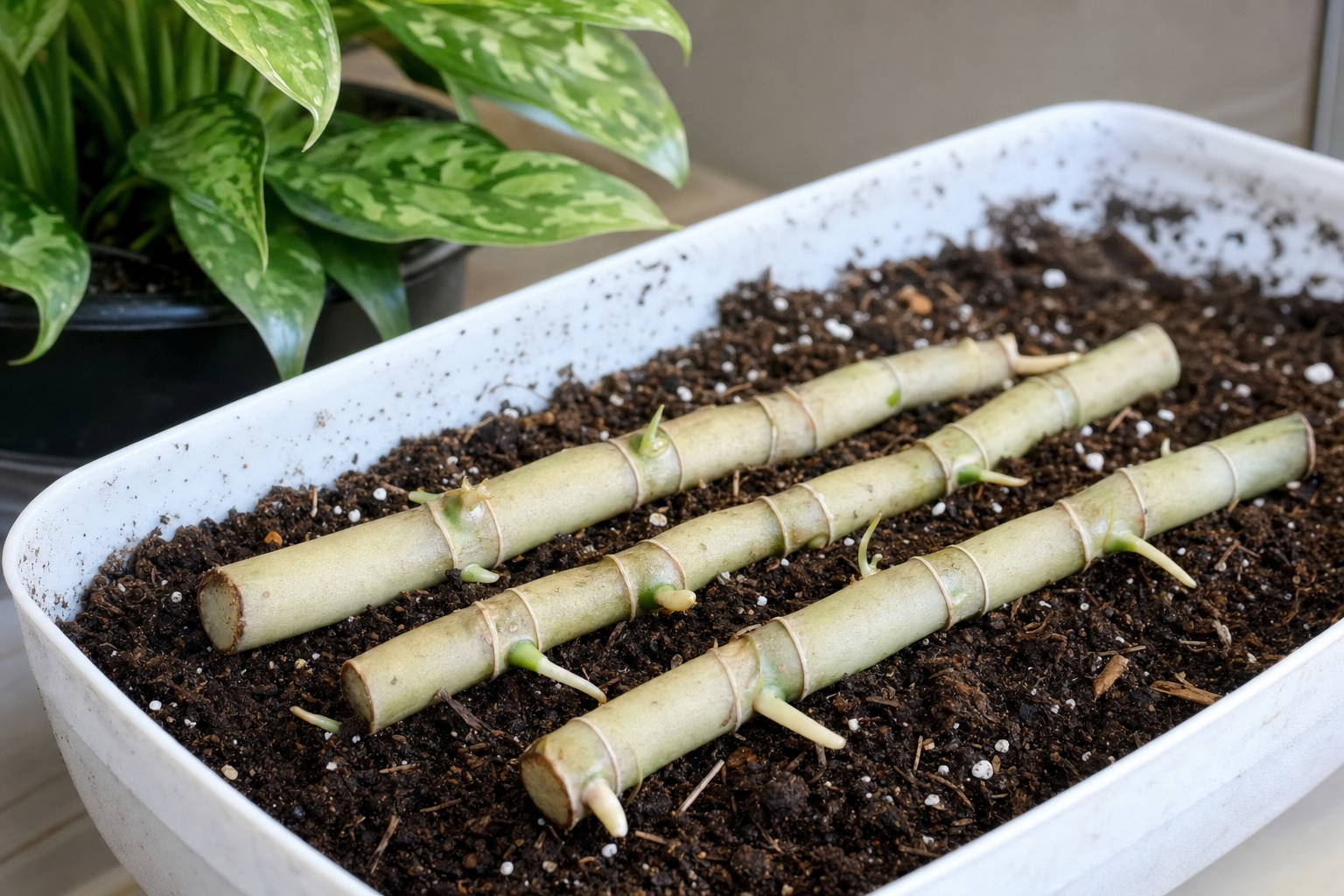
Cane cutting (for leggy plants)
If your Chinese Evergreen has grown tall with a bare lower stem, you can cut the cane into segments to produce multiple new plants.
- 1 Cut the bare stem into 3–4 inch segments, each with at least one node (the ring marking where a leaf was attached).
- 2 Note which end was pointing up — planting upside down will fail.
- 3 Let the cut ends dry and callus for 1–2 hours.
- 4 Plant segments vertically in moist potting soil, burying the bottom half with the node facing up, or lay them horizontally on moist soil and press lightly.
- 5 Cover with a clear plastic bag to maintain humidity.
- 6 Keep in bright indirect light at warm temperatures (70–80°F).
- 7 New growth emerges from the node in 4–6 weeks.
Expected timeline: new shoots in 4–6 weeks, established plant in 10–12 weeks. Success rate: approximately 70–80%.
Success rate: approximately 70–80%.
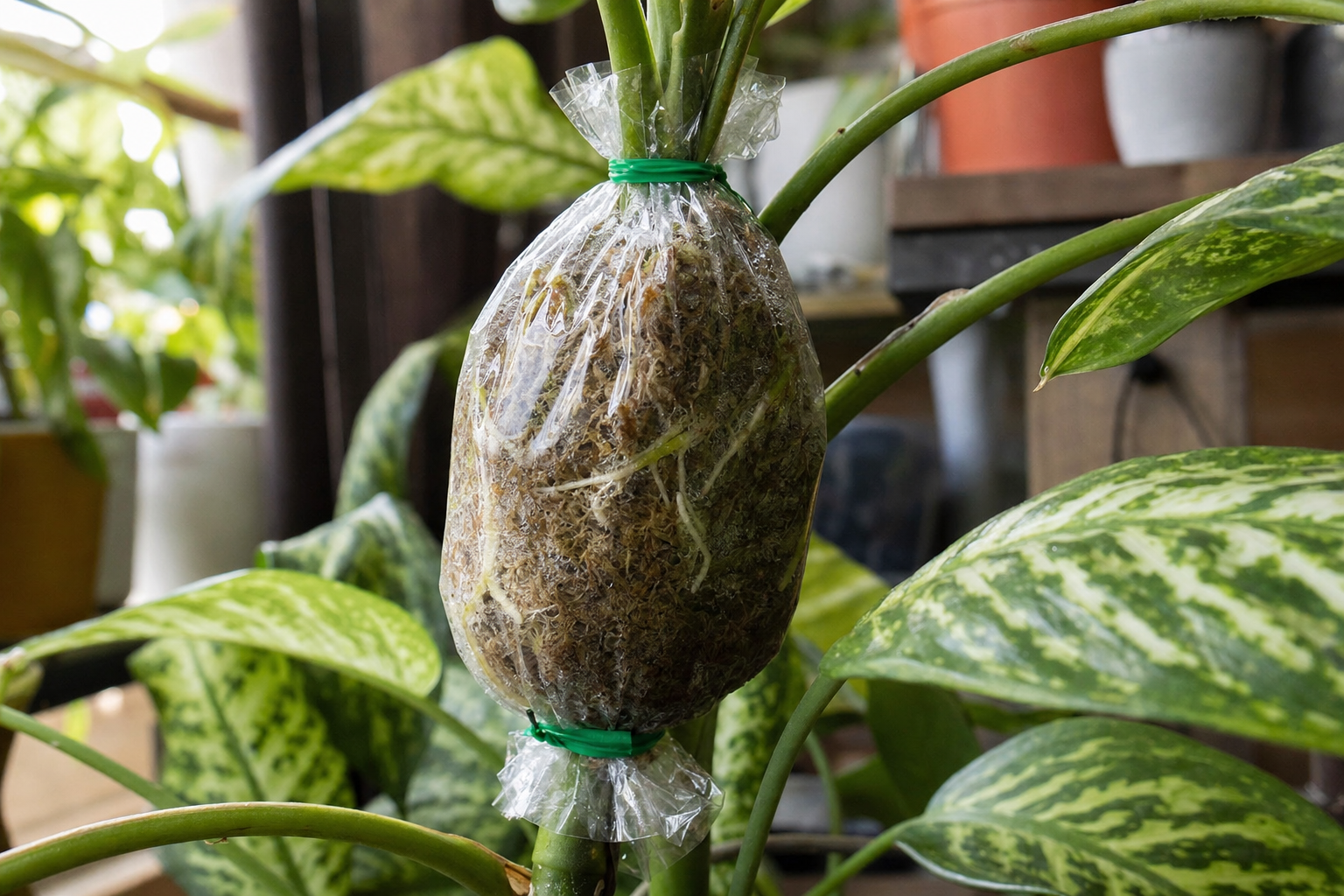
Air layering (for thick, woody stems)
- 1 Select a healthy section of stem.
- 2 Make an upward diagonal cut about one-third through the stem.
- 3 Insert a toothpick or small pebble to keep the cut open.
- 4 Wrap the cut area with moist sphagnum moss, then cover with plastic wrap, securing both ends with twist ties or tape.
- 5 Keep the moss consistently moist by opening the plastic and misting every few days.
- 6 Roots will develop inside the moss in 6–8 weeks.
- 7 Once you see substantial roots through the plastic, cut the stem below the rooted section and pot it up.
- 8 The parent plant will continue growing from the section below the cut.
Expected timeline: roots in 6–8 weeks, established plant in 12–14 weeks. Success rate: approximately 80–90%.
Success rate: approximately 80–90%.
Troubleshooting Common Issues
Cutting rotting in water
If the stem turns brown or mushy and the water becomes cloudy, bacterial rot has set in. Remove the affected cutting, recut above the rot line with clean scissors, and restart in a clean jar with fresh water. Prevent rot by changing water every 5–7 days and keeping no leaves below the water line.
No roots after 3–4 weeks
Chinese Evergreens root fastest in warm conditions (70–80°F). If your home is cool, move the cutting to a warmer spot or use a heat mat. Also ensure the node is submerged — roots emerge from the node, not the cut end. Variegated varieties may root more slowly than solid green ones.
Cane cutting not sprouting
Cane cuttings can take 4–8 weeks to show growth. Ensure the soil stays consistently moist (not soggy) and the temperature is warm. If no growth appears after 8 weeks, gently unbury the segment to check for rot — if it is firm, rebury and wait longer. If mushy, discard and try again with a fresh segment.
New plant losing variegation
Variegated Chinese Evergreens may produce all-green growth from cuttings, especially if the cutting was taken from a less-variegated section. To maintain variegation, take cuttings from the most heavily patterned parts of the plant and provide bright indirect light.
Propagation Tips
- ✓ Always use clean, sterilized tools to prevent infection
- ✓ Cuttings need bright indirect light — never direct sun
- ✓ Change propagation water every 5–7 days to prevent bacteria
- ✓ Be patient — rooting takes 2–6 weeks depending on the method
- ✓ Spring and summer are the best seasons for propagation