
Bird of Paradise Varieties
A comparison of the most popular Bird of Paradise varieties — learn which one is right for your space and skill level.
| Variety | Key Feature | Care Difficulty | Price Range |
|---|---|---|---|
| Strelitzia reginae (Orange) | Vibrant orange and blue crane-shaped flowers emerging from boat-shaped green spathes; compact 3–5 foot clumping habit with upright blue-green paddle-shaped leaves forming a basal fan | Easy | Varies |
| Strelitzia nicolai (White/Giant) | White and blue flowers emerging from a dark purple-black spathe; enormous dark green leaves up to 6 feet long and 2 feet wide; tree-like trunk with leaf scars | Easy | Varies |
| Strelitzia juncea (Rush Leaf) | Narrow cylindrical rush-like leaf blades instead of broad paddles; same vibrant orange and blue crane-shaped flowers on a tidy upright clumping form reaching 3–4 feet tall | Easy | Varies |
| Strelitzia Mandela's Gold | Golden yellow and blue crane-shaped flowers replacing the standard orange; otherwise identical compact blue-green paddle-leaf form and 3–5 foot clumping habit as standard reginae | Easy | Varies |
Variety Details
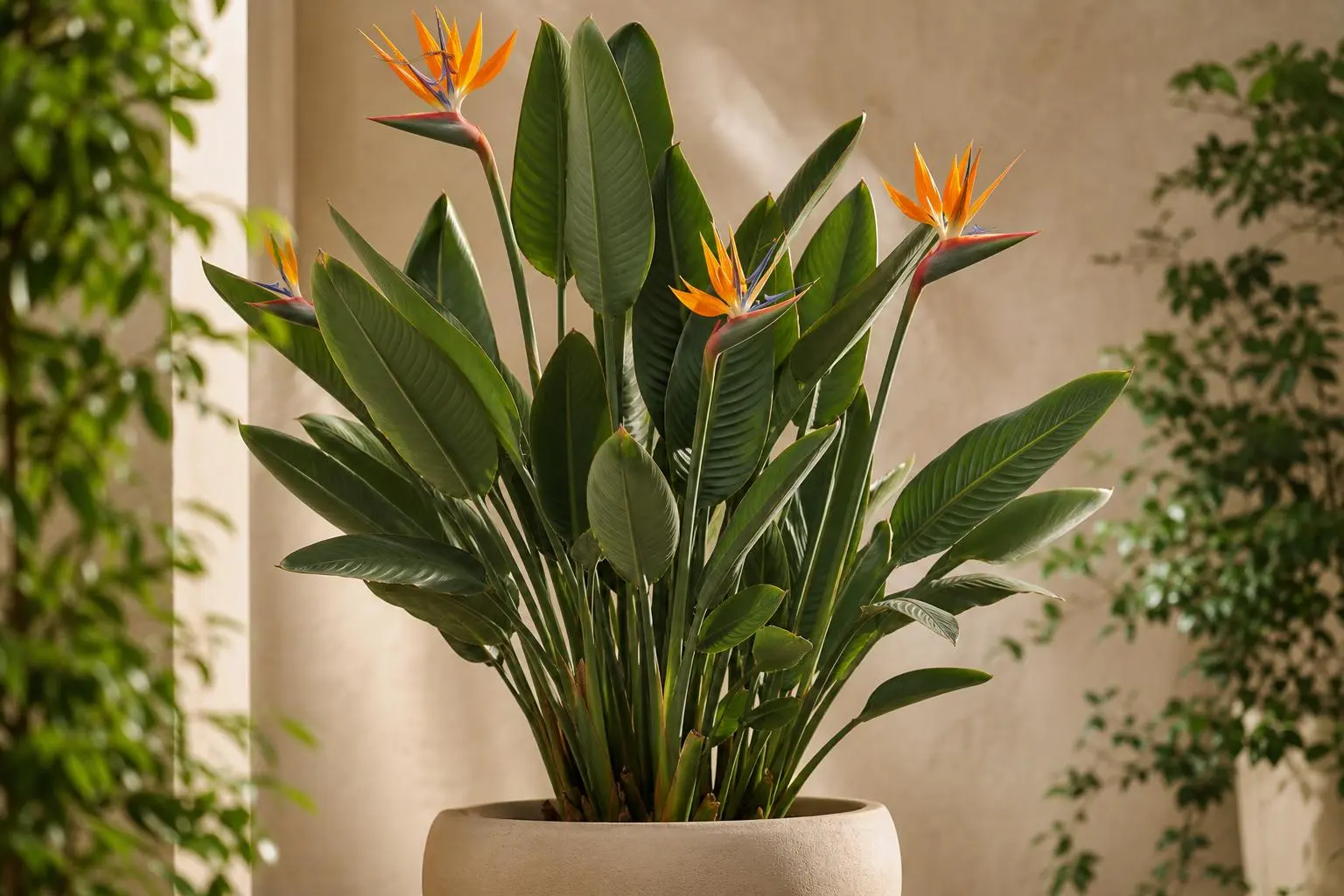
Strelitzia reginae (Orange)
The classic and most widely grown Bird of Paradise, Strelitzia reginae produces the iconic orange and blue crane-shaped flowers that have made this plant a symbol of the tropics. Native to the Eastern Cape of South Africa, it forms dense clumps of upright, blue-green paddle-shaped leaves that fan out from a basal crown, reaching 3 to 5 feet tall indoors. Each mature fan can produce multiple flower spikes per season, with each spike bearing several blooms that open sequentially over several weeks. Bright orange sepals emerge from a boat-shaped spathe alongside a blue-purple tongue that contains nectar, and in its native habitat, sunbirds pollinate the flowers by perching on this tongue. Indoors, the plant grows about one new leaf per month during the growing season and typically sells for $25 to $60 in a 6-inch pot.
Distinguishing feature: Vibrant orange and blue crane-shaped flowers emerging from boat-shaped green spathes; compact 3–5 foot clumping habit with upright blue-green paddle-shaped leaves forming a basal fan
Care notes: The most manageable Bird of Paradise for indoor cultivation and the variety most likely to bloom inside a home. It flowers more readily than the white species, typically producing blooms once the plant reaches 4 to 5 years of age with at least 8 to 10 mature leaf fans. To encourage flowering, keep the plant slightly root-bound, provide at least 6 hours of bright indirect light with some direct morning sun, and apply a bloom-boosting fertilizer higher in phosphorus in early spring. Water when the top 1 to 2 inches of soil feel dry and avoid letting the plant sit in standing water. The leaves naturally split in response to air movement, which is normal and not a sign of poor health. Wipe the broad leaves with a damp cloth every 2 to 3 weeks to maintain their glossy blue-green sheen.
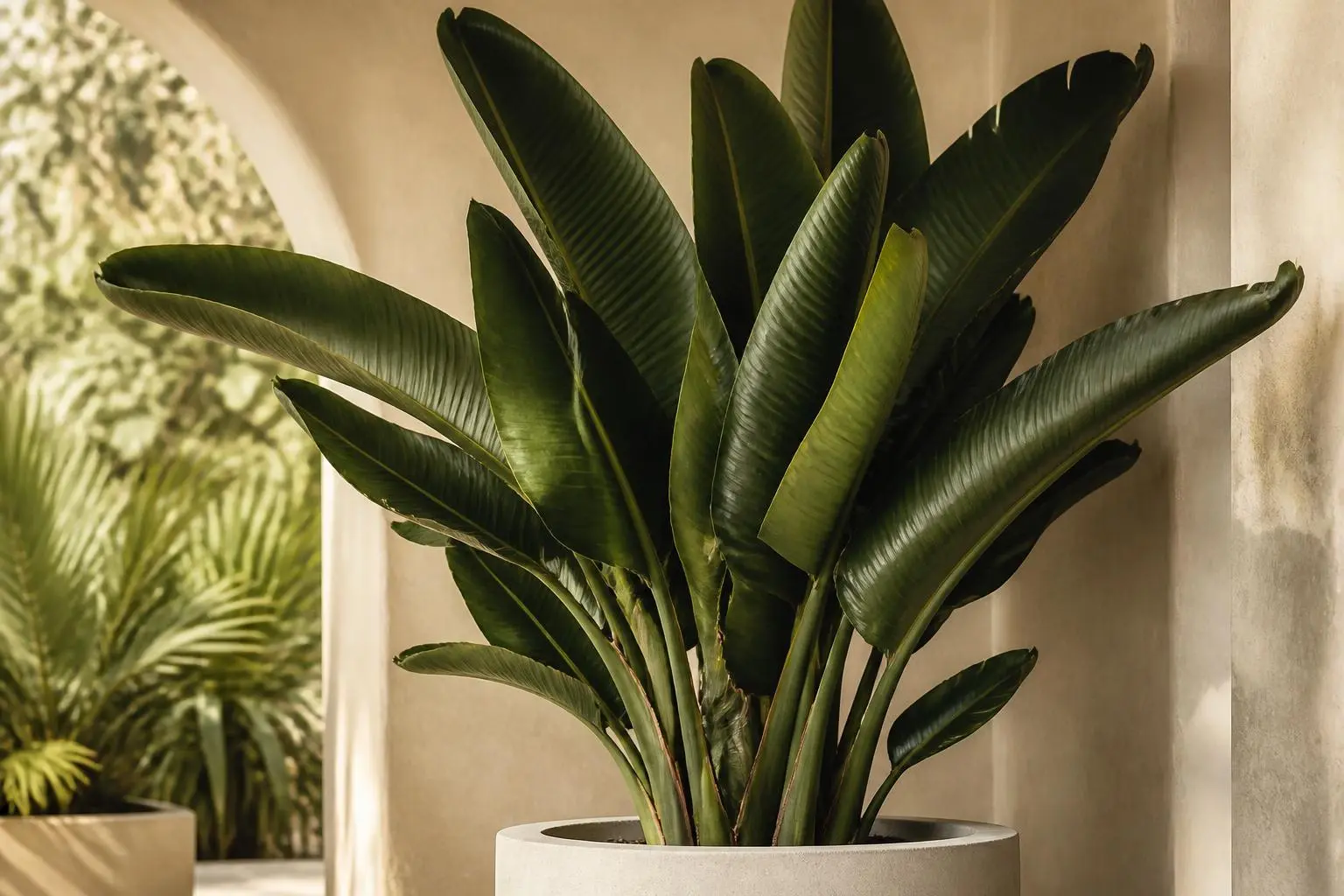
Strelitzia nicolai (White/Giant)
The White Bird of Paradise is a dramatically larger species that can grow into a true indoor tree over time, eventually reaching 6 to 15 feet or more indoors and up to 30 feet in its native habitat along the eastern coast of South Africa and Mozambique. Its enormous dark green leaves can grow up to 6 feet long and 2 feet wide, creating a bold tropical canopy effect that rivals the visual impact of a Fiddle Leaf Fig at a fraction of the price. The thick, woody trunk develops leaf scars as older leaves drop, giving mature specimens a palm-like appearance. When it flowers — which is rare indoors — it produces striking white and blue blooms from a dark purple-black spathe. Widely available for $30 to $80 in a 10-inch pot, it has become one of the most popular large houseplants.
Distinguishing feature: White and blue flowers emerging from a dark purple-black spathe; enormous dark green leaves up to 6 feet long and 2 feet wide; tree-like trunk with leaf scars
Care notes: Requires significantly more floor space and ceiling height than Strelitzia reginae, making it better suited for large rooms with high ceilings. It demands very bright light — a south-facing window with several hours of direct sun is ideal — and will struggle in medium light, producing smaller leaves and leggy growth. Water thoroughly when the top 2 inches of soil are dry during the growing season, and reduce watering in winter. This species is extremely unlikely to flower indoors without near-greenhouse light levels, so grow it primarily for its dramatic foliage. The large leaves accumulate dust quickly, so wipe them with a damp cloth every 2 to 3 weeks, always supporting from underneath to prevent cracking. Repot every 2 to 3 years into a heavy, wide-based container to prevent toppling.
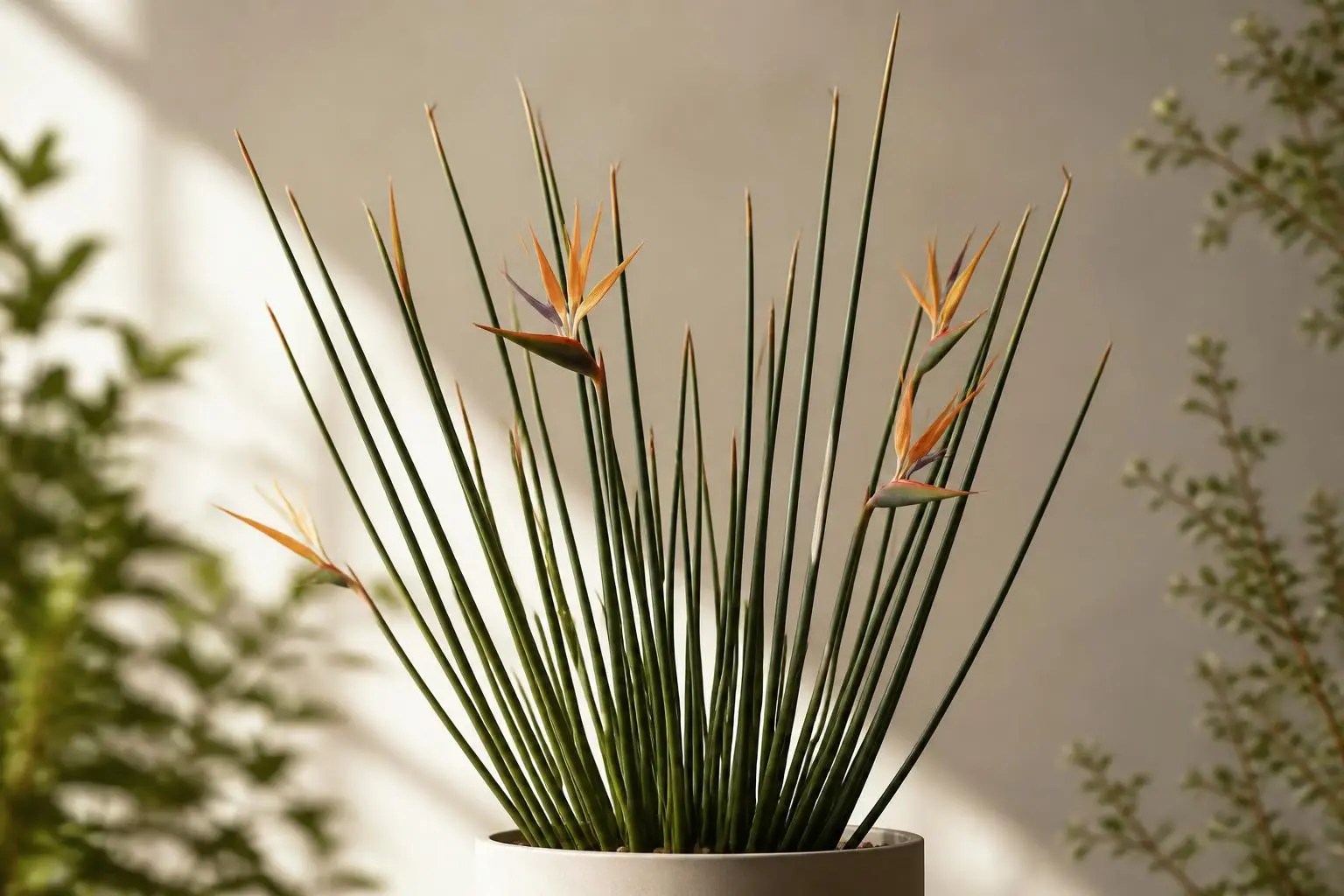
Strelitzia juncea (Rush Leaf)
A highly distinctive and relatively rare Bird of Paradise species, Strelitzia juncea replaces the broad paddle-shaped leaves of its relatives with narrow, cylindrical, rush-like foliage that gives the plant an entirely different architectural character. The reed-like leaf blades are modified — the leaf tissue has been reduced to a central vein, creating thin cylindrical stalks that rise in dense clumps from the base. Despite this dramatic foliage difference, it produces the same vibrant orange and blue crane-shaped flowers as Strelitzia reginae. Native to the Eastern Cape of South Africa, it grows slowly to about 3 to 4 feet tall and forms a tidy, upright clump. Classified as near-threatened in its native habitat due to overcollection and habitat loss, this species commands premium prices of $50 to $100 or more when available from specialty nurseries.
Distinguishing feature: Narrow cylindrical rush-like leaf blades instead of broad paddles; same vibrant orange and blue crane-shaped flowers on a tidy upright clumping form reaching 3–4 feet tall
Care notes: Follow the same general care guidelines as Strelitzia reginae — bright indirect to direct light, watering when the top inch or two of soil dries out, and monthly fertilizing during spring and summer. However, the reduced leaf surface area makes this species notably more drought-tolerant than the broad-leaved varieties, so be especially careful not to overwater. Allow the soil to dry slightly more between waterings than you would for reginae. It also tolerates slightly cooler temperatures, down to about 25 degrees Fahrenheit for brief periods outdoors, though indoor specimens should still be kept above 50 degrees. Because it is rare in cultivation, sourcing one may require specialty nurseries or online retailers. Once established, it is a resilient and long-lived specimen that rarely suffers from pests or disease.
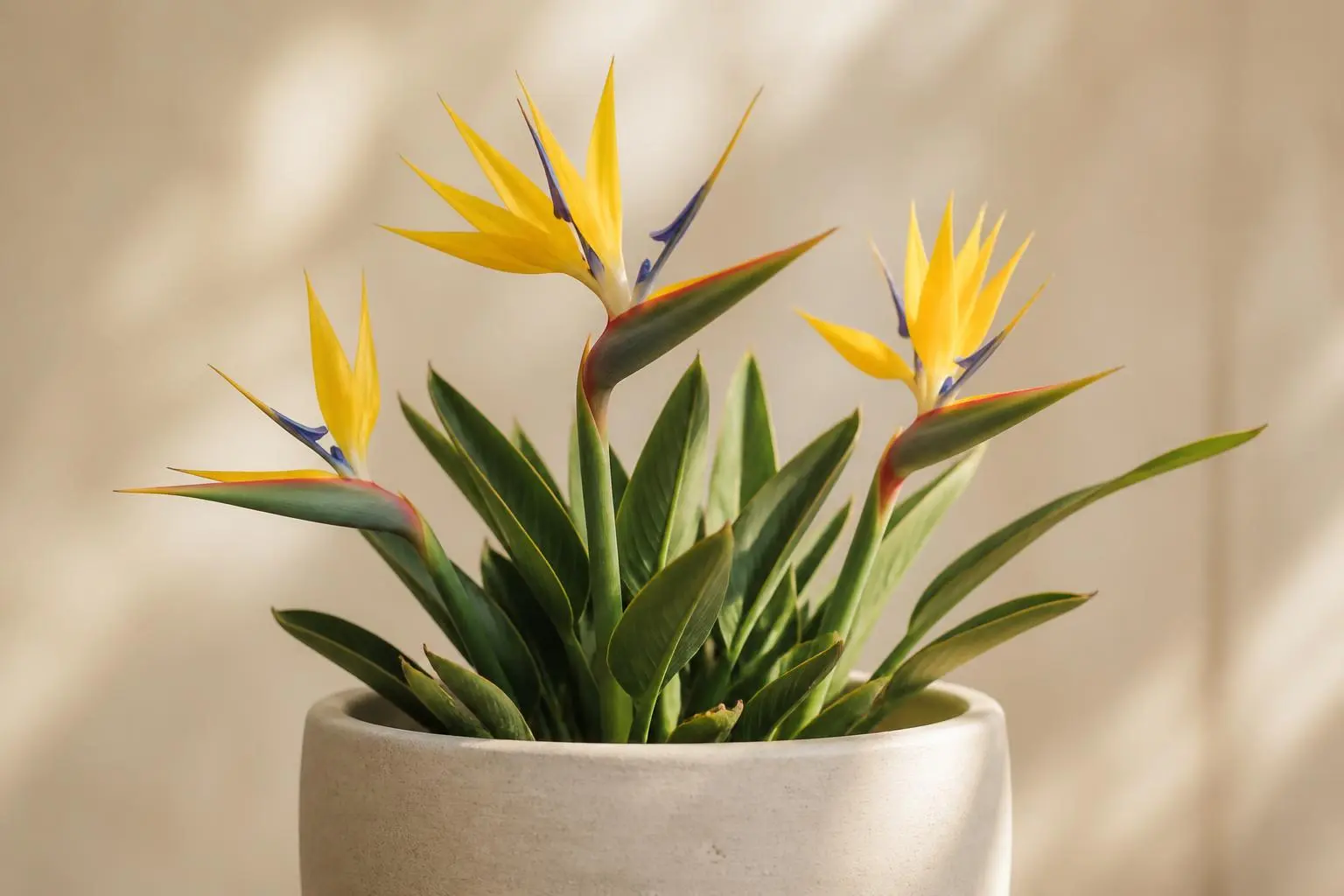
Strelitzia Mandela's Gold
A rare and sought-after cultivar of Strelitzia reginae that produces stunning golden yellow and blue flowers instead of the typical orange, Mandela's Gold was developed over two decades of selective breeding at the Kirstenbosch National Botanical Garden in Cape Town, South Africa, and named in honor of Nelson Mandela in 1994. The yellow coloration comes from a recessive genetic trait carefully stabilized through controlled hand-pollination across multiple generations. The foliage is identical to standard Strelitzia reginae — blue-green, paddle-shaped leaves in a compact clumping habit reaching 3 to 5 feet tall — but the golden blooms create a warmer, softer visual effect. Each flower spike bears 3 to 5 blooms that open over several weeks from late winter through spring. Due to the difficulty of producing seeds that breed true to the yellow form, this cultivar commands premium prices of $60 to $120 or more.
Distinguishing feature: Golden yellow and blue crane-shaped flowers replacing the standard orange; otherwise identical compact blue-green paddle-leaf form and 3–5 foot clumping habit as standard reginae
Care notes: Care requirements are essentially identical to standard Strelitzia reginae — bright indirect to direct light, consistent moisture during the growing season with a slight dry-down between waterings, and monthly fertilizing with a balanced or bloom-boosting formula in spring and summer. The primary difference is that this cultivar is somewhat slower to offset and propagate because the yellow flower trait requires careful breeding to maintain, meaning divisions may not always produce the same golden blooms if the plant reverts. To preserve the yellow flowering trait, propagate only by division of confirmed Mandela's Gold clumps rather than from seed, which may produce variable results. It is slightly less vigorous than the standard orange form, so be patient with its growth rate and avoid repotting too frequently. Like all Strelitzia, it benefits from being slightly root-bound when you want to encourage flowering.